Barkat (abundance)
दम घुटता है यहाँ
हर तरफ मकान ही मकान
मकान मैं भरे लोग
सड़कों पर मर्द ही मर्द
न कोई पेड़ न पार्क
सांस लेने के लिए दूर के पार्क जाना पड़ता हैं
और वहां अकेले जाने की परमिशन नहीं है
These were the words of one of the participants in a workshop on Mapping Mobility- Meri Zindagi ka Naksha. This workshop involved making maps using embroidery and appliqué techniques to visually depict the daily routines of women. This creative process served as a means to delve into the extent of their mobility- how freely they could navigate and access public spaces, how much freedom did they have to visit their safe places or places they liked going to, and also identify the places they were not allowed to visit due to familial or societal restrictions.
Absence of greenery came up often in the conversations during this module and yet when the participants made their maps, they were full of trees, flowers, birds, butterflies..abundance!
Many participants who come to Rafooghar are migrants. They have come to cities for better opportunities, leaving the land, their farms behind. They carry with them embodied knowledge of the land, what to grow and when, what to eat in each season…probably that’s why their artworks carry and showcase their deep-rooted connection to nature even in the absence of greenery.
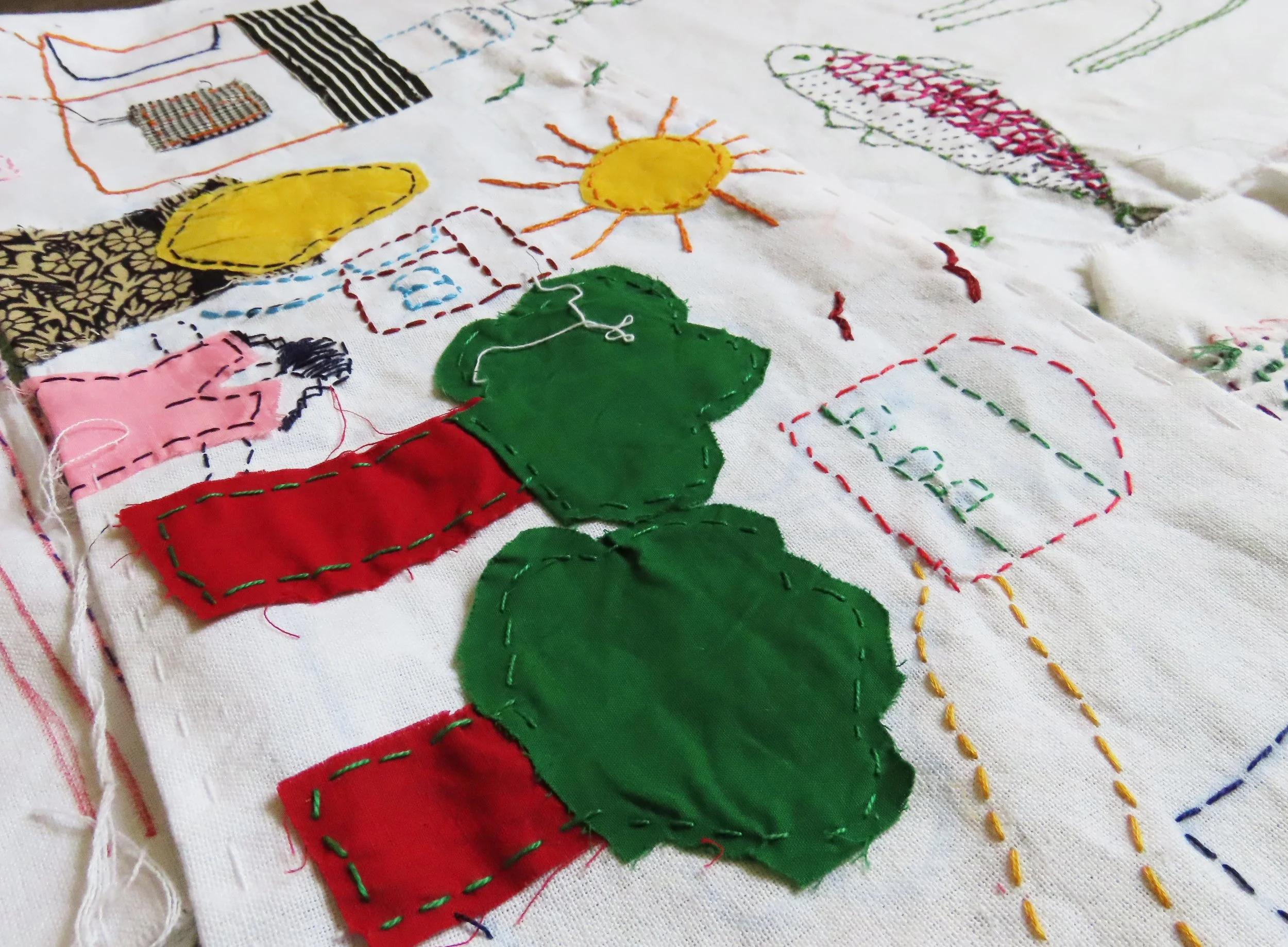
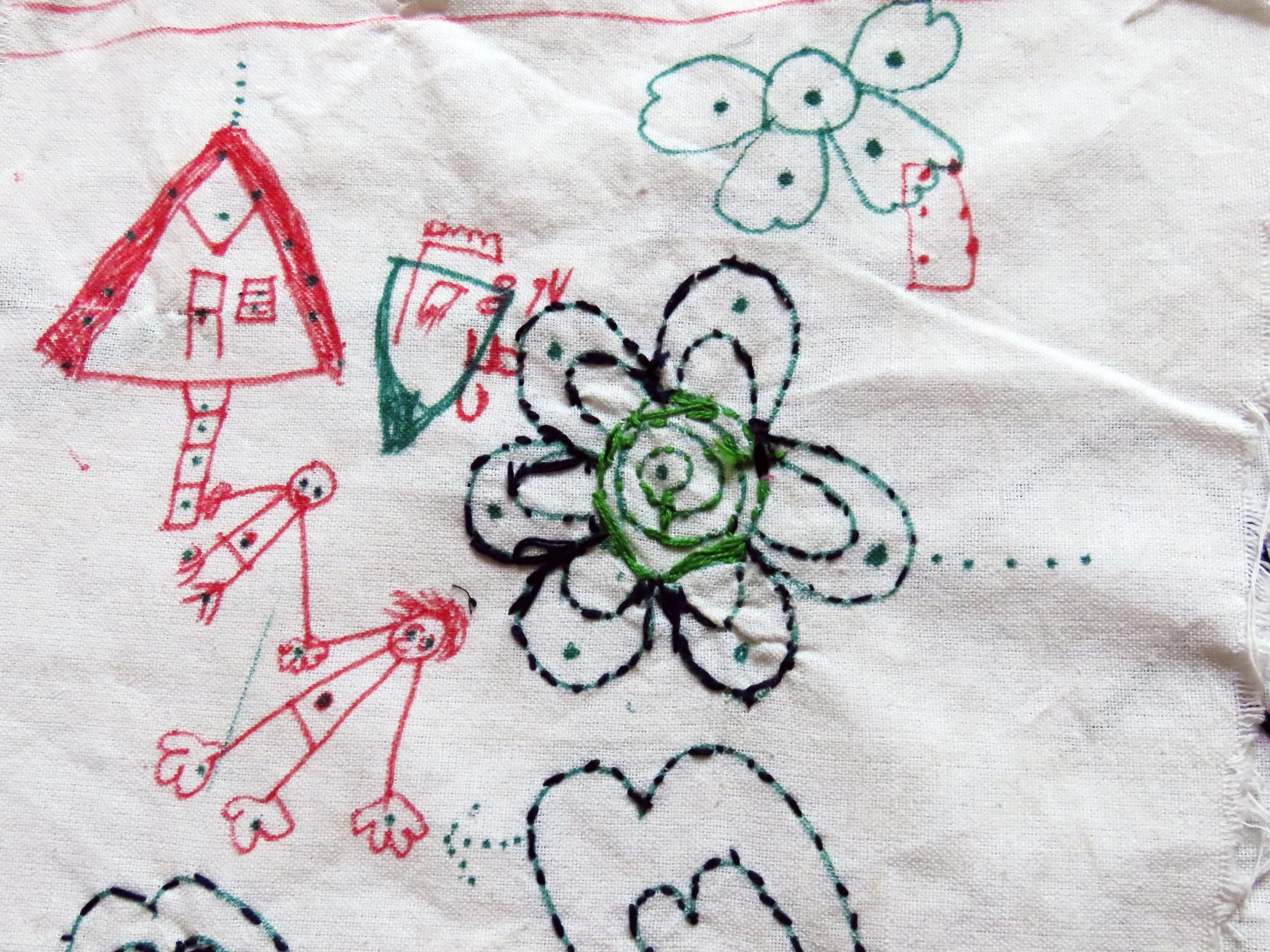
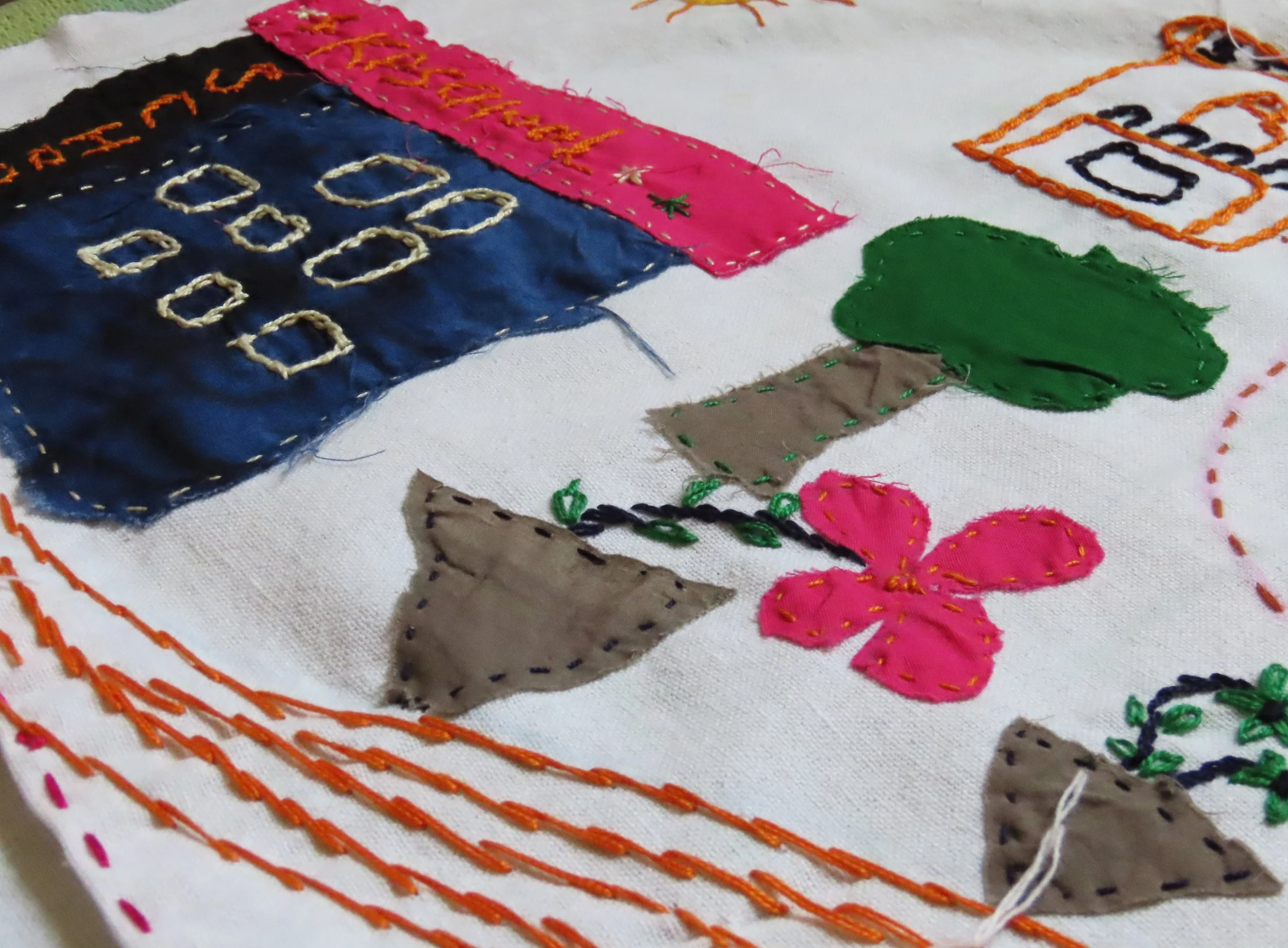
We started Rafooghar in a tiny, windowless room. Over time our women made this room their own… beautiful with their presence, stories and embroidered works, decorating every nook and corner of this space.
But a room, no matter how lovingly made, is not enough.
Women need more. They need gardens to bloom in, open skies to spread their wings into. They need spaces for laughter, for dance, for music-for joy that doesn’t have to justify itself. They need the freedom to loiter without purpose, to wander without fear, to have uninterrupted time with themselves.
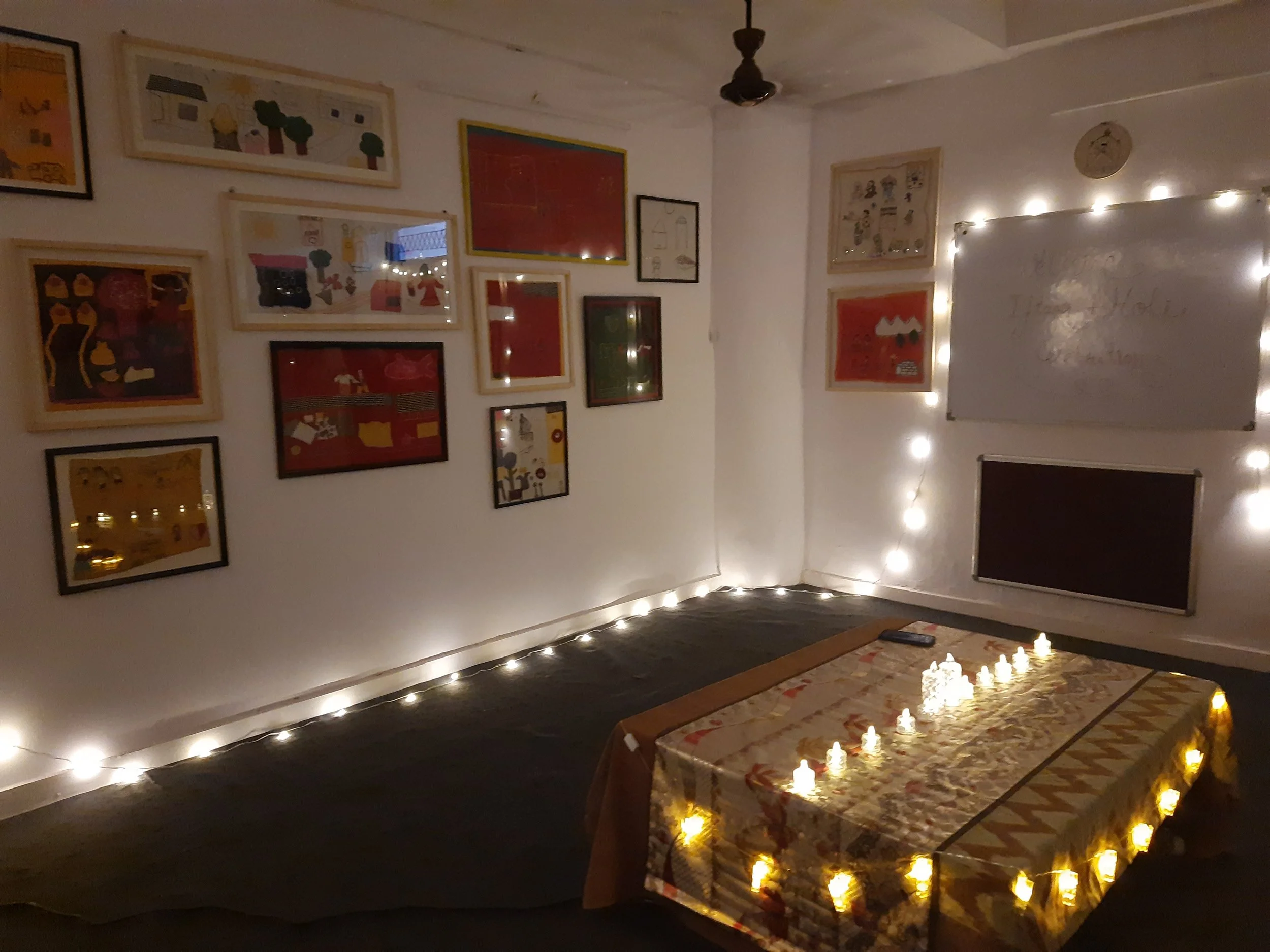
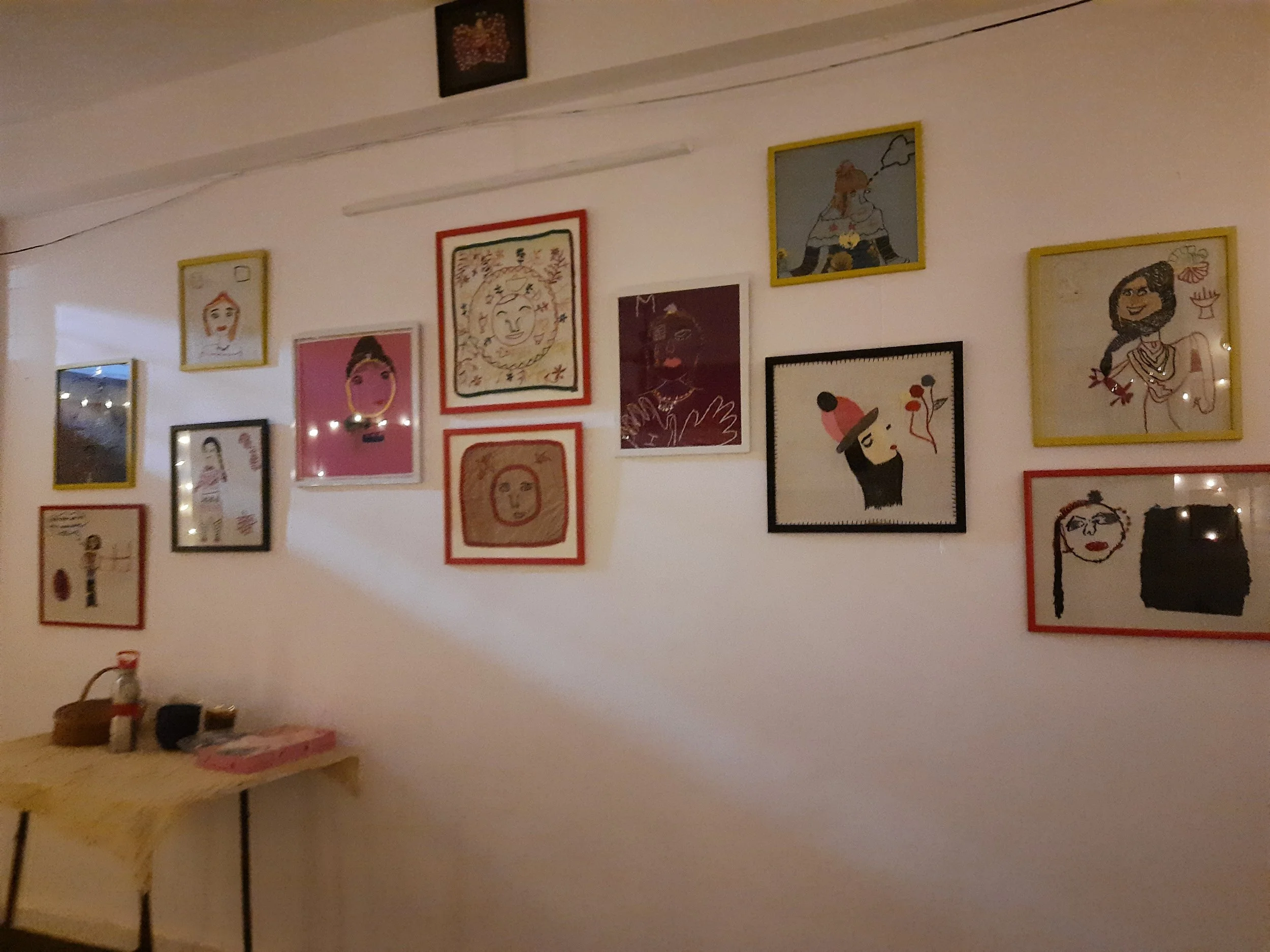
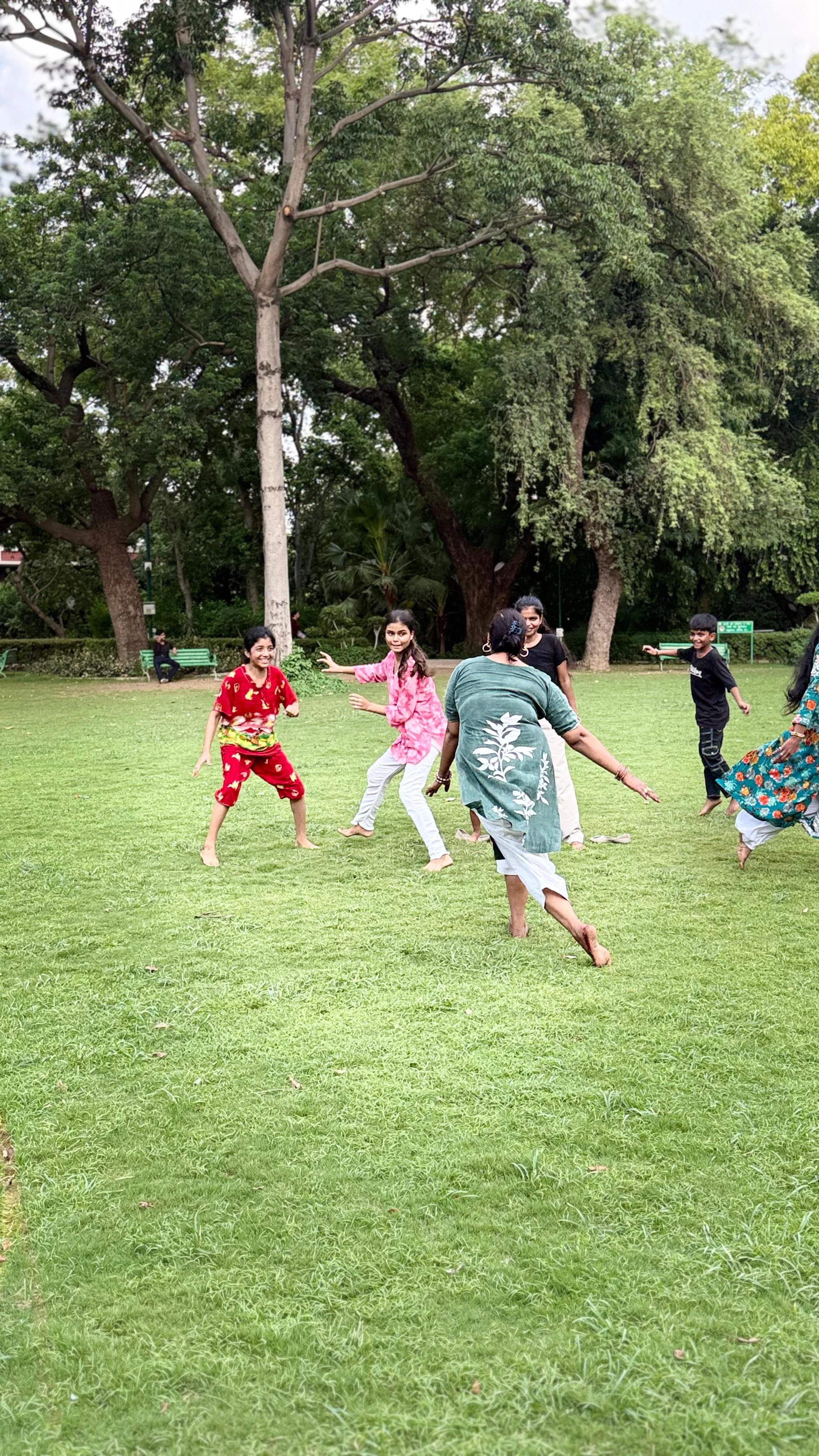
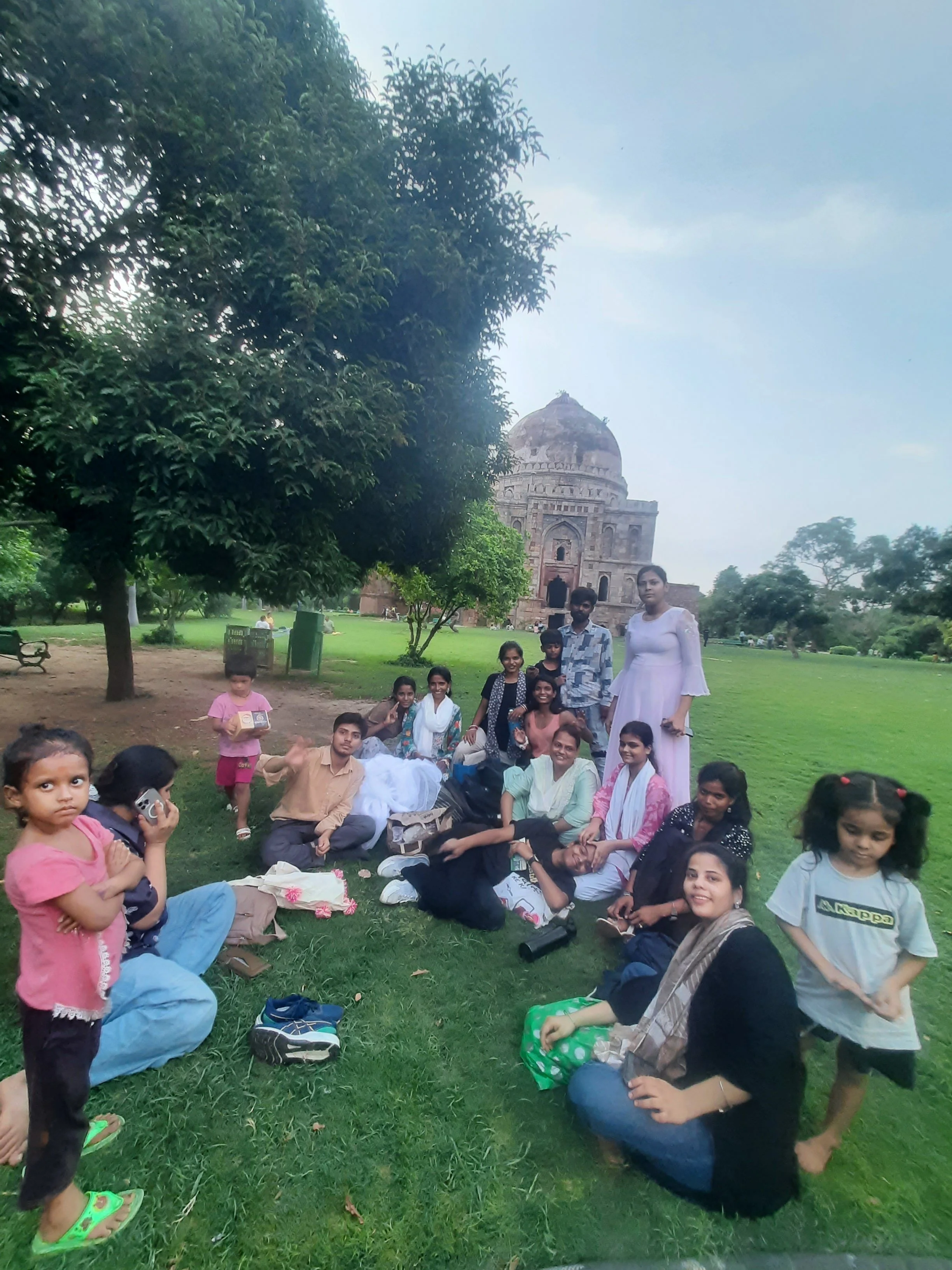
And that’s why, whenever possible, we pack our lunch boxes, our stitching kits and go for picnics in public parks. We started embroidery gatherings in public parks -‘Dil Bagh Bagh’ that loosely translates as “the heart is so happy that it has become a blooming garden. Through these gatherings, we share the joy of stitching amidst nature with others and also bring embroidery out from the confines of the domestic sphere, making it a more public and visible activity. Our women also became more and more carefree and relaxed with each outing.
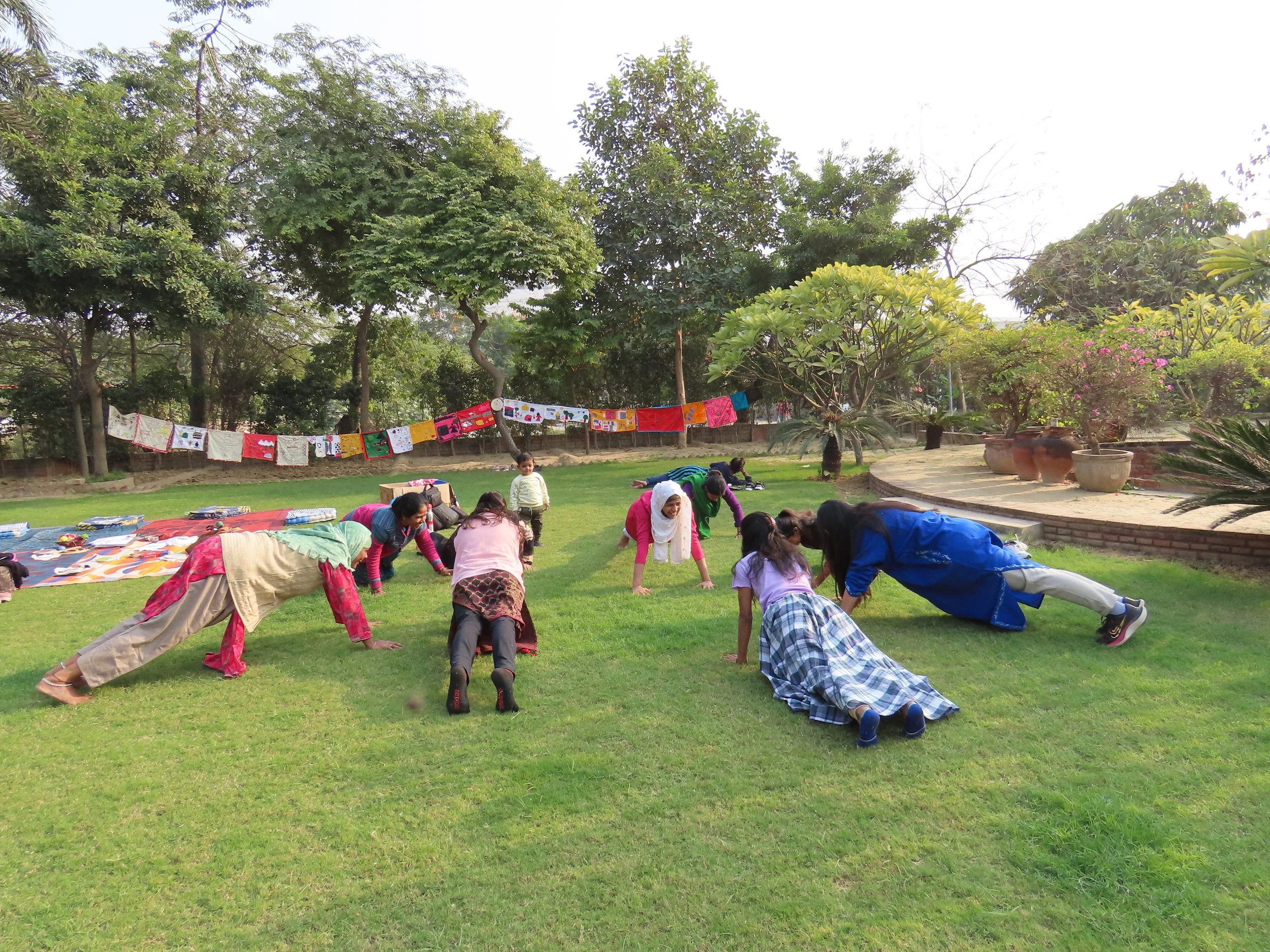
Kasrat and Fursat ..Rafooghar women enjoying a day in the garden.
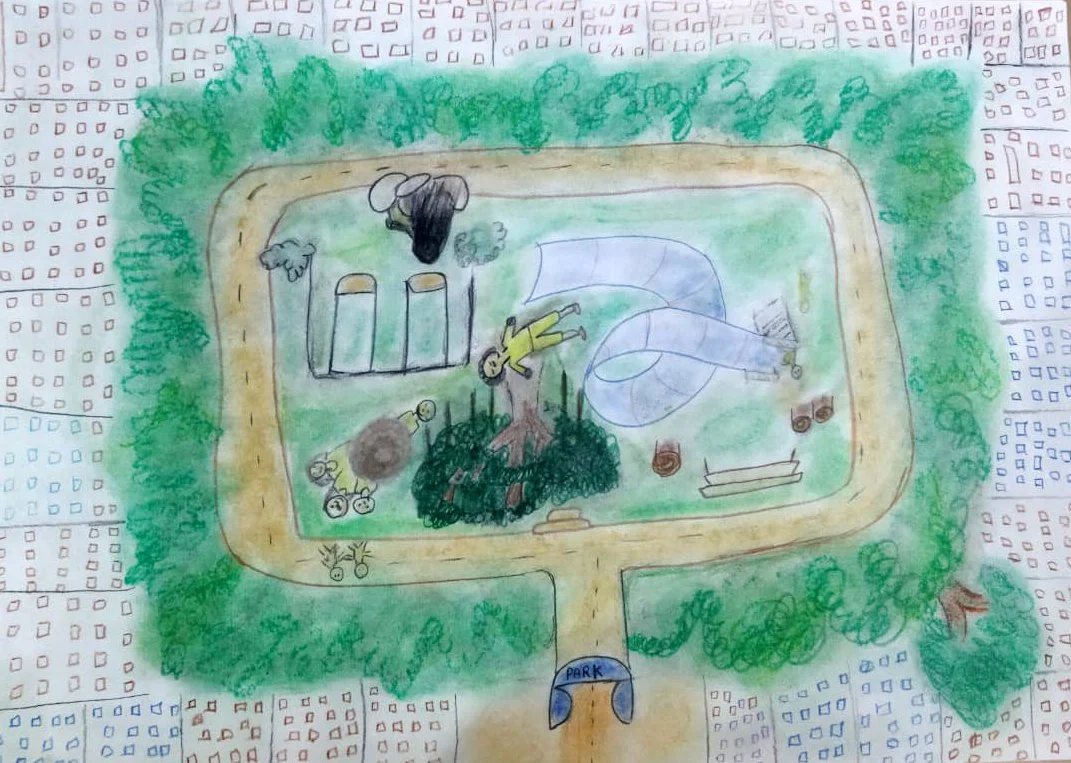
A tired body at rest in the park, surrounded by buildings all around. Illustration by Hariom.
“I must have flowers, always, and always”- Monet
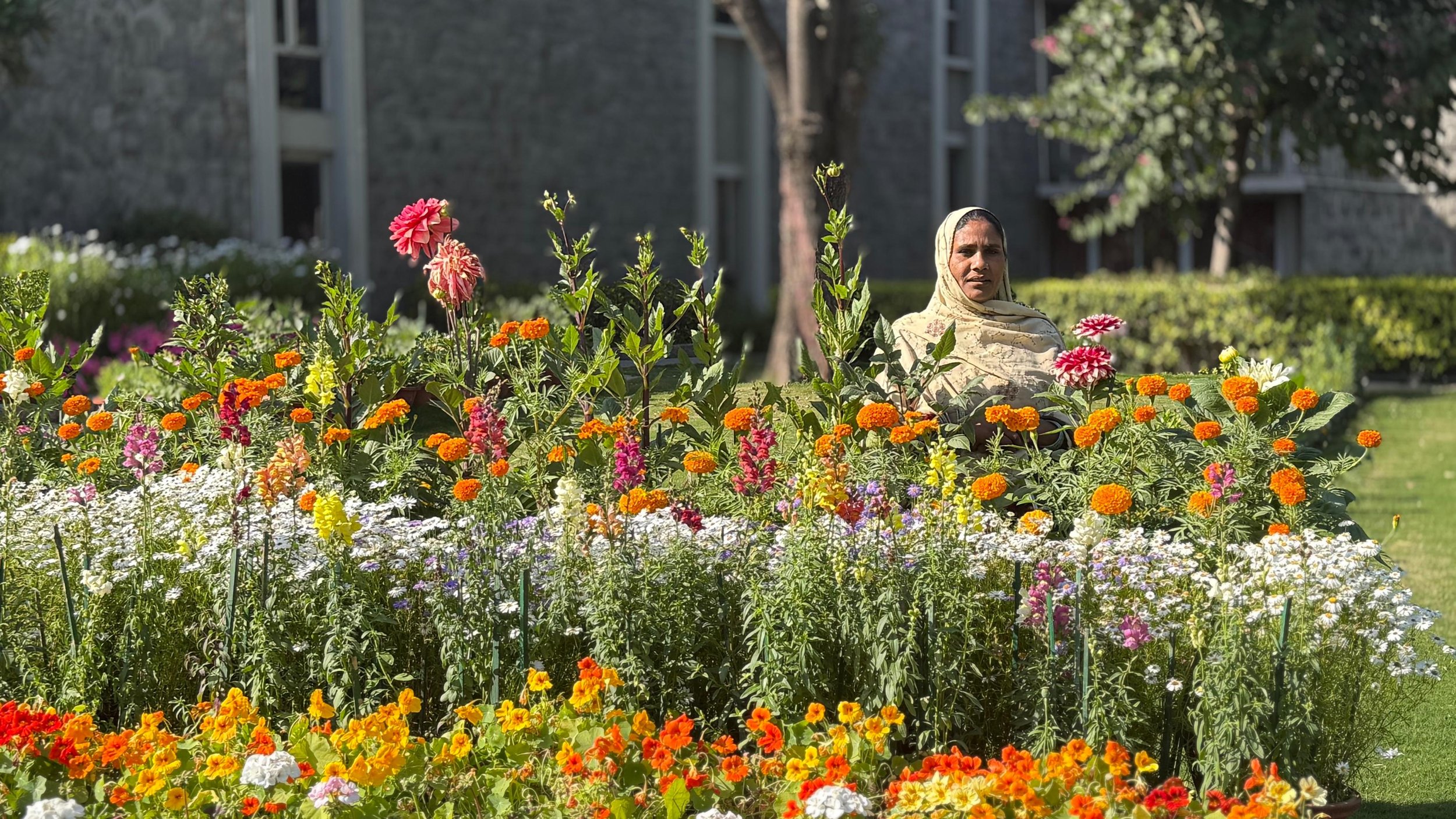
Above: Roshan ji at IIC, with flowers in full bloom. Below: Picnic and Kabbadi, Kabbadi, Kabbadi at Lodhi gardens
And then we started dreaming of the impossible. What if we had a garden of our own?
If a few hours in a public park could have such an impact on us ,what might daily access to a garden make possible? So when Yellow Streets moved into a new space with a terrace and an expansive view of the Yamuna, we felt like we were a step closer to realising our dream.
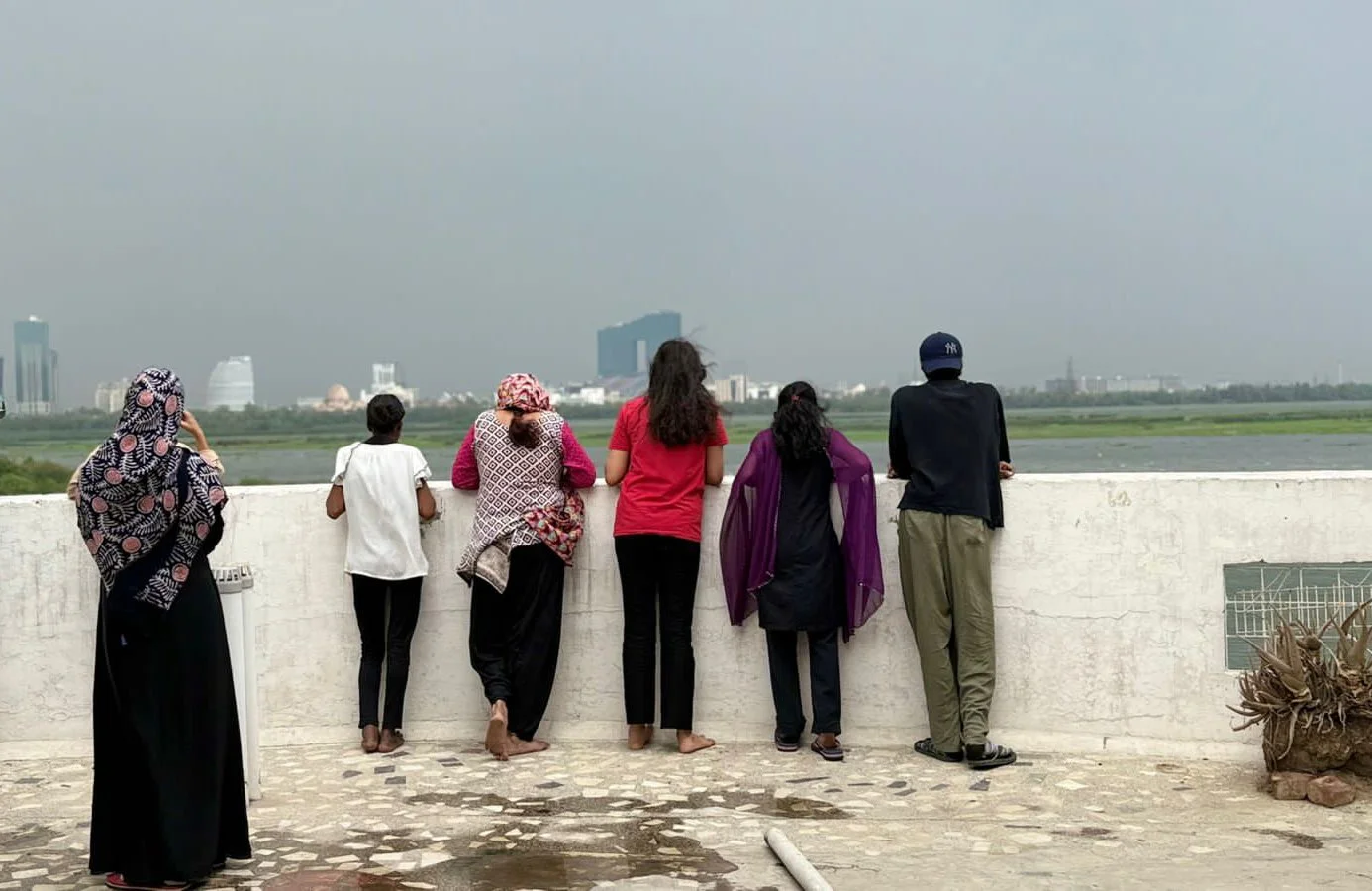
Chilling on the terrace
And then Natasha came into our lives and filled our terrace with hope and happiness.
Dr. Natasha Narain is a Meanjin-Brisbane based Bengali Australian interdisciplinary artist, scholar, and educator. Her work explores cultural hybridity, memory, and environmental themes, focusing on the intersection of Bengali Kantha textile traditions, personal narratives, and contemporary art, often utilizing collage, painting, and artist books.
She had come to spend some time with the women at Rafooghar during her residency with FICA and and as we showed her the terrace, we casually shared with her about turning this space into a community terrace garden
Women who come to Rafooghar carry with them generations of knowledge- of soil, seasons, seeds; but due to lack of space in their neifborhoods, this knowledge often remains unused. A terrace permaculture garden, led by the women themselves, could slowly grow into a model for sustainable urban farming and food sovereignty in Shaheen Bagh.
The idea was not just to grow food, but to recognise and honour this knowledge. The garden could provide fresh, organic produce, while also creating a space where their expertise is visible and valued.
We also began imagining how this space could extend into a learning site. A place where children could come to understand climate change and sustainability through doing, through touching soil, through making and growing. Art workshops, hands-on sessions, small experiments.
At its heart, the project is simple: to show that even within limited space and resources, communities can reclaim some control over their food, their environment, and their futures. Over time, we hope it can grow into a community-led effort- transforming underused terraces into small, living ecosystems. Spaces of care, resilience, and possibility-green sanctuaries in a city that has long overlooked its most vulnerable communities.
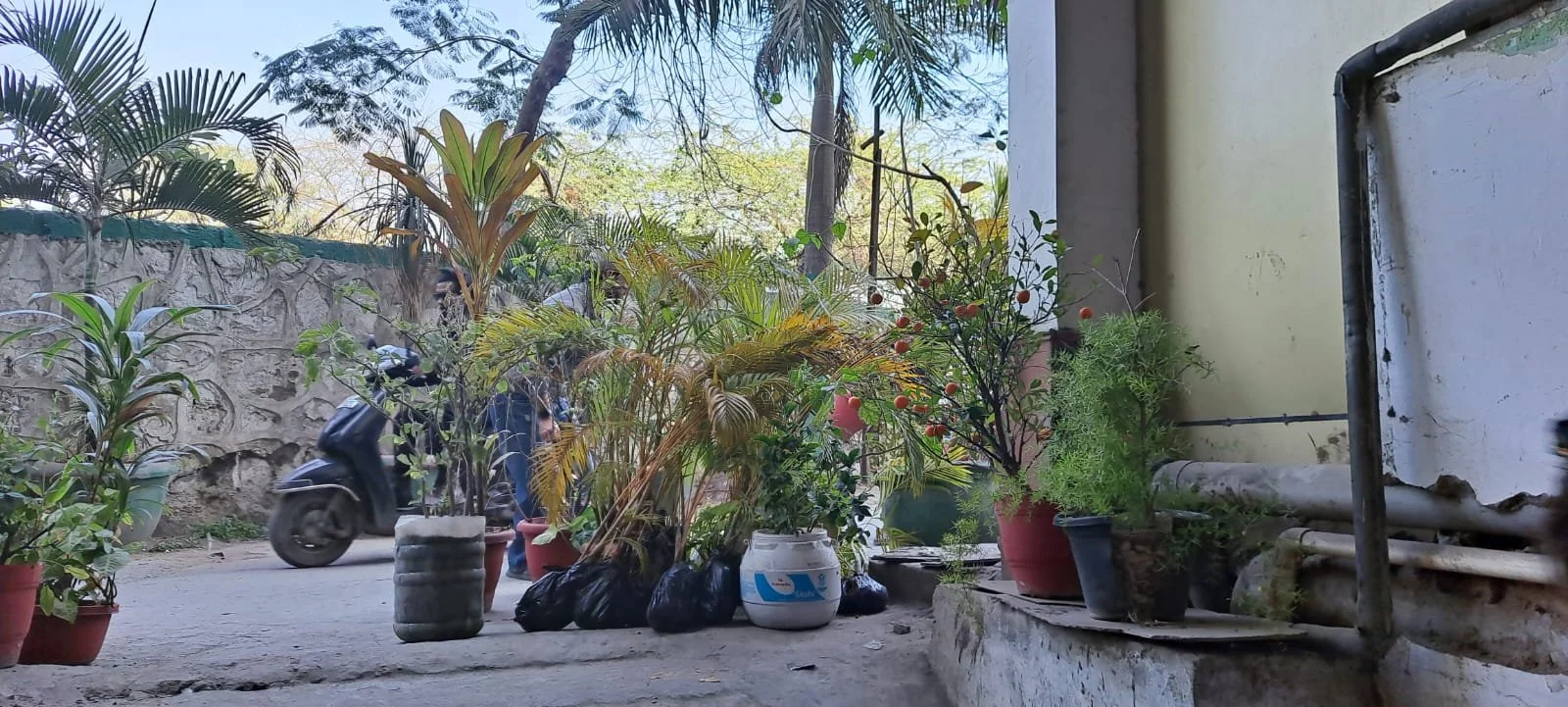
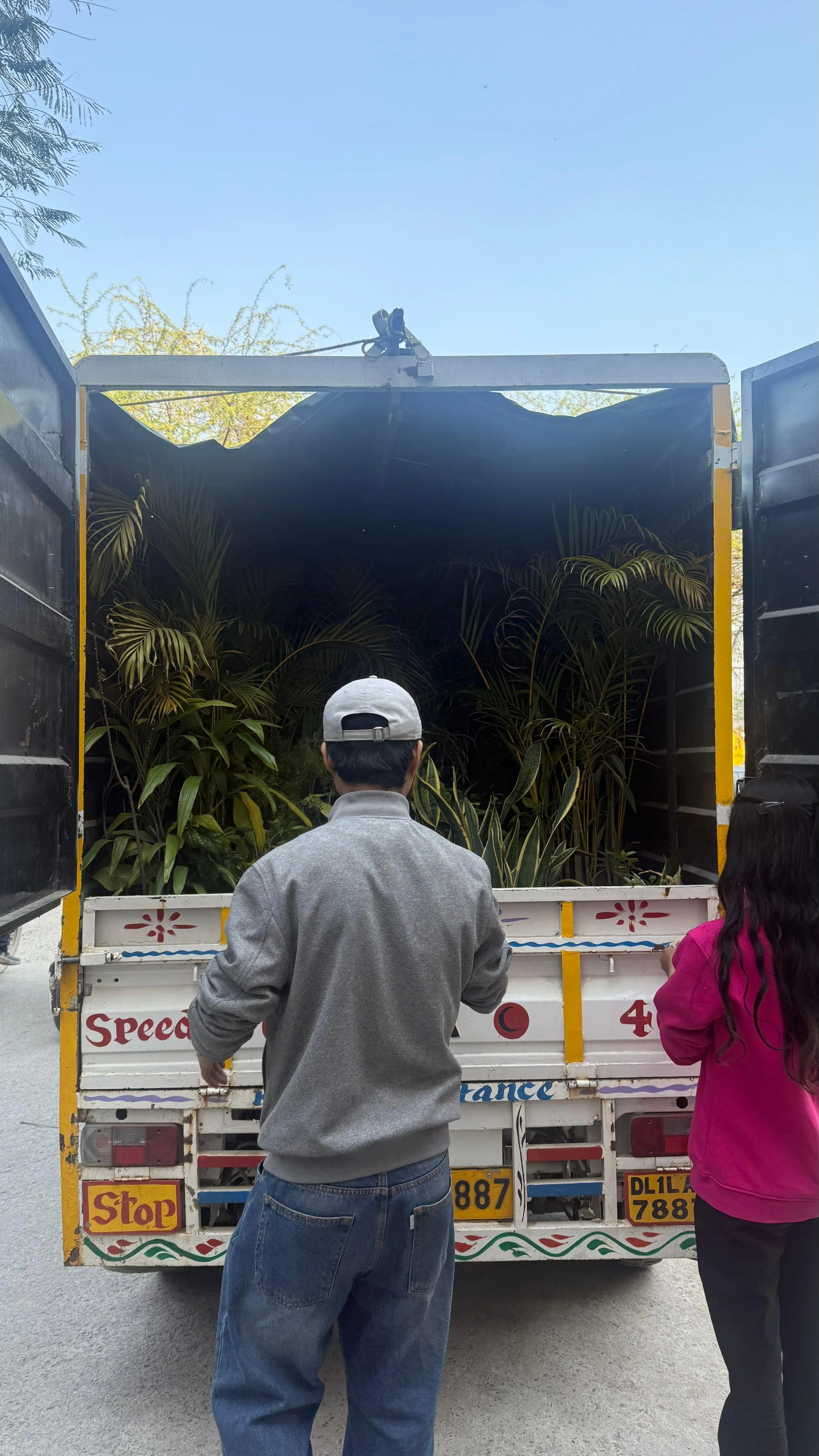
Just a day before Natasha’s return to Australia, she came to Rafooghar with a tempo packed to the brim with pots and plants. With her came two gentle souls- Harkajit Bhai and Sameena Didi, the most loving, attentive plant parents, who came to ensure their children would find a home where they could truly take root and be cared for.
We had a packed house at Rafooghar with people of all age and heights waiting eagerly since morning. When the tempo finally arrived (five hours late), a slightly tired but determined human chain stretched from the ground floor all the way up to the summit, passing along each of the 100 + plants, one by one.
Sanya and Rida had taken over the kitchen, sitting in the most ajeebogareeb way possible, busy preparing pasta for the bacha party, completely absorbed in their own little world.
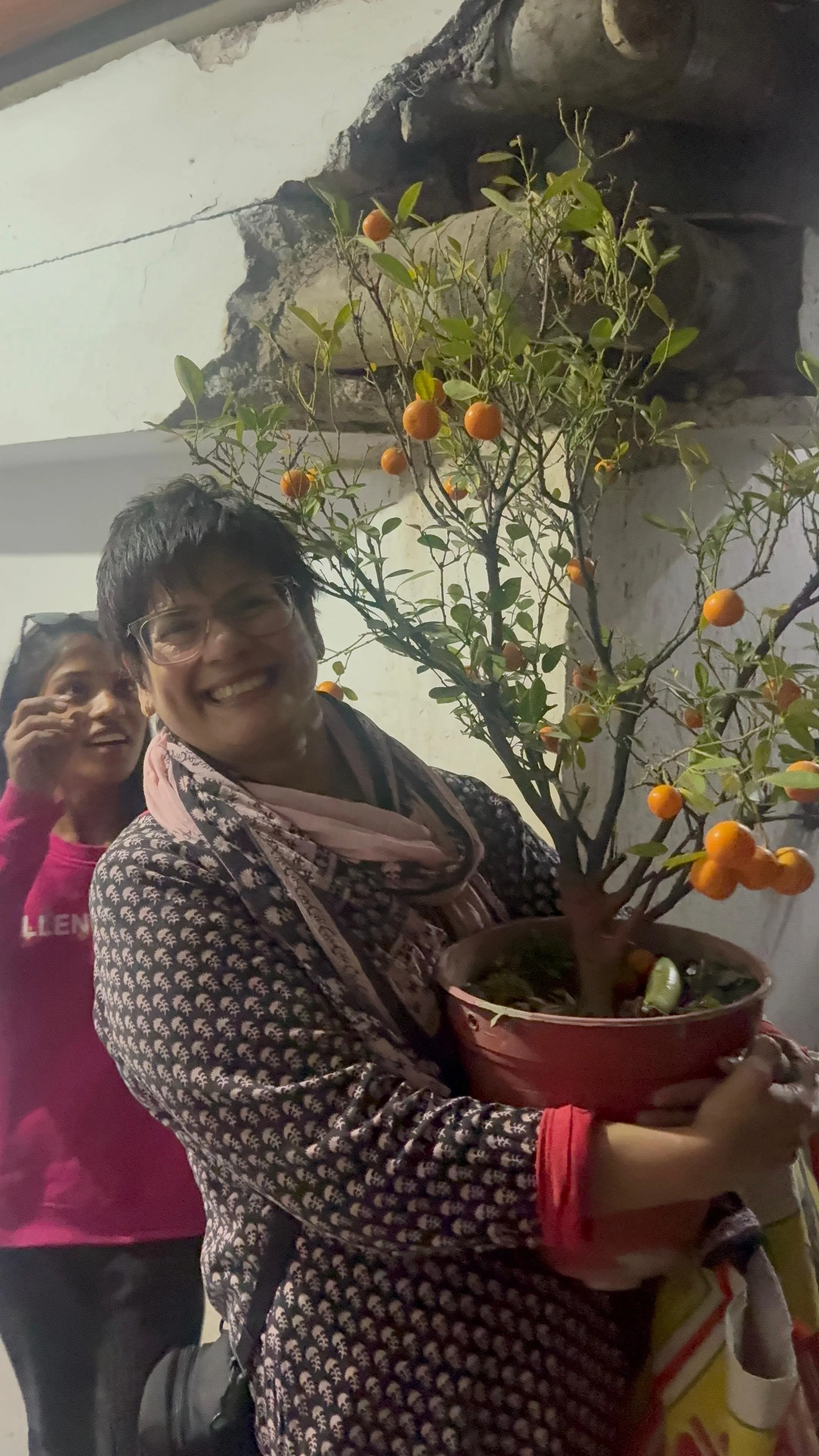
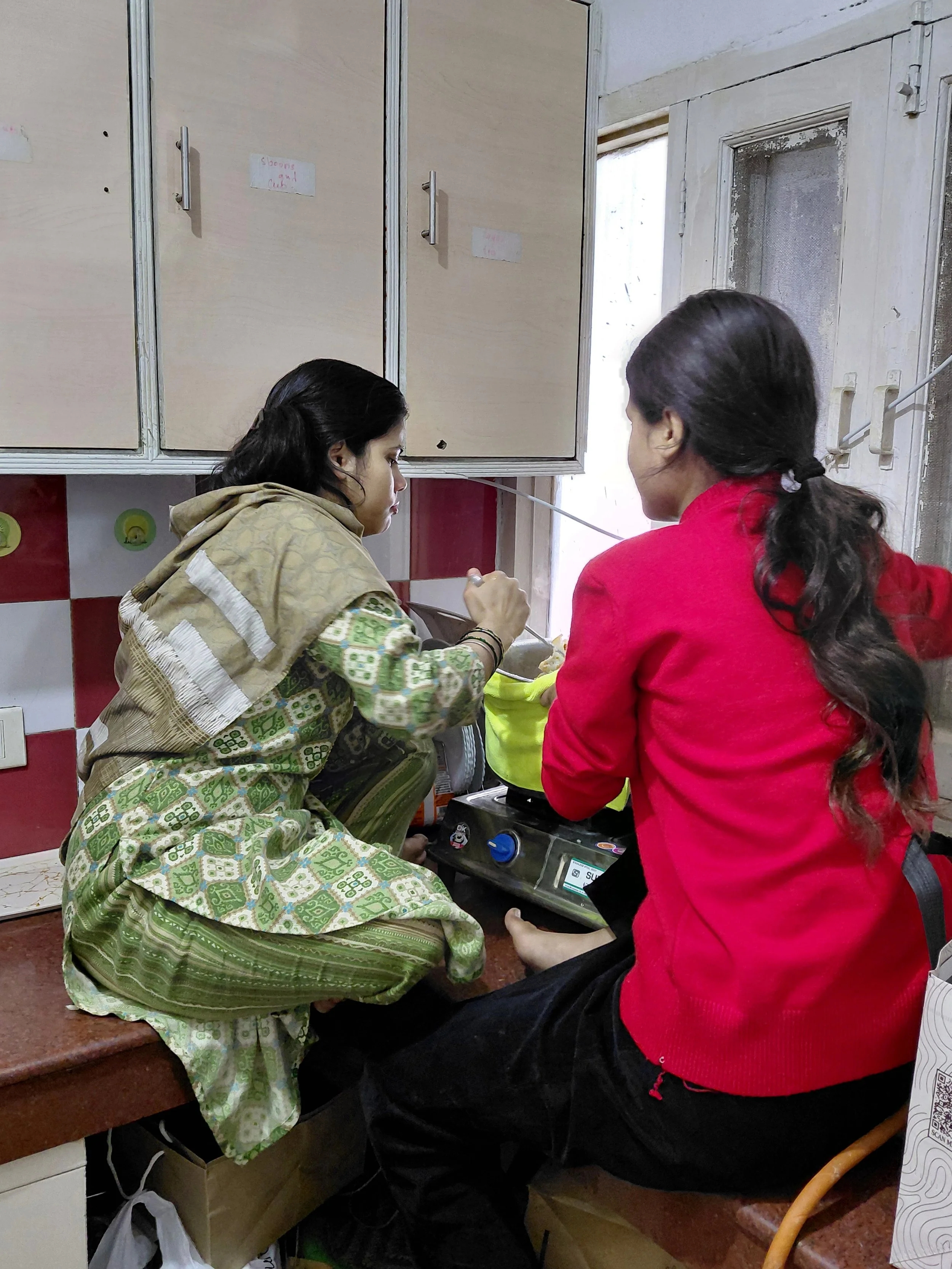
The women began arriving soon after, each carrying something from their kitchens..mouth-watering dishes that turned the day into an impromptu feast.
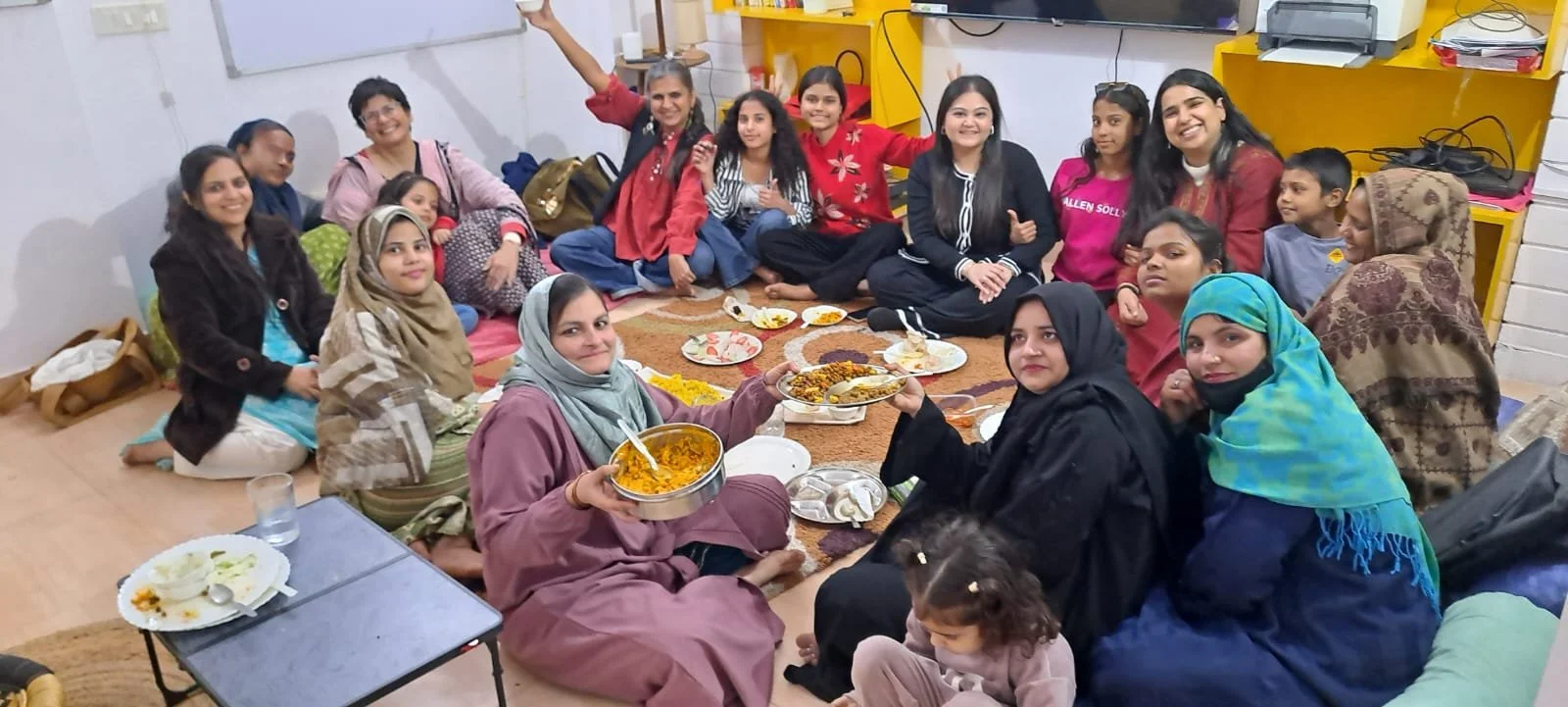
With our stomachs full, we made our way up to the terrace and began work on the garden. Harkajit Bhai and Sameena Didi introduced us to each plant.. its needs, its temperament, what helps it thrive and what holds it back. Our women and girls joined in from time to time, adding their own bits of wisdom.
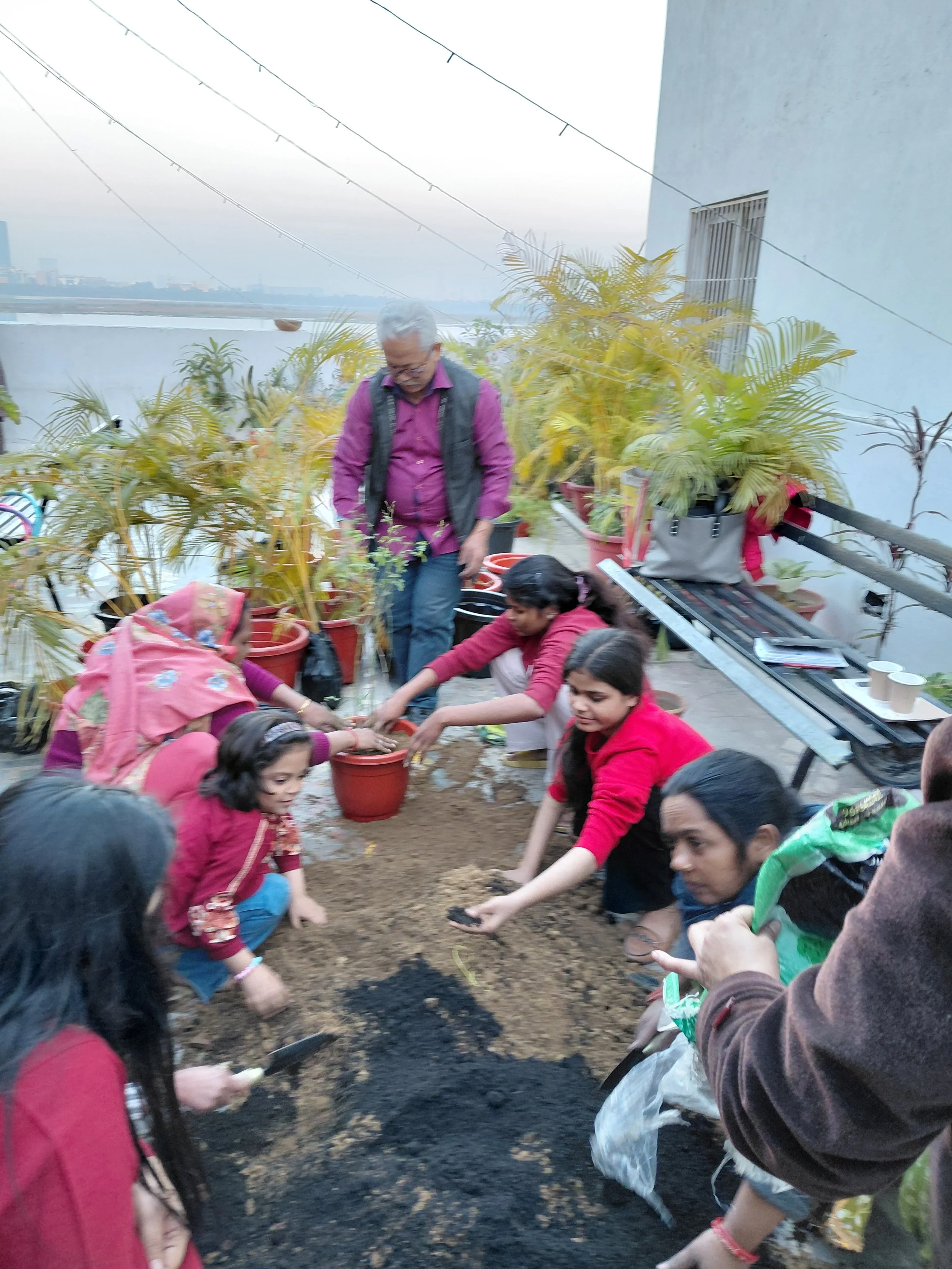
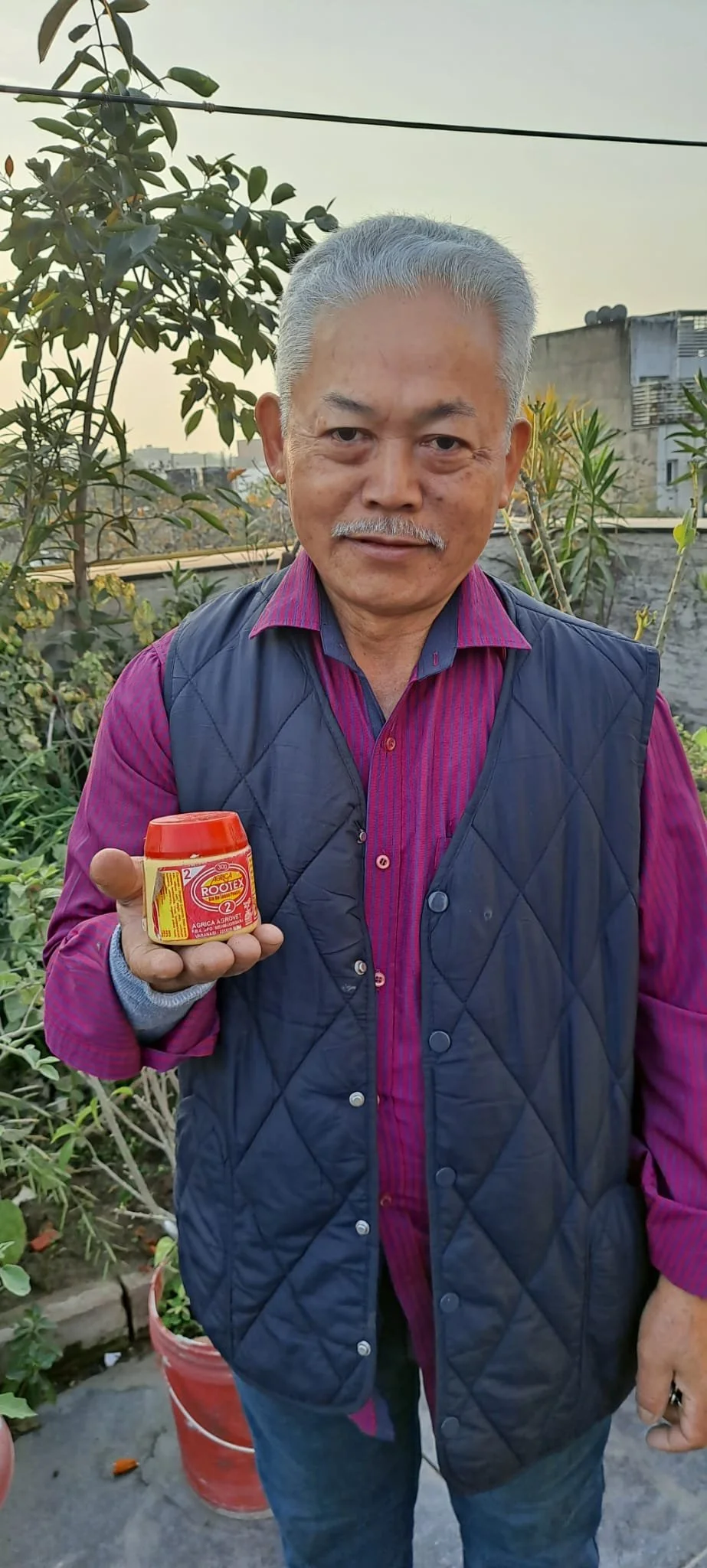
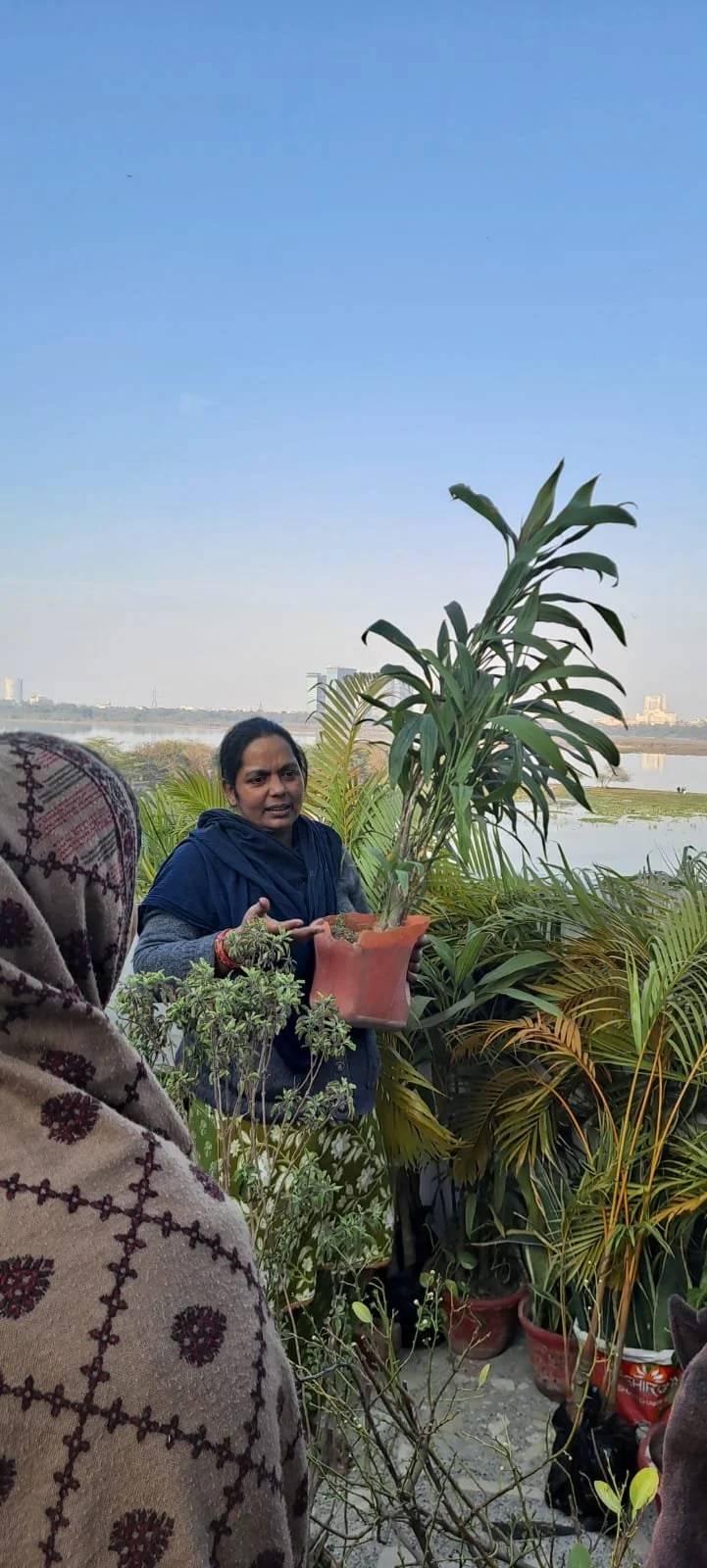
We made notes, mixed soil with compost, Rida sang a song about vegetables. Anjali showed everyone how to make reels. Even before the plants could settle in, the women were already blooming.
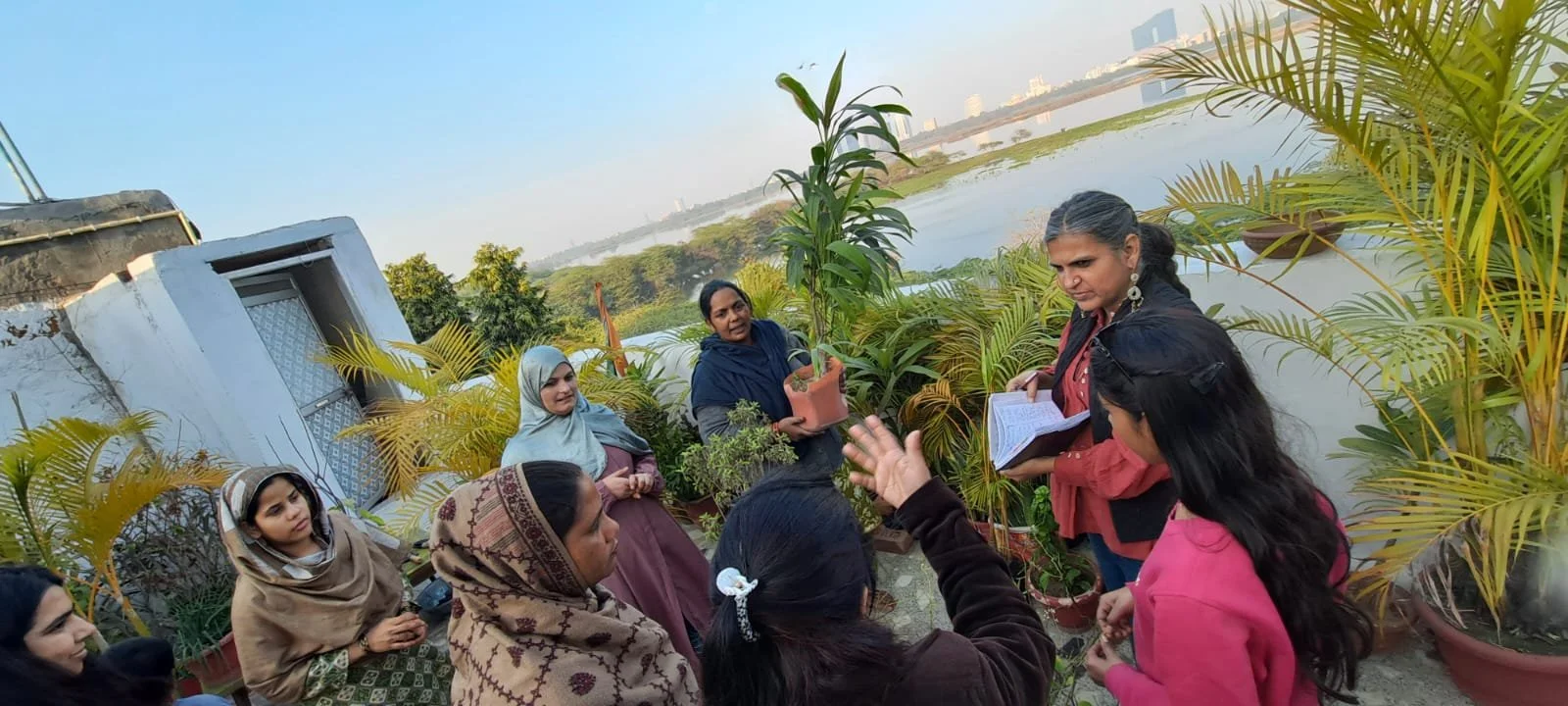
Anjali sharing some gyaan on plants. Below: A song on vegetables by Rida
Anjali teaching everyone how to make reels.
Till we secure funding to make this a community-owned space, Sania has taken on the responsibility of caring for Barkat, keeping a detailed journal to track its growth and changing needs.
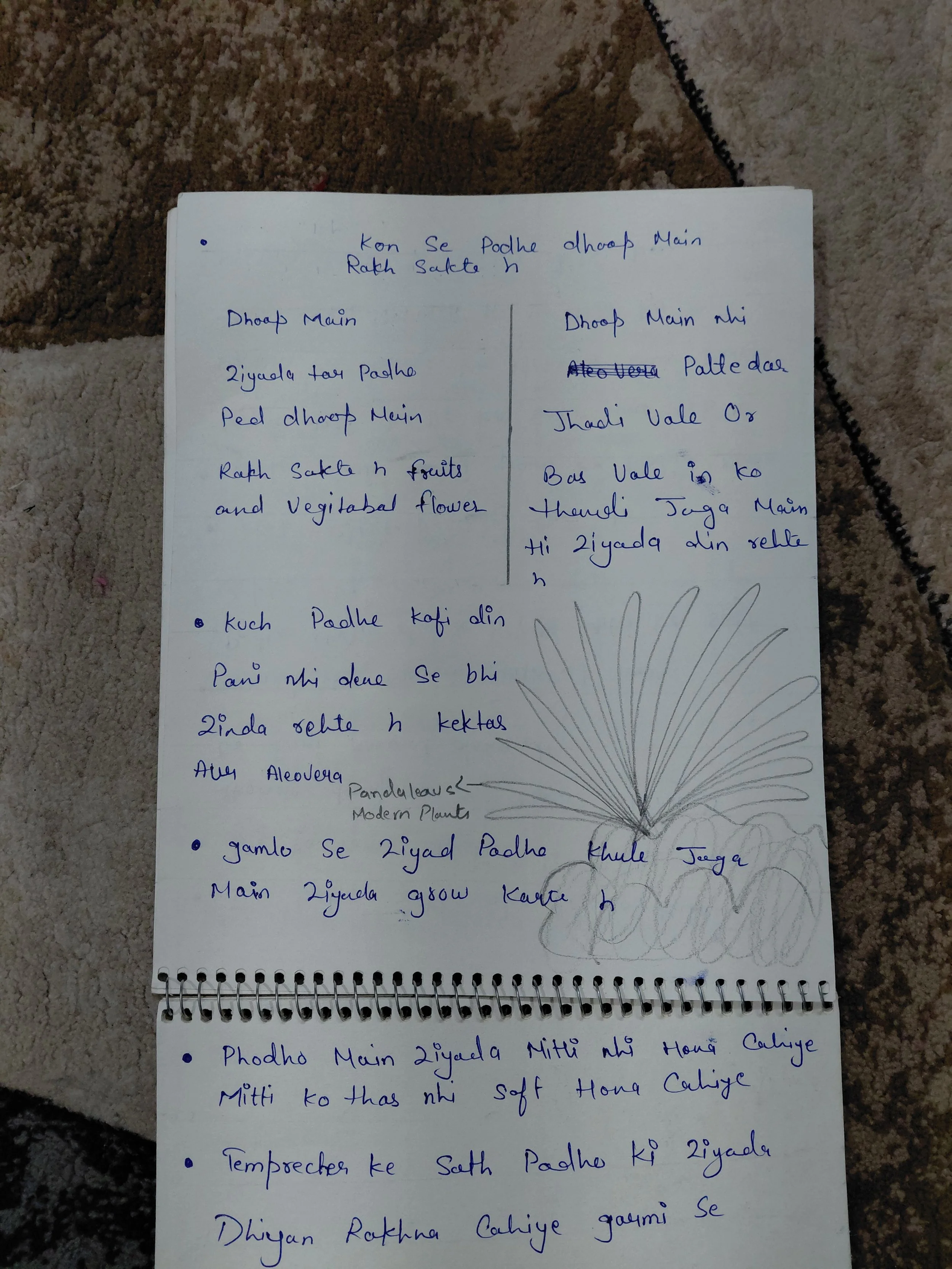
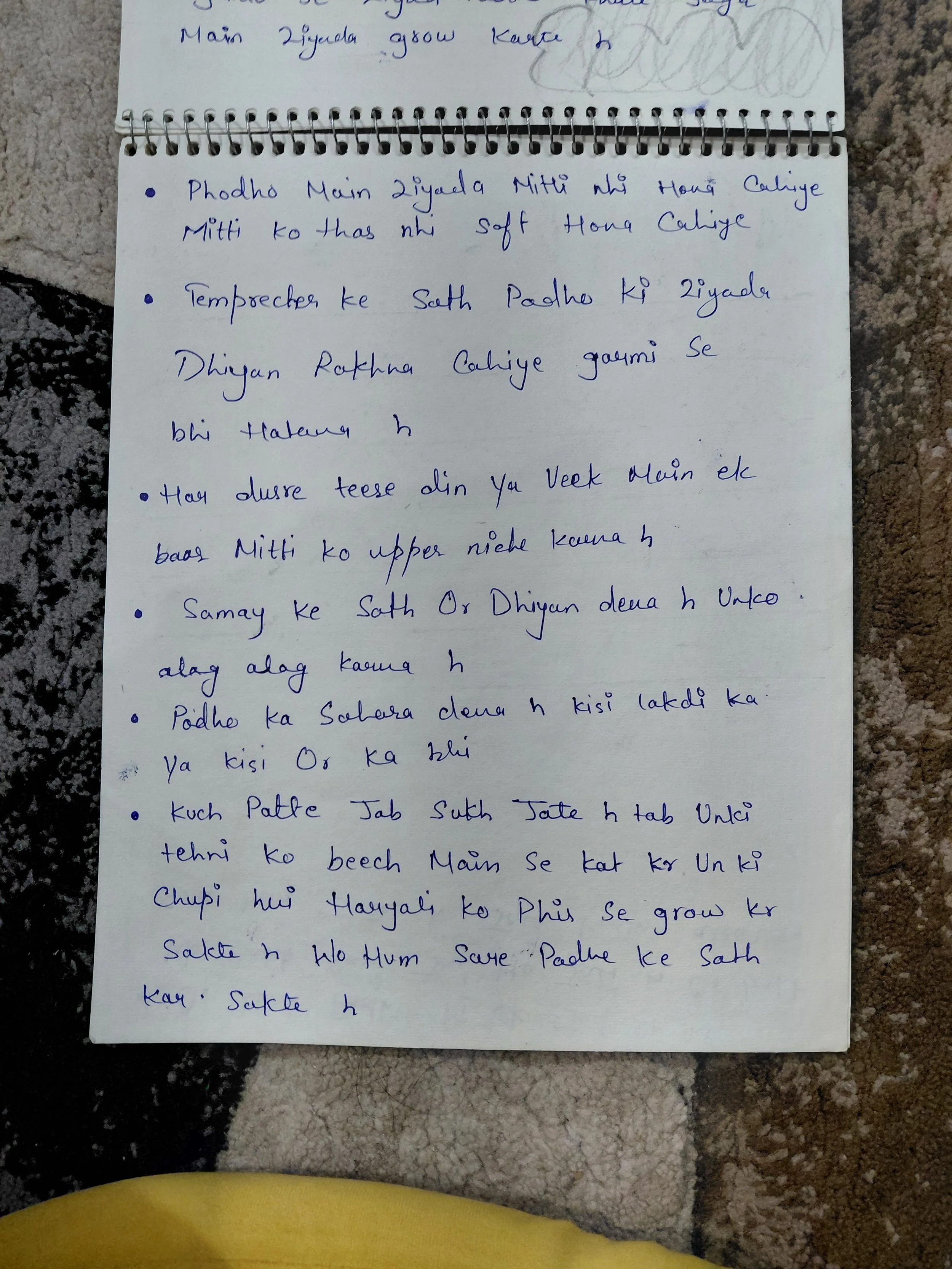
The tomato chutney that Sania made from our very first harvest was absolutely delicious.
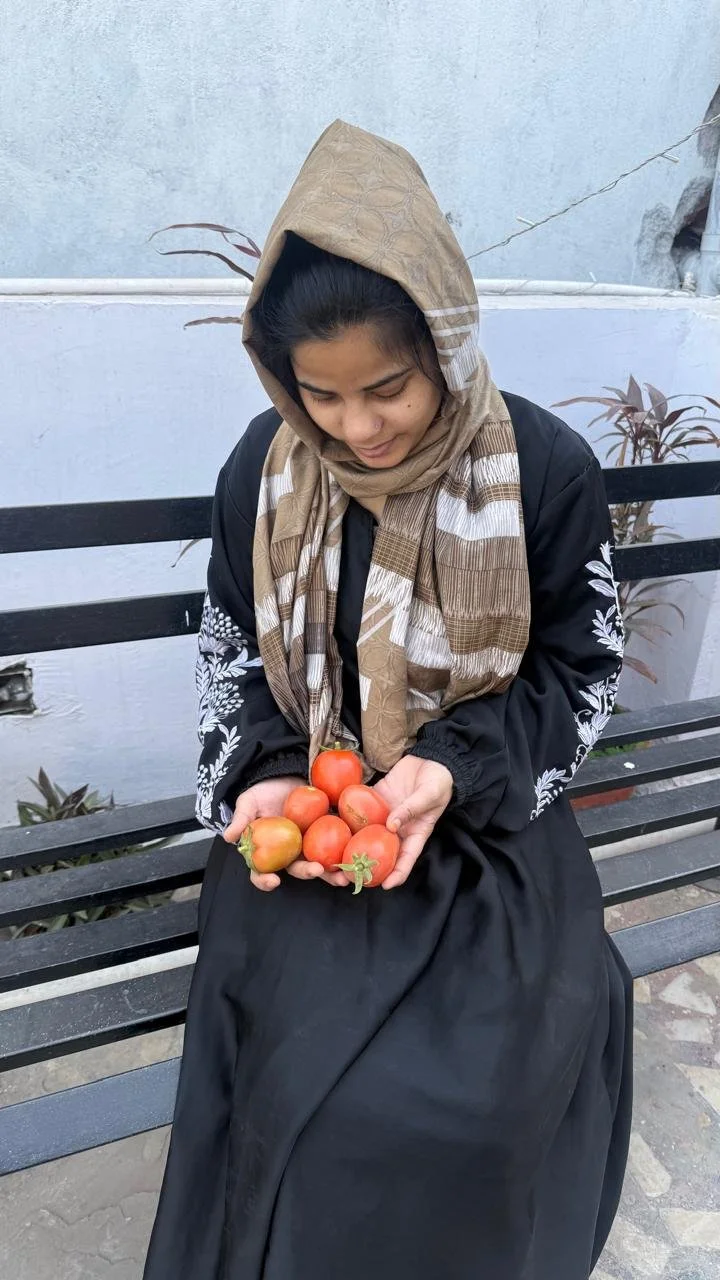
May we all live in abundance..always!
We are deeply grateful to Vidya Shivadas and Foundation for Indian Contemporary Art for making this exchange with Dr. Natasha Narain possible.