Khayali Pulao
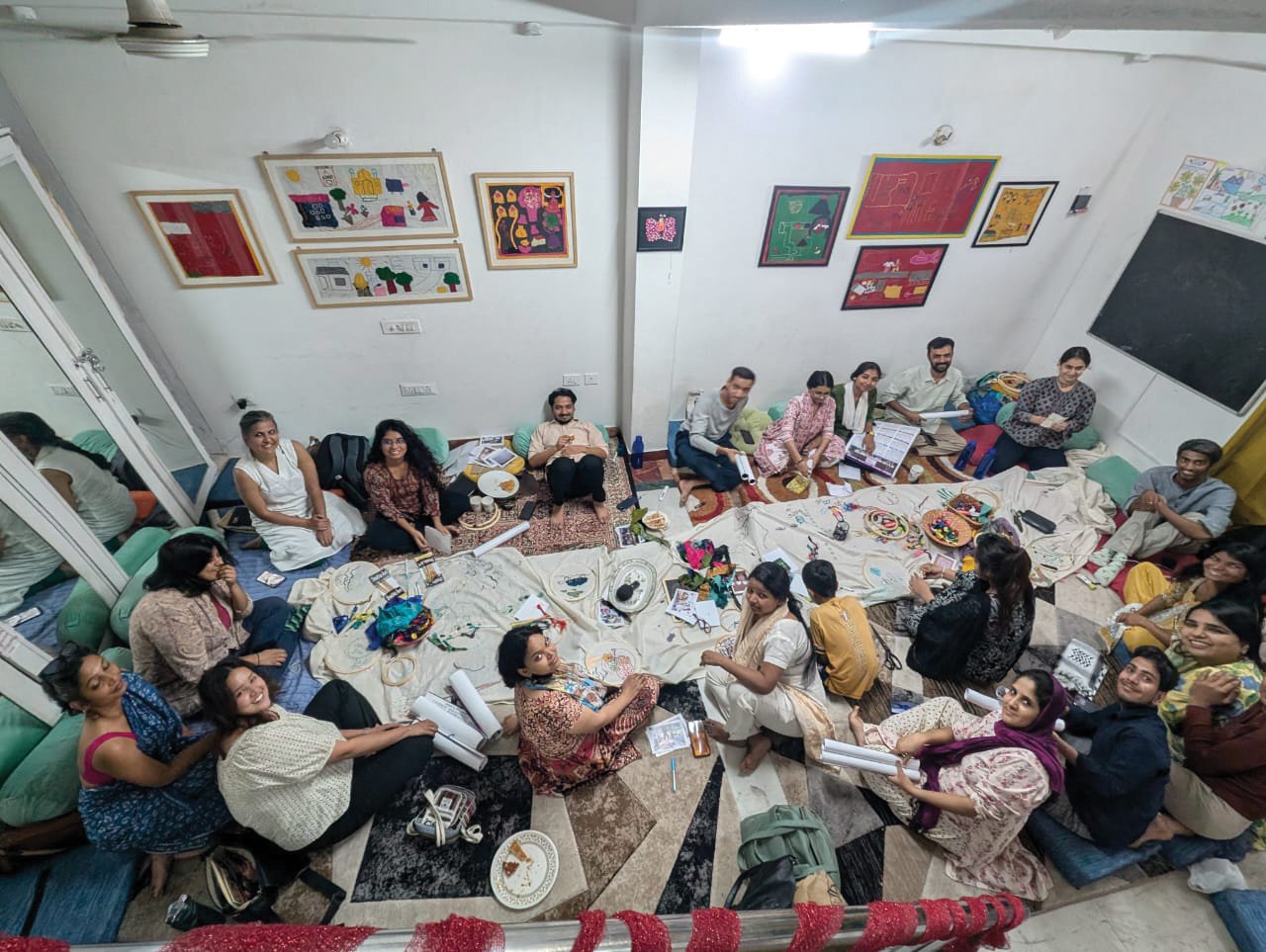
~ Khayali Pulav ~ a first draft gathering in collaboration with Rafooghar, Artreach India and Yellow Streets, was a month-long celebration of communing, creating, supporting, and learning about community-based practices that use artistic mediums to connect with marginalised sections of society.
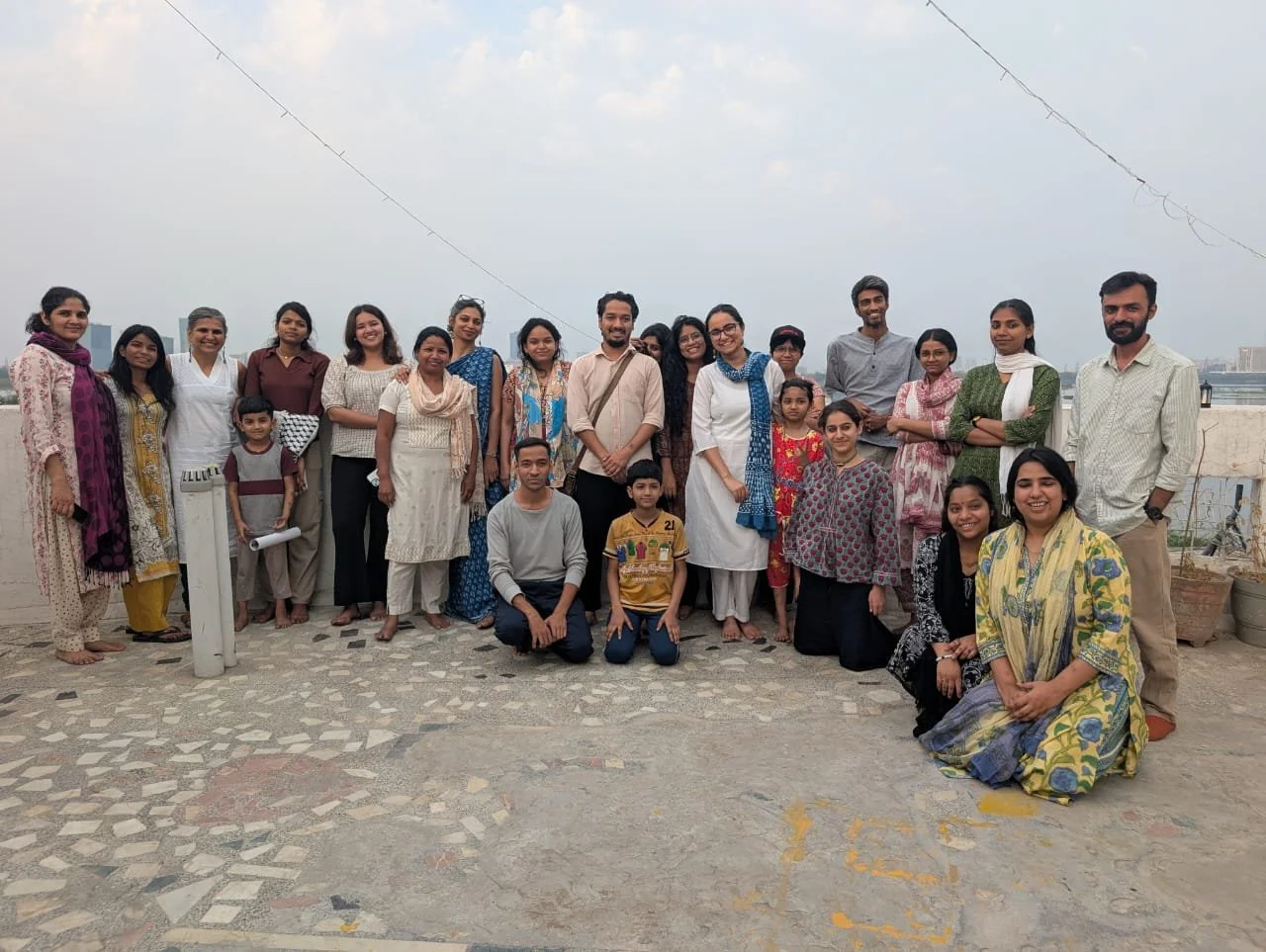
On 12 April, 26 community-based practitioners from 12 organisations/practices came together at Yellow Streets centre in Delhi for a day-long gathering. They were invited to bring an edible/non-edible 'ingredient'- of what nourishes and lies at the core of their engagement with communities. The gathering became a space for exchange of knowledge and learnings, to reflect on what sustains us, brings us together, recognises our differences, and builds spaces of solidarity through our work.
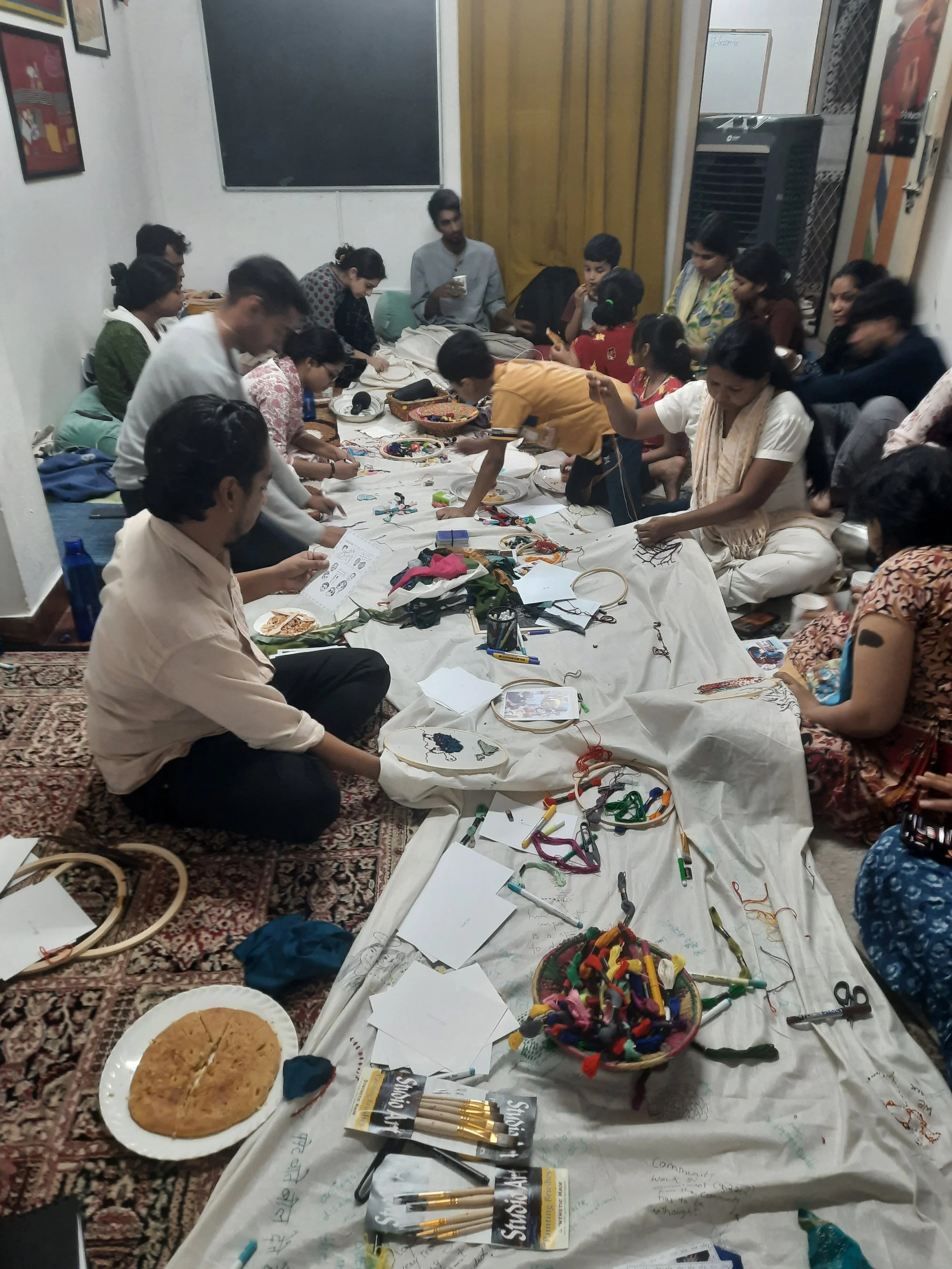
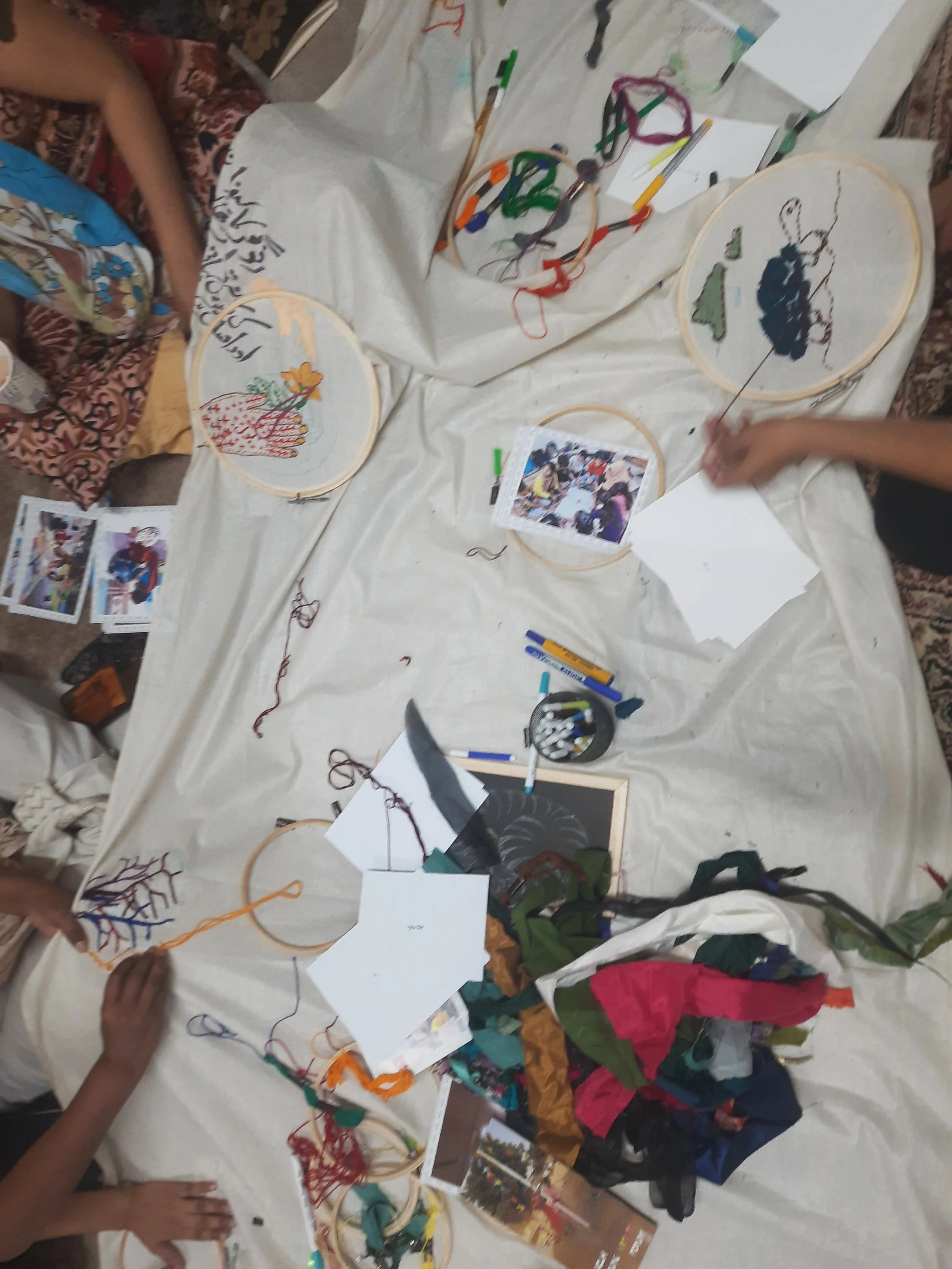
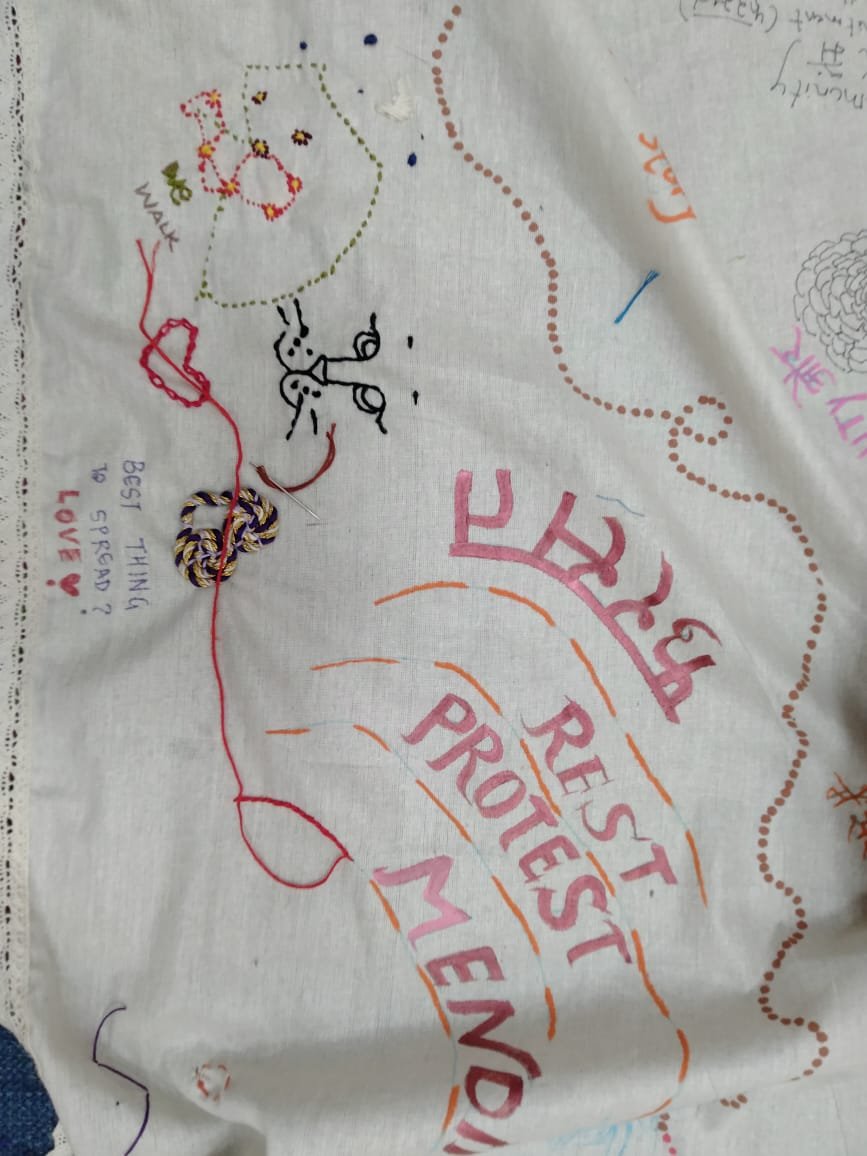
While having conversations and sharing our responses to the prompt, we embroidered, doodled, painted our daydreams/khayals over a ‘Dastarkhān’ ~ a long table-cloth used in families/communities across Central Asia and South Asia as a traditional dining space for eating food. The dastarkhān served as a background to the conversations and khayals, just as it is used as a background to lay food and eat together; the conversations became the centre letting the residues fall onto the cloth.
The community practices involved working around gender, income inequality, identity, education, disability through creative/expressive modes thereby building accessible, equitable, sustainable and compassionate futures for marginalised groups in Delhi NCR.
Some common concerns involved — how to deal with conflicts in communities and to what level can a person intervene - what is the threshold of tiredness/exhaustion for a community practitioner/worker and how to navigate through it - in practices that try to create equal, safe and brave spaces for women and queer communities, how can rage, forgiveness and patience help, specially in gender education - what medium of expression works better with a particular community - how does having a centralised physical space as opposed to a distributed/mobile one affect the practice - what are the differences between working with consistent and ephemeral communities - how to reach out to other organisations at times of crisis or lack of enough resources/capacities by forging collaborations or resource pools - questions of sustainability and funding - and so forth. We spent an entire day talking, eating (khayali) pulav, passing cups of chai and Sheermal, embroidering, sketching, playing theatre games, laughing and learning from one another.
The Dastarkhān was opened up for public interaction during the Empowerment exhibition by @goetheinstitut_newdelhi & @sandboxcollective at Travancore Palace from 15 April – 2 May.
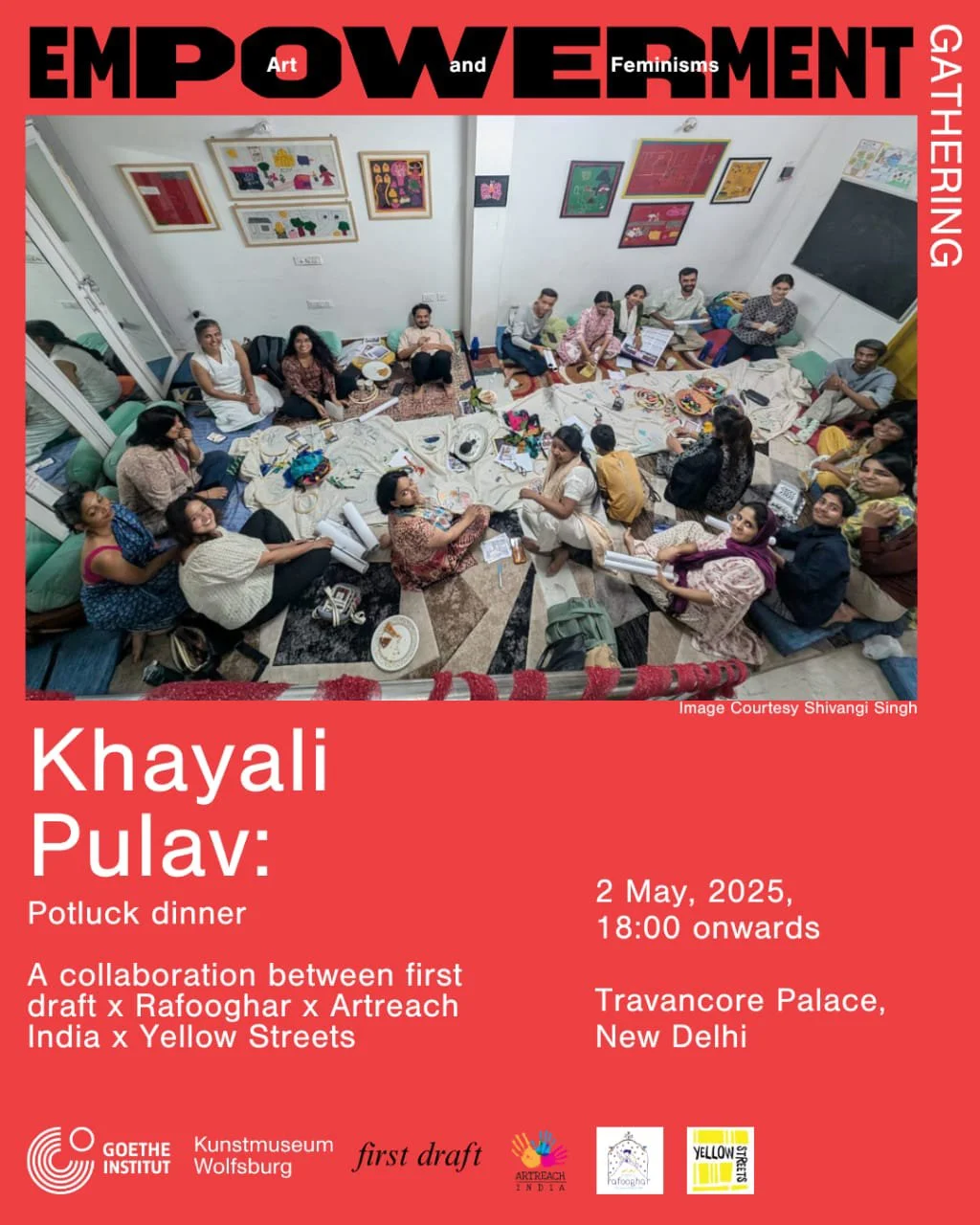
As an afterlife & culmination of the celebration, we gathered for a potluck dinner on 2 May where the Dastarkhān served it's original purpose~ a space for feasting together.
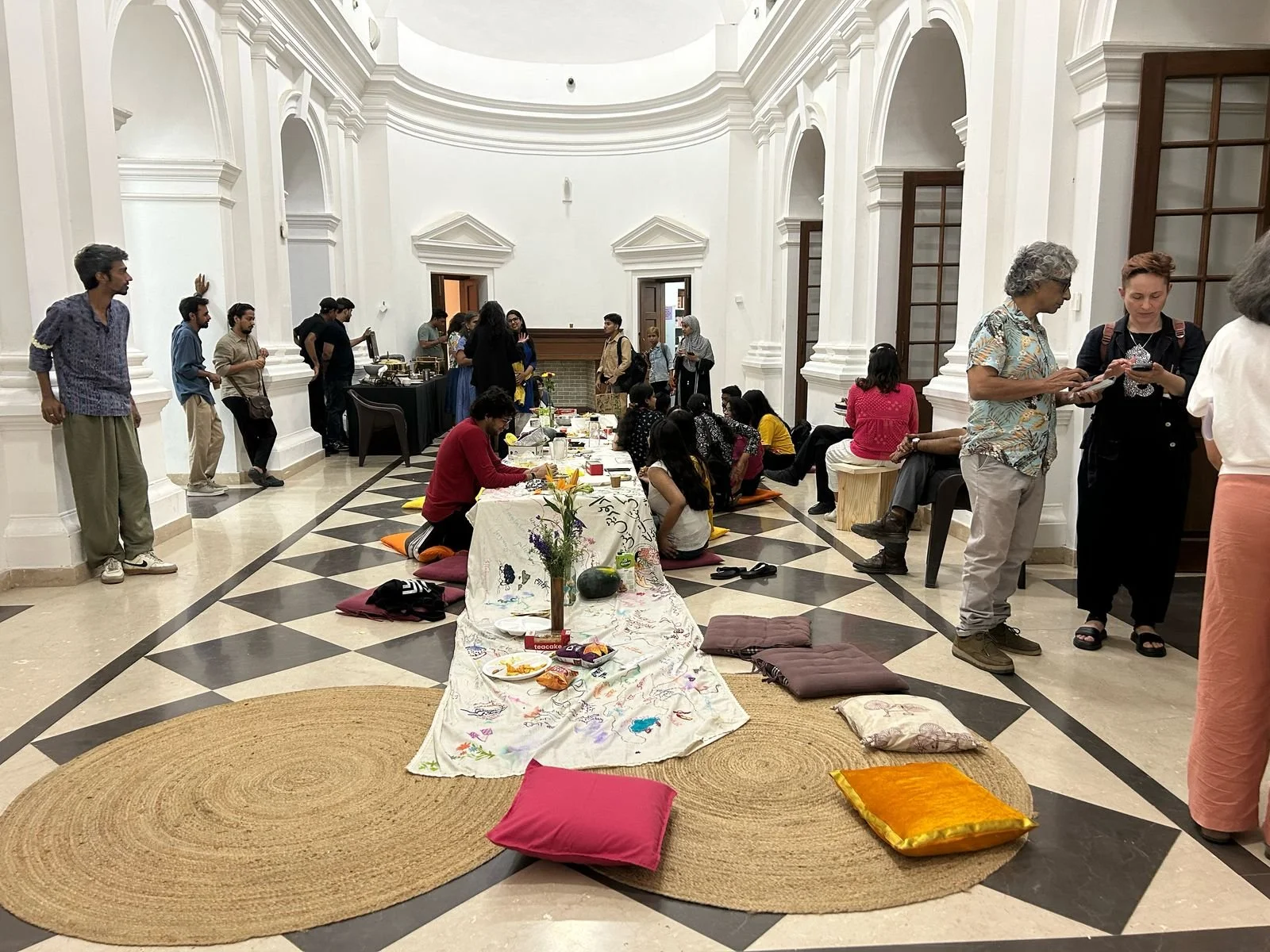
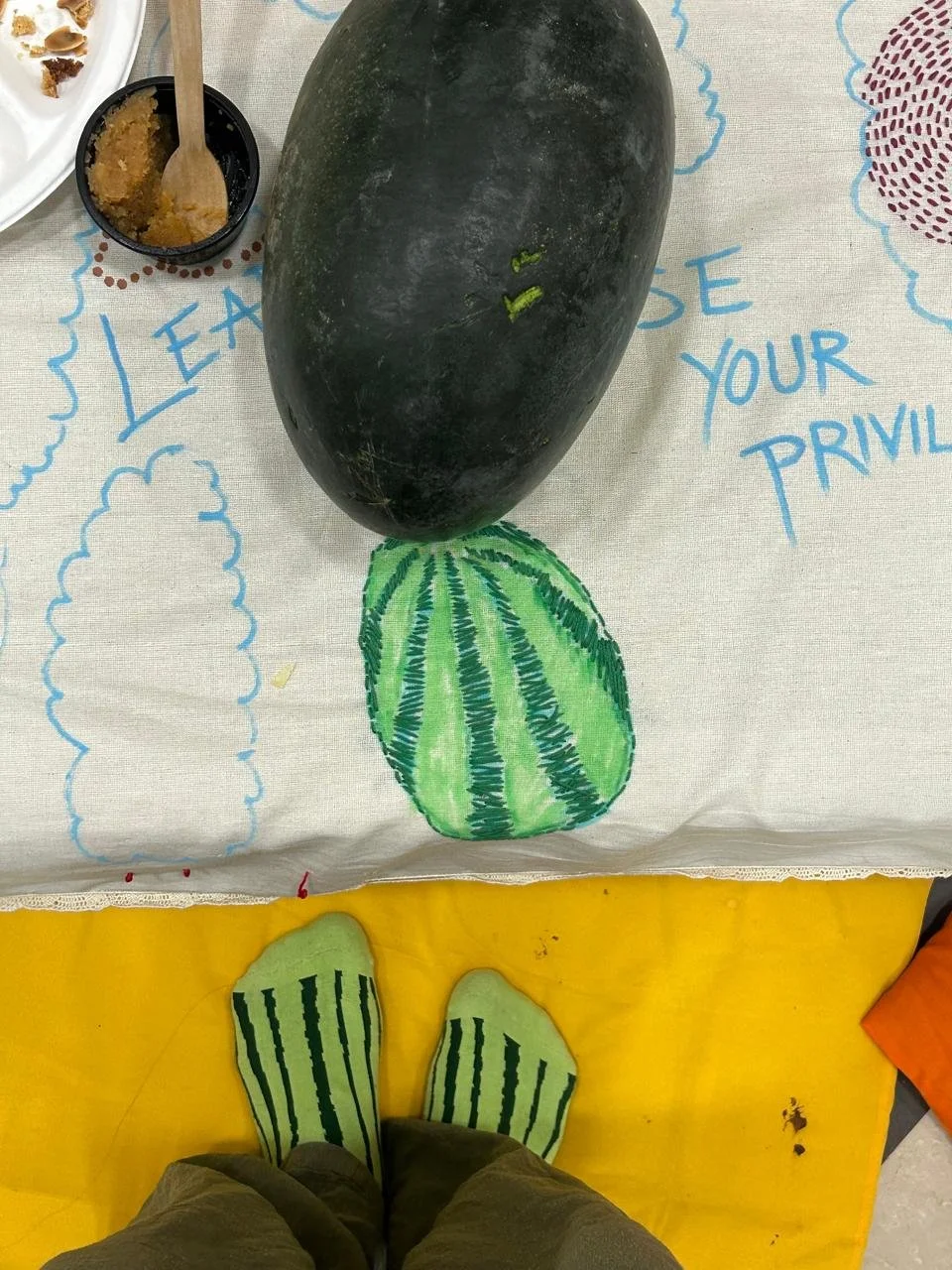
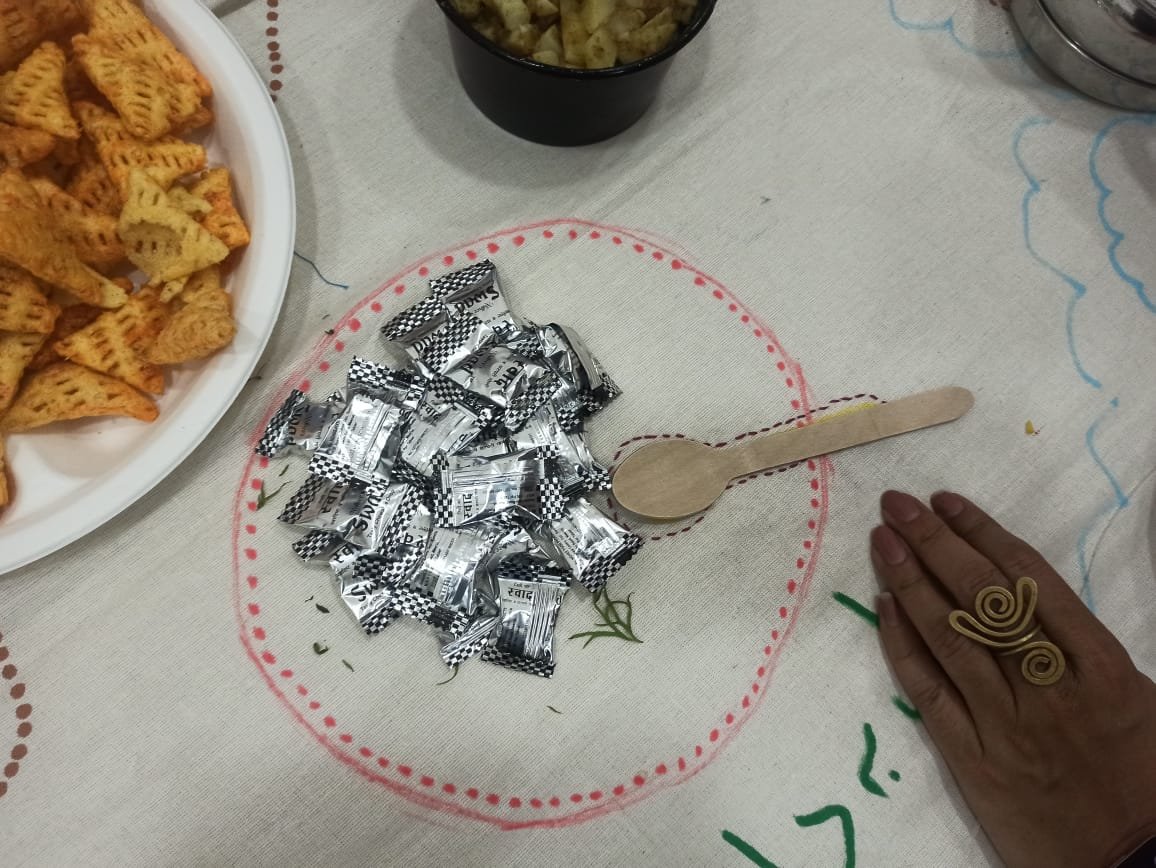
It was a beautiful convergence of people from different class, caste, religion, gender, age, geographies, taking over the central hallway of the exhibition at a royal heritage building in Central Delhi. From murmura bhel, homemade aloochat, khichdi, Shaheen Bagh ki Biryani to Theobroma brownies, cookies, mangoes to Swad goli, watermelon, kachodi, rajma-chawal, suji ka halwa to little hearts, aami ki mahni, Jamia k rusk toast, dodhha burfi.. The exciting variety of food brought by everyone symbolises the vast imagination we have for the communities of the future!