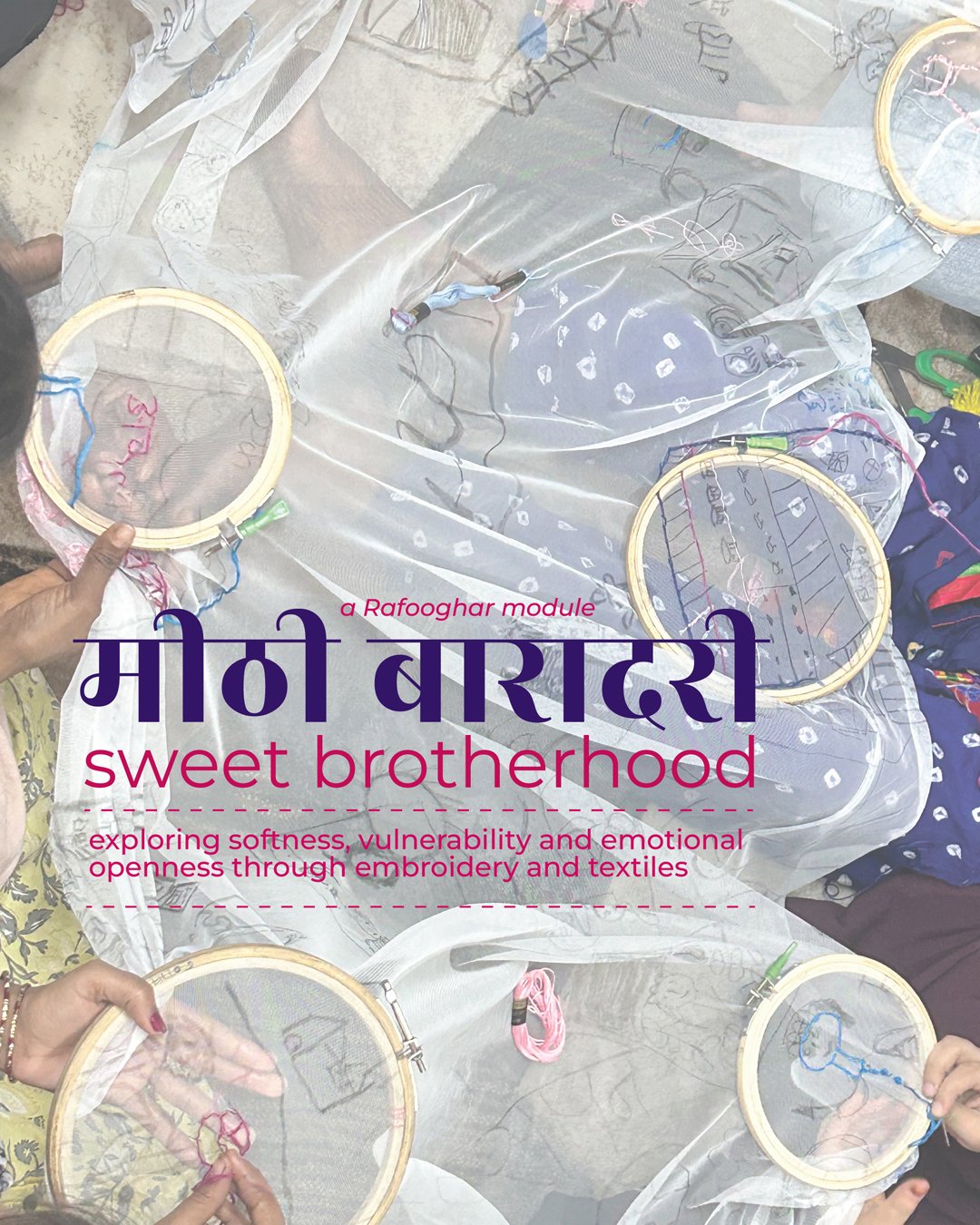
Meethi Baradari/ Sweet Brotherhood
Background of Meethi Baradari
We believe that we are all a sum total of our exposures and experiences, and that the more people we meet and learn from, the more we grow and the more empathetic we become. And that’s why we bring a diverse pool of artists, art educators and practitioners to Rafooghar.
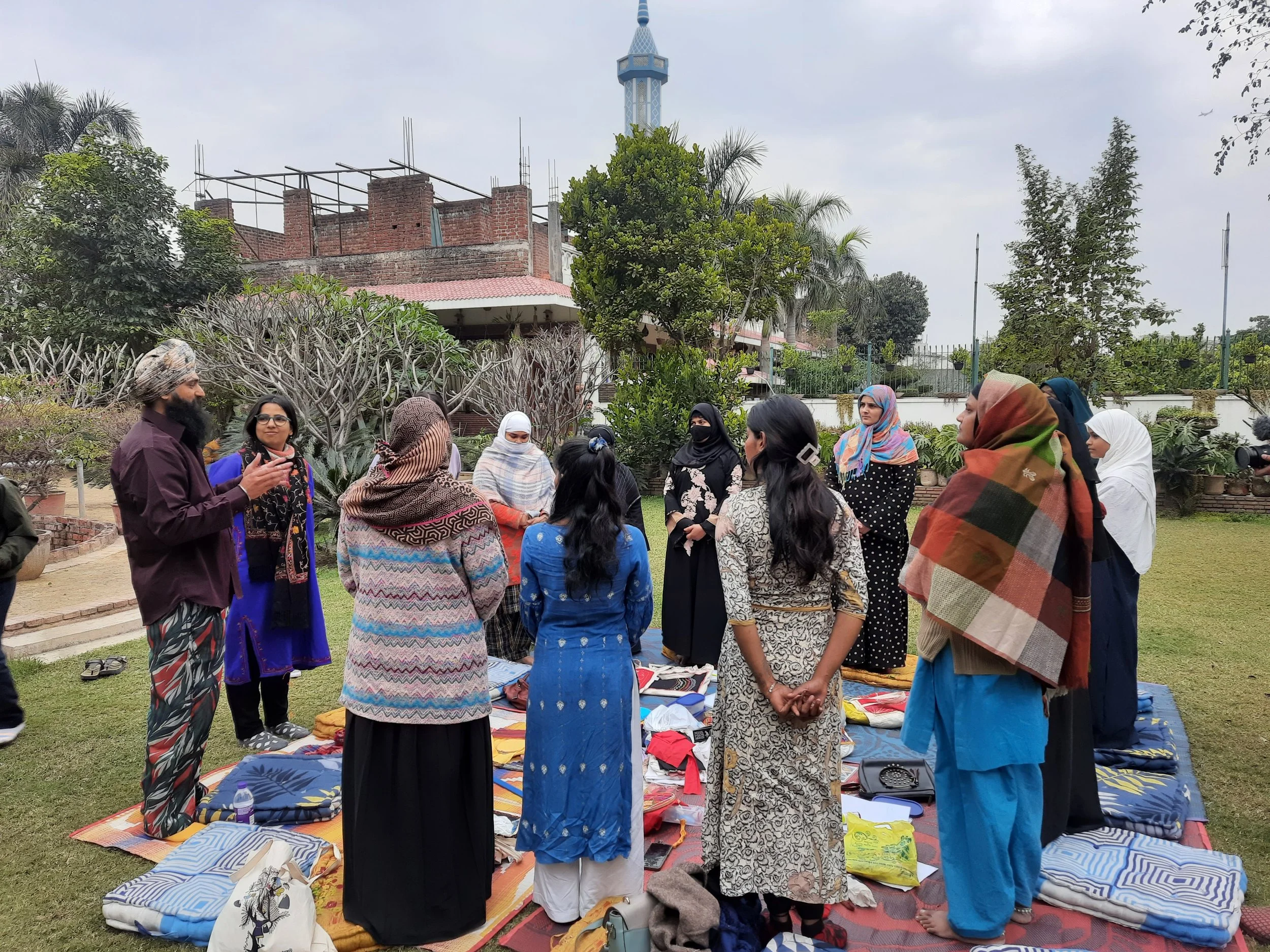
Meeting Gurjeet, a male artist working with textiles and embroidery, left many participants deeply inspired. For Hariom, a young participant at Rafooghar and the only male-identifying member who loves to stitch, Gurjeet’s presence felt especially affirming. In Gurjeet’s story, Hariom saw reflections of his own struggles. A few weeks after Gurjeet’s session, Hariom shared, how at school and in other social settings, he is frequently mocked and called "meetha ladka" – a colloquial term used to insinuate homosexuality or queerness, often in a derogatory manner.
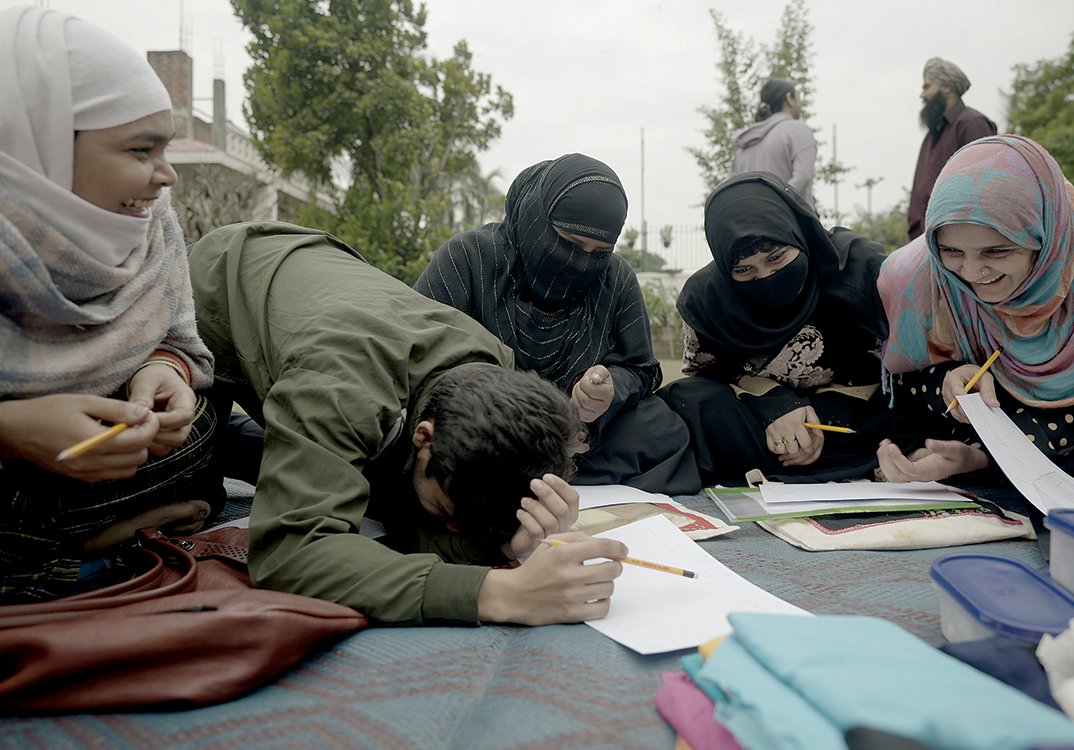
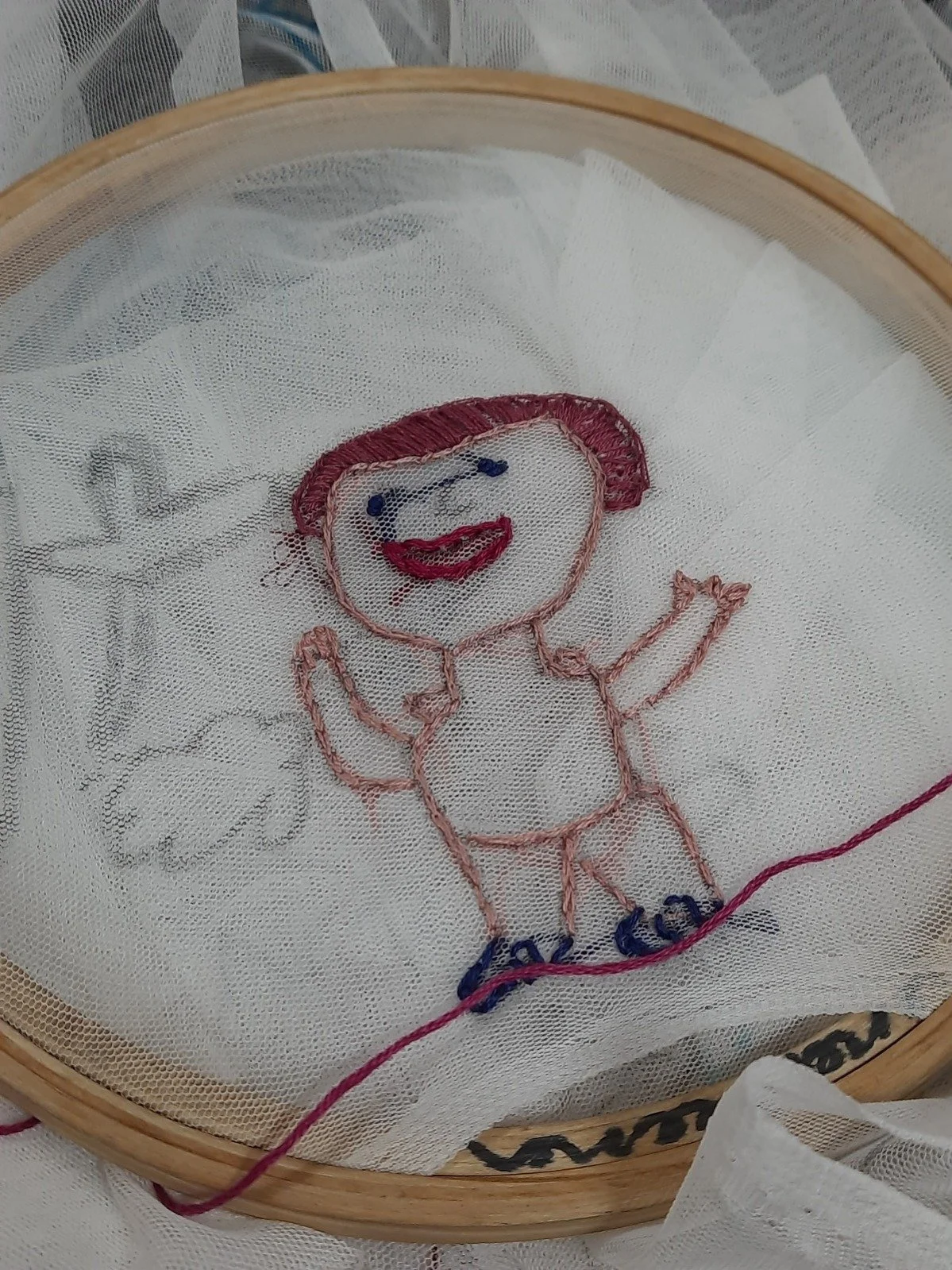
Hariom spoke about the emotional toll of being labeled and ridiculed for simply being who he is. His words were filled with both pain and curiosity as he asked us a series of questions.
"Main meetha kyon hoon?" (Why am I considered 'meetha'?)
"Agar main meetha hoon to kya yeh buri baat hai?" (If I am 'meetha,' is that a bad thing?)
"Mujhe gali dena ya sunna accha nahin lagta hai kya isliye main meetha hoon?" (Am I 'meetha' because I don't like to give or hear abuses?)
"Mujhe silai kadhai ghar ke kaam karna, mummy ki kitchen main madad karna acha lagta hai, kya isliye main meetha hoon?" (Am I 'meetha' because I like stitching, doing household work and helping my mother in the kitchen?)
"Sab meethe kue nain hain?" (Why aren't others 'meetha' like me?)
His story of being bullied for being soft and sensitive reflects the societal pressures many boys face to conform to rigid definitions of masculinity, leaving no room for gentleness, vulnerability, or care.
Inspired by Hariom’s story and courage, and moved by his meethapan we decided to celebrate his softness. We collaborated with artist and facilitator Achal Dodia to to mentor Hariom, and to design and co-lead a module on gender and masculinities for our community.
Achal (30) is a queer, gender fluid artist. Like Hariom, Achal has faced challenges due to his non- conformity to traditional gender roles. Achal channels his experiences into his work, using art to question and redefine gender norms. Despite the ongoing difficulties in finding spaces where he can fully be himself, Achal has found comfort and acceptance among the women in his life, including his mother and close female friends. These relationships have provided him with the strength to embrace his identity and continue his exploration of gender through his art.
Achal and Hariom both come from different backgrounds yet share similar struggles transcending age and experience. Incidentally, both met each other at Rafooghar during a stitching ‘baithak’ (gathering). Stitching is a common thread that not only binds them but gives them an outlet to express themselves.
Rafooghar, with its aim to create a nurturing and inclusive space for self-expression and dialogue, plays a small but crucial role in both Hariom's and Achal’s lives. Here, they find the freedom to explore their identity without judgment, surrounded by supportive women from the community. The space offers them not only a refuge from the outside world but also a platform to voice their experiences and challenge the status quo.
“इन्किलाब मुलायम भी होता है और मुलायम भी मज़बूत होता है.” - Hariom
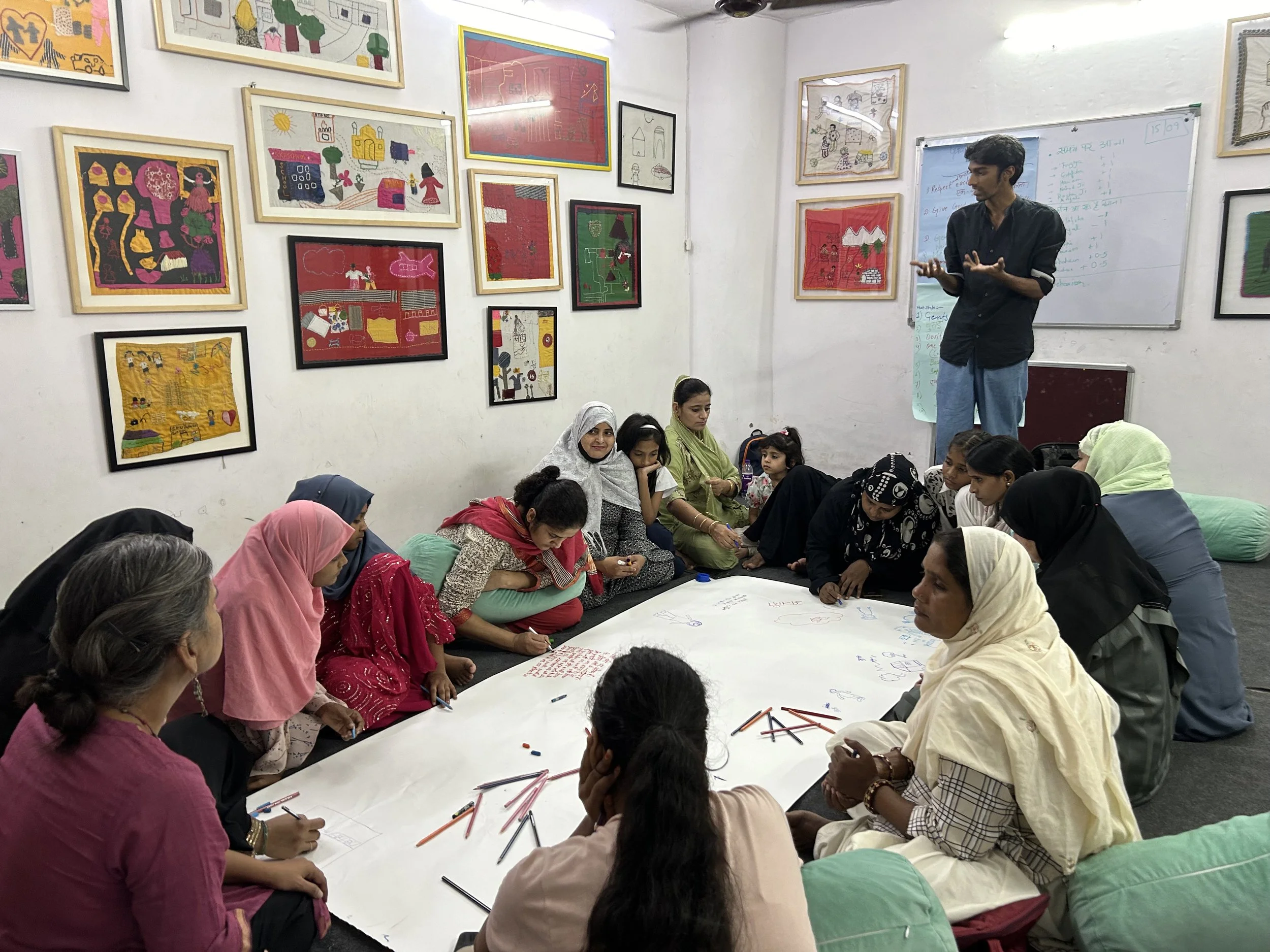
We have been engaging in a series of sessions with women, young girls and boys at Rafooghar under the Meethi Baradari project since September 2024. These sessions are centred around questions around gender, masculinities and softness.
Mulmul jaisa Mulayam Mard (Soft Masculinities)
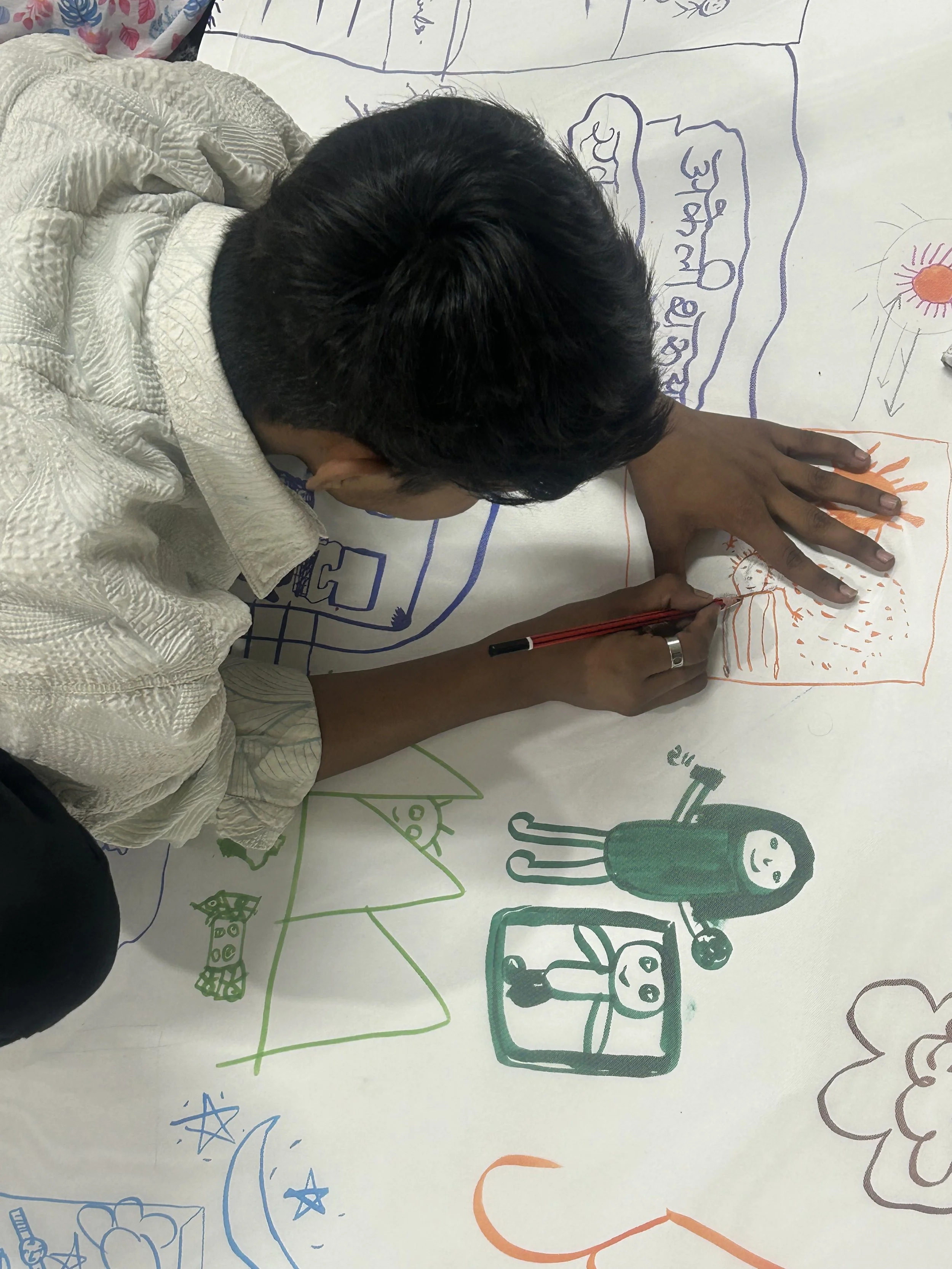
Many young boys from the community have been joining the women to stitch and exchange their ideas around gender roles and how these roles shape their identities and interactions, often limiting them from being vulnerable, or expressing their emotions freely. Masculinity is often equated with strength, dominance, or detachment but the boys are finding a safe space at Rafooghar to question these norms and are beginning to see care, gentleness, and vulnerability not as weaknesses, but as essential human qualities.
A participant shared, “Humare pati hum par gussa nikalte hain, aur hum apne bachon par. Peetne- pitane ka yeh silsila aise hi chalta rehta hai... kabhi khatam nahi hota.” (Our husbands take their anger out on us, and we take it out on kids. This cycle of violence becomes never ending). A generational cycle of anger, frustration, and violence can only end if we acknowledge it, address it and unlearn it collectively.
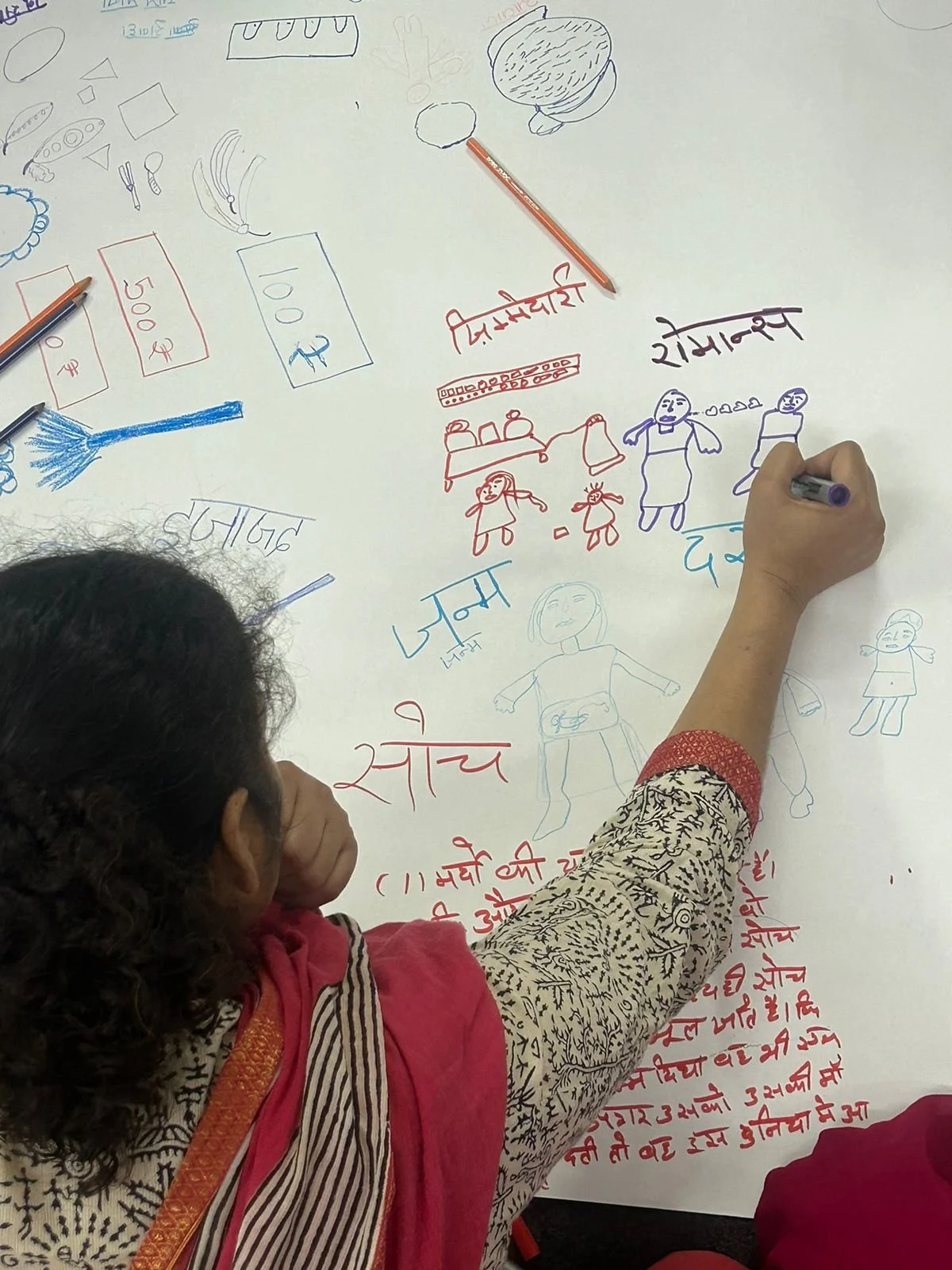
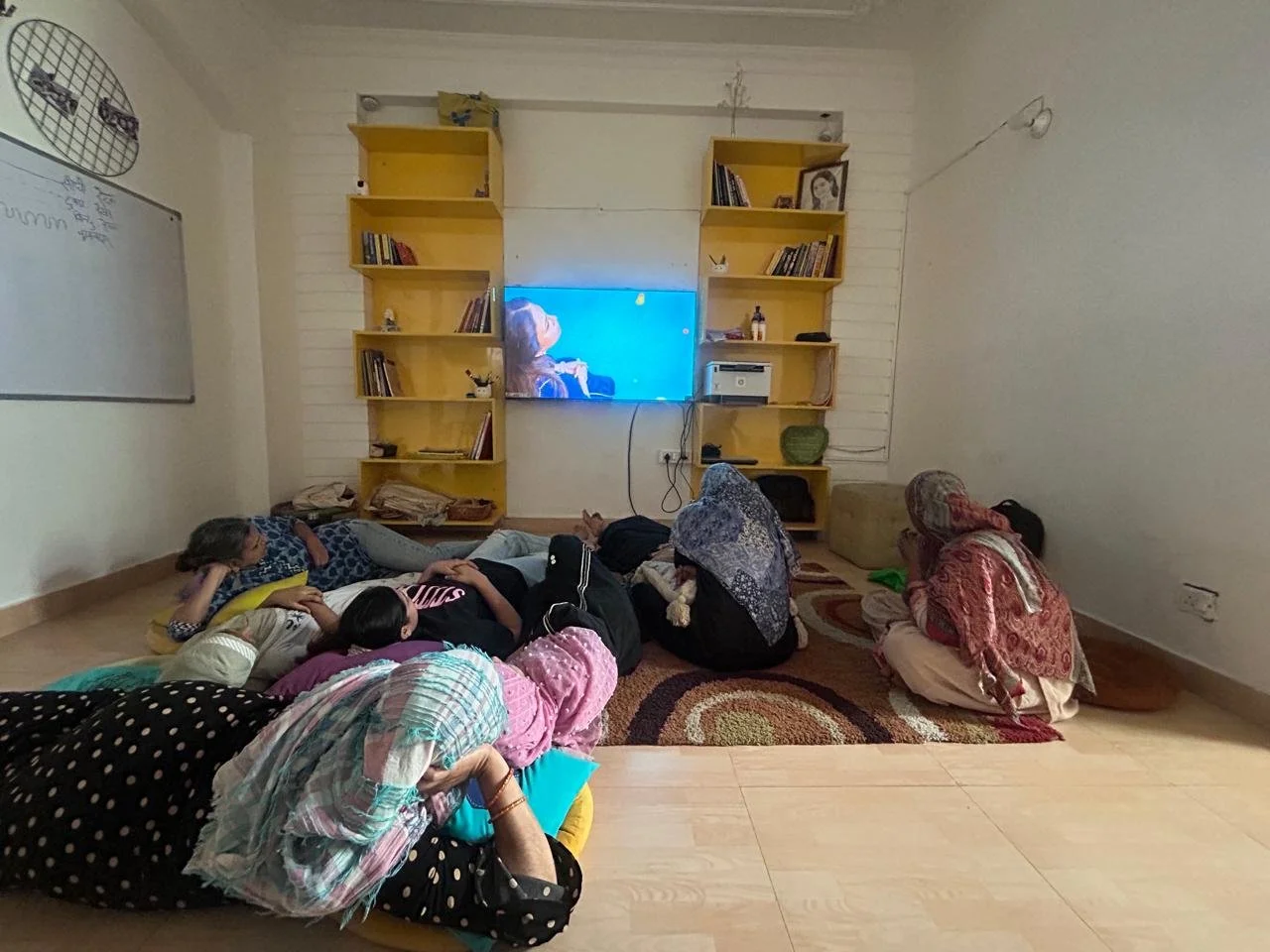
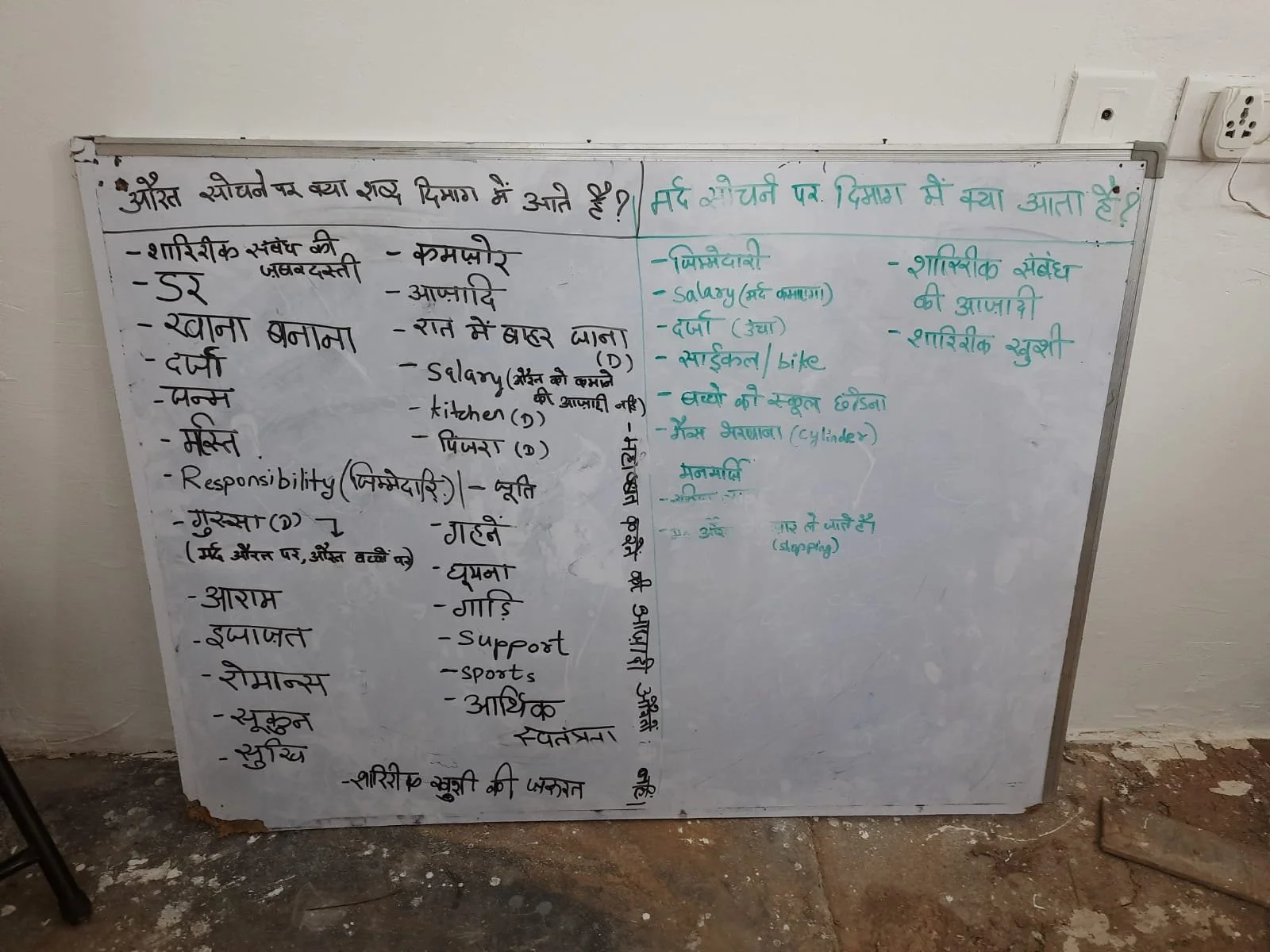
Gendered spaces
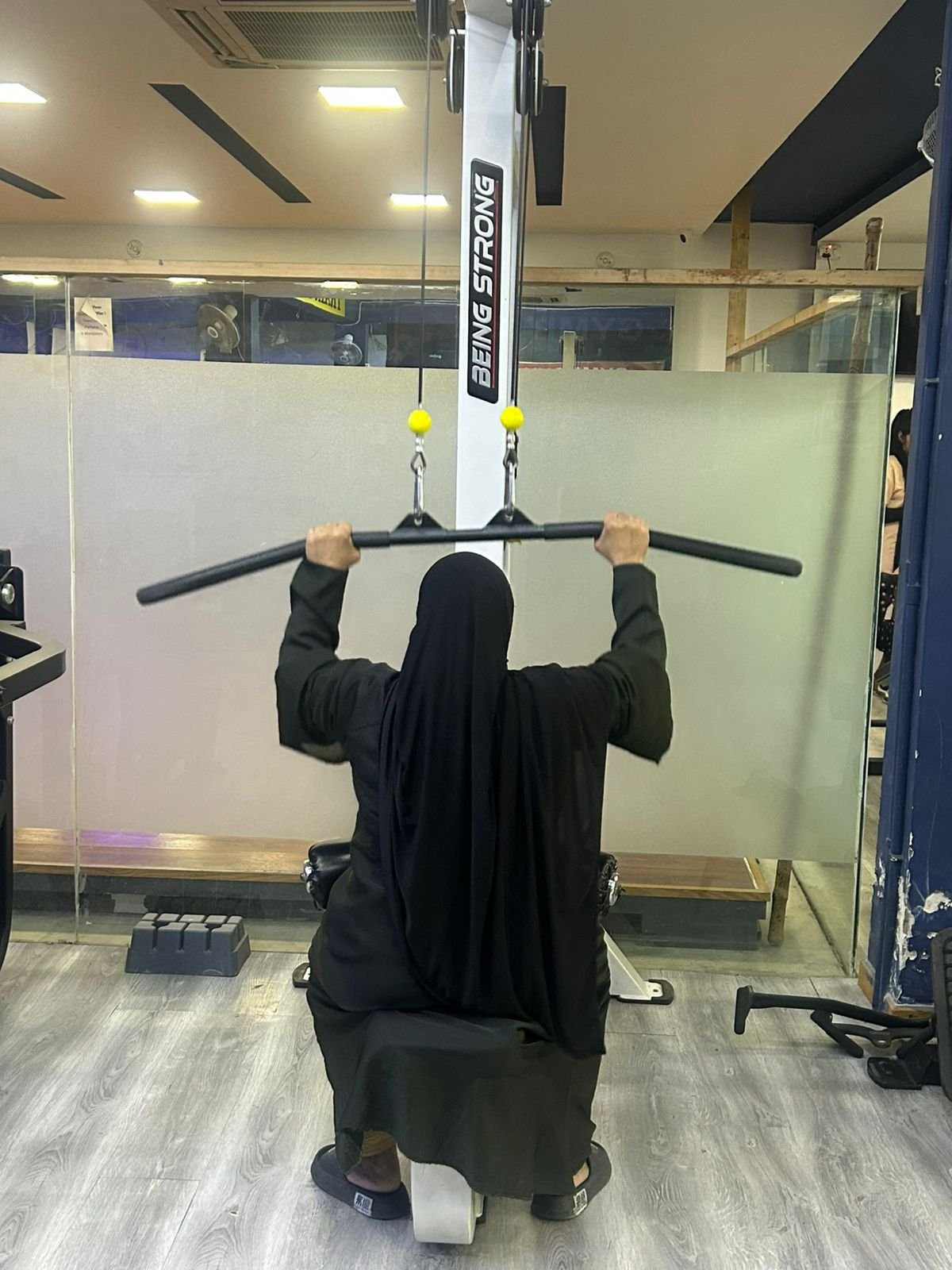
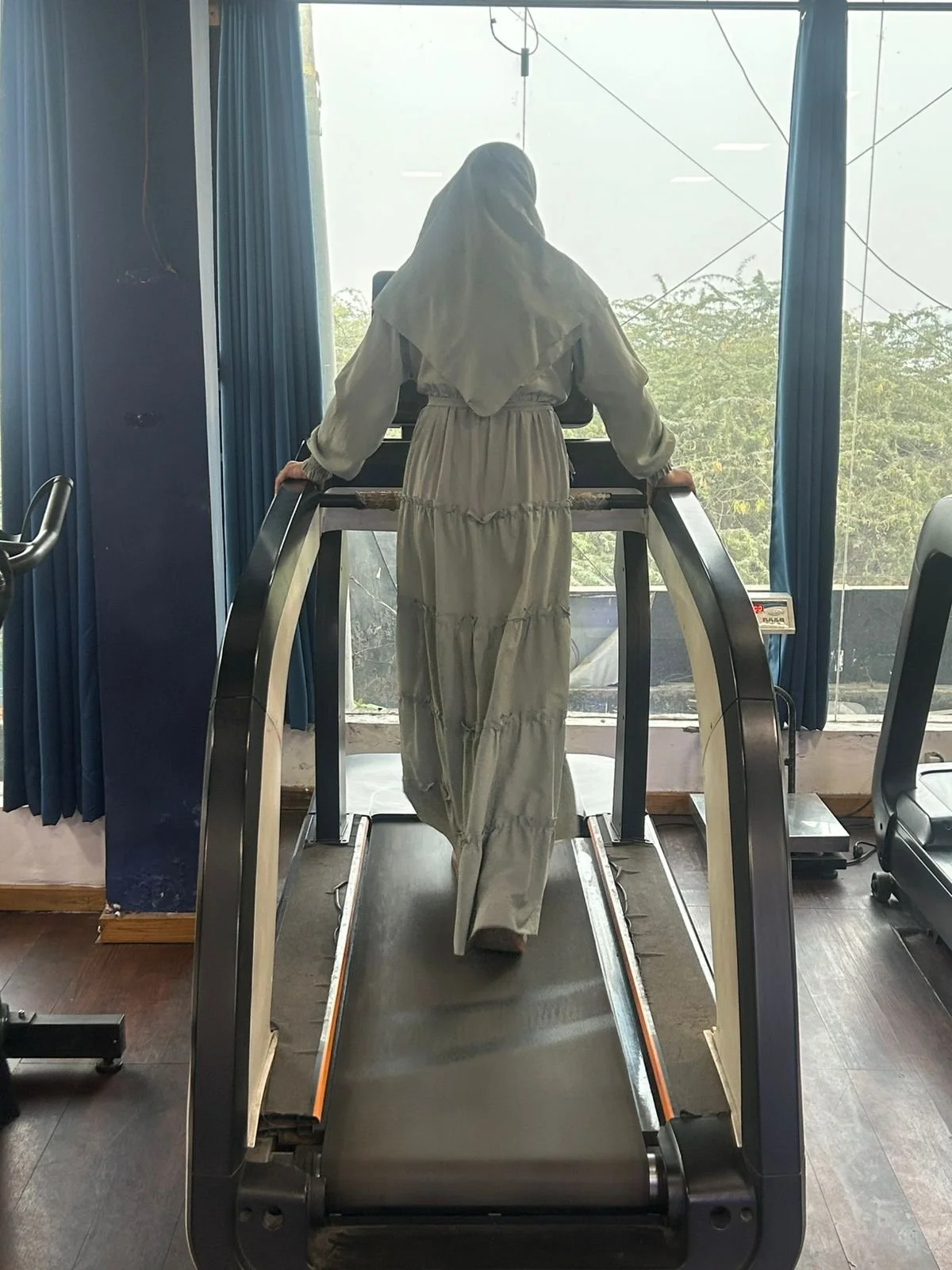
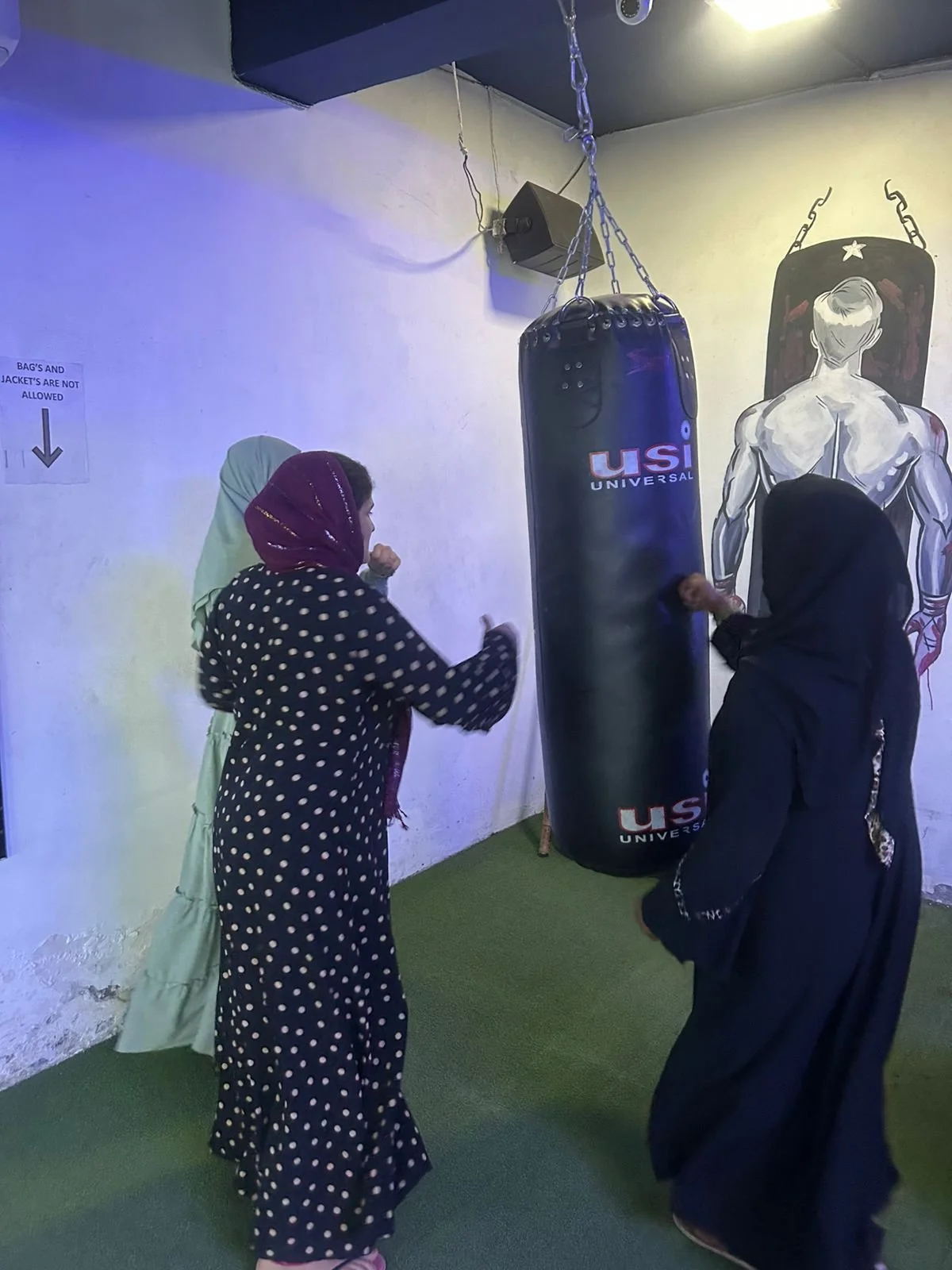
The idea of staying ‘fit’ often reinforces gendered ideals: men are encouraged to bulk up, while women are pushed toward weight loss instead of strength. Gyms, seen as male- dominated, can feel intimidating for women due to heavy equipment designed for men and biased social dynamics. To challenge this, we organized a gym session where women, initially uncomfortable, grew confident, bonding through laughter and camaraderie.
Ekal aurat (Single Woman)
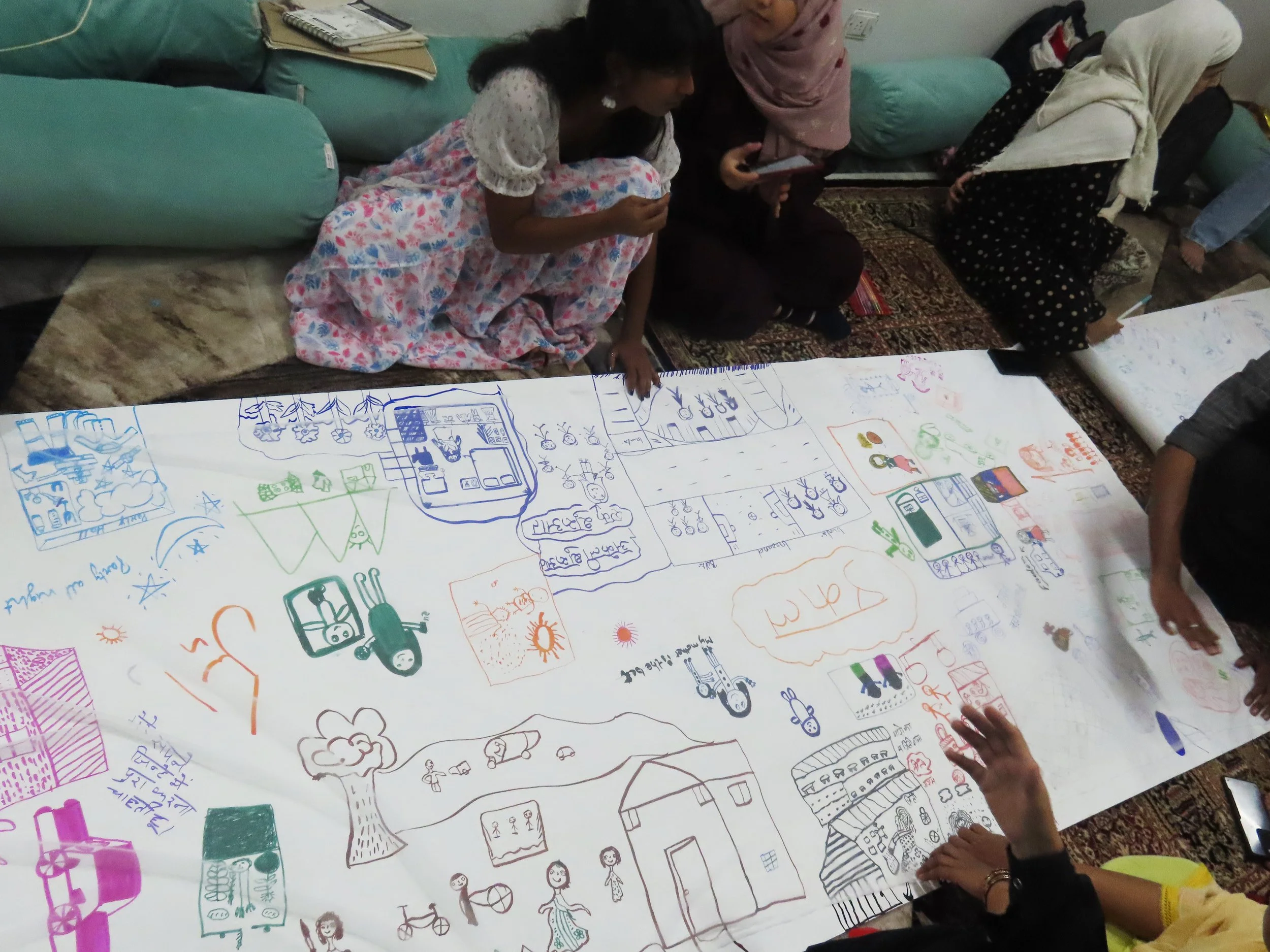
What does it mean to be a single woman? In a world that often defines women in relation to their families, partners, or roles within domestic spaces, singlehood is frequently viewed as an anomaly rather than a choice. In this session, participants were asked to imagine one thing they would want to do if they were single. The responses ranged from the quietly personal to the wildly rebellious. Some dreamed of learning how to drive while others imagined going on solo journeys, pursuing higher education, or dancing and partying all night long. They stitched their responses on a net fabric.
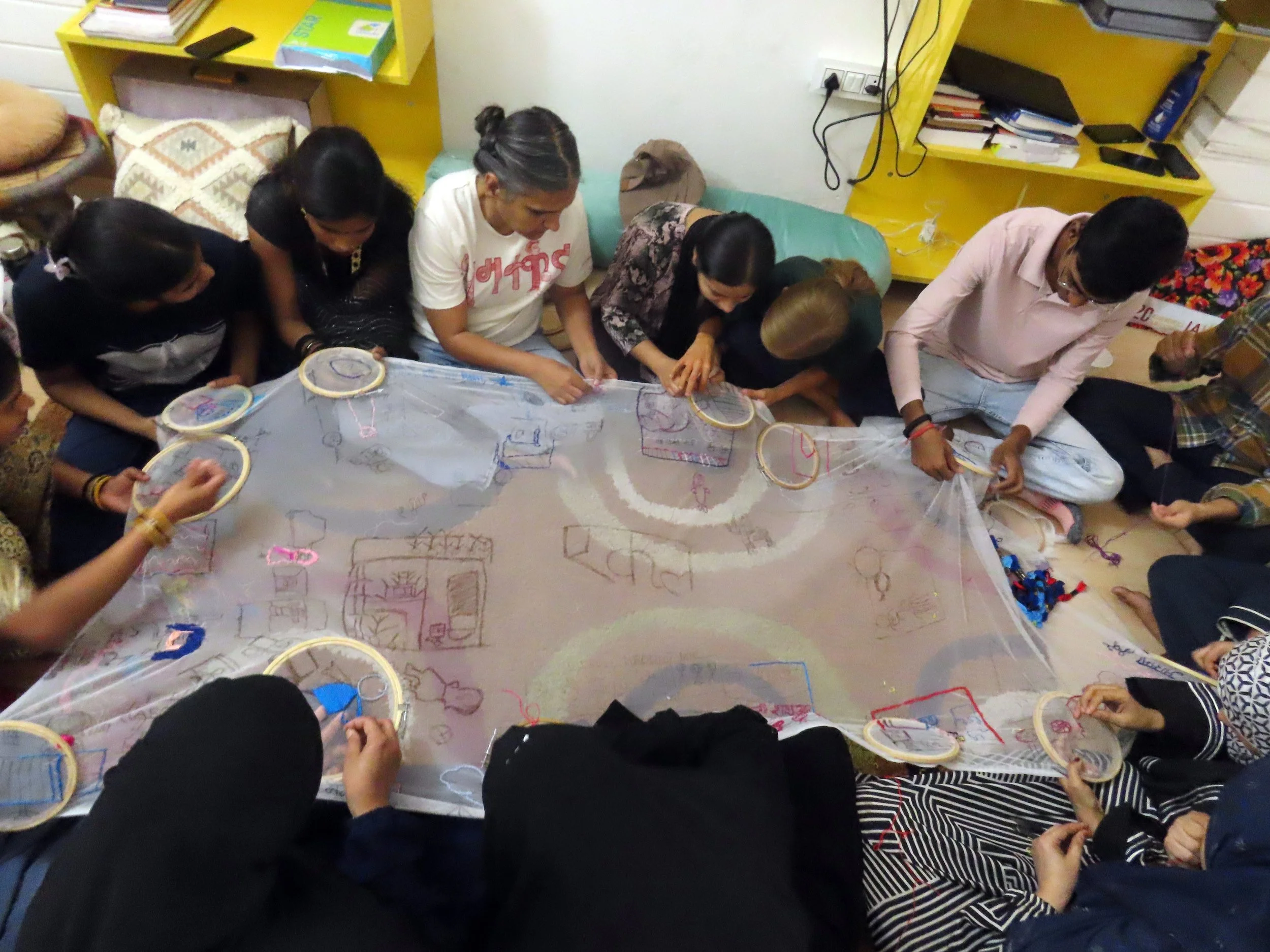
Meethi Baradari received the grant for Futures in Formation, a public art program initiated by @fica_india and @serendipityartsfoundation to start a a year-long community engagement with young boys and girls from Shaheen Bagh, Madanpur Khadar, Okhla phase 1, Jasola and create a shared, empathetic space, where boys and girls can listen to each other stories, reflect on their own identities, and challenge the rigid norms of masculinity by engaging with the mediums of embroidery and textiles- traditionally associated with women.
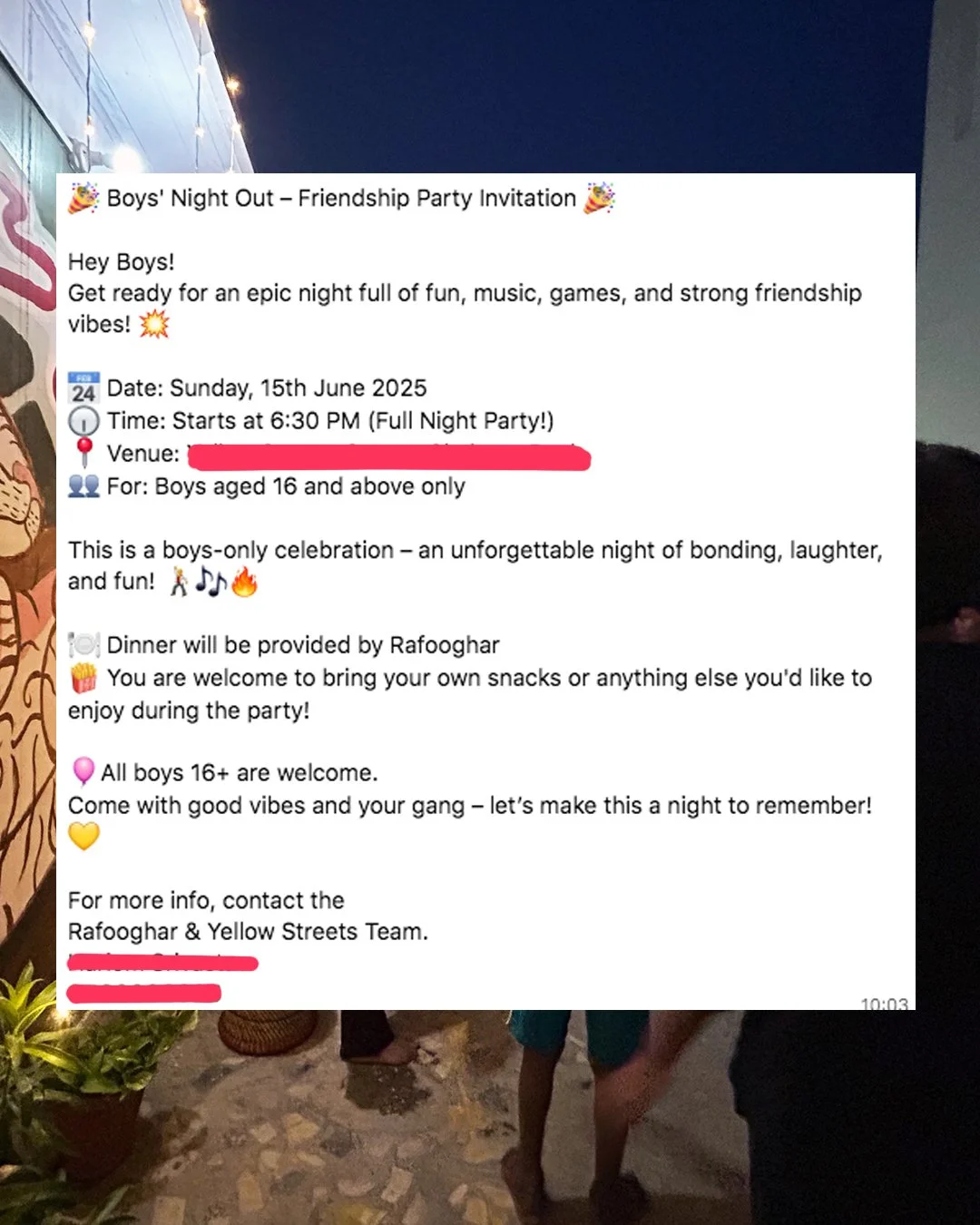
We opened the doors of Rafooghar to the young boys of our community with a party where boys and girls came, interacted with each other, shared their stories, played fun games facilitated by Achal and Hariom, enjoyed delicious homemade food lovingly prepared by Nahid ji, and danced their hearts out late into the night.
DOSTI YAARI: ALL NIGHT FUN!
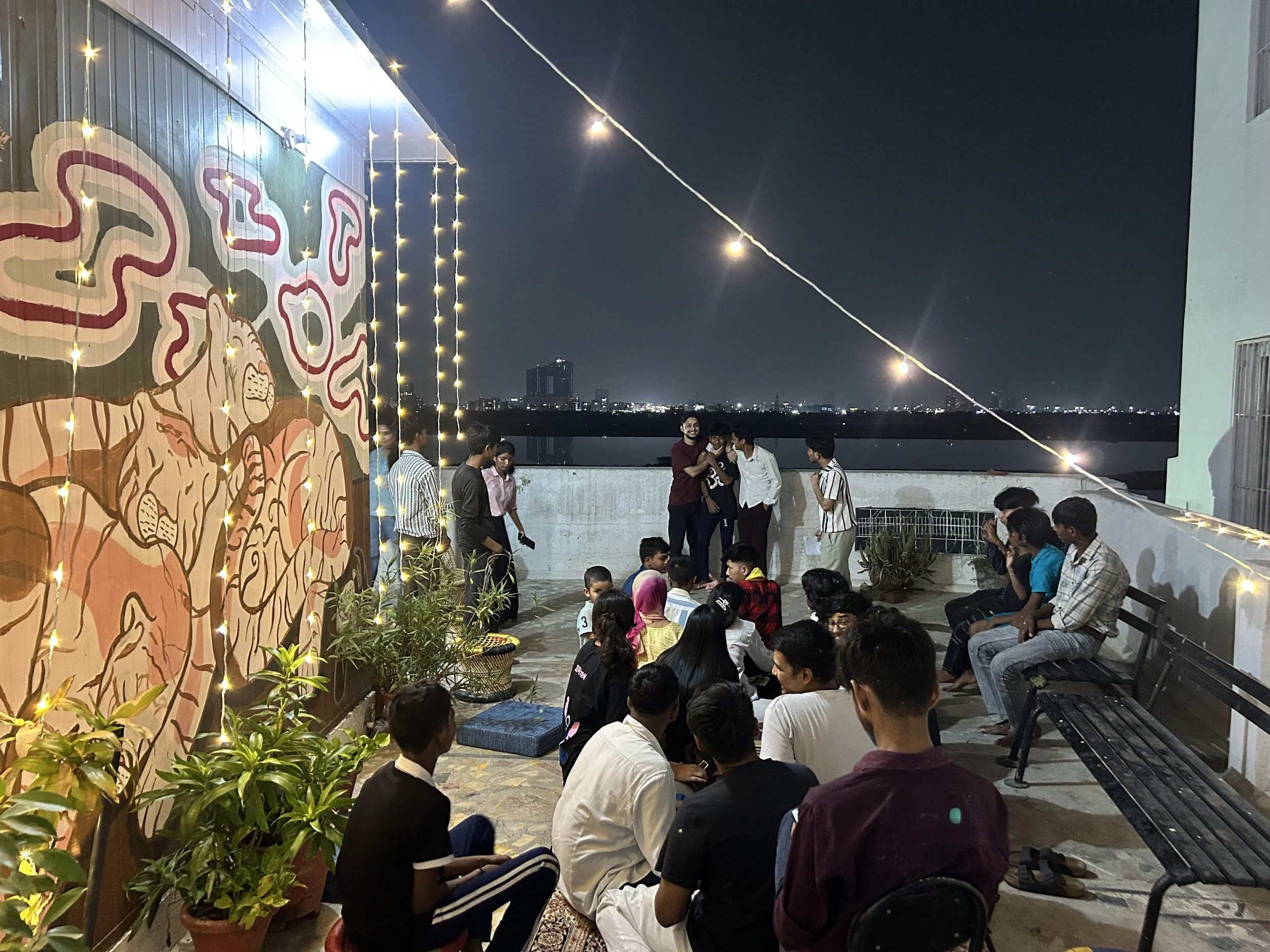
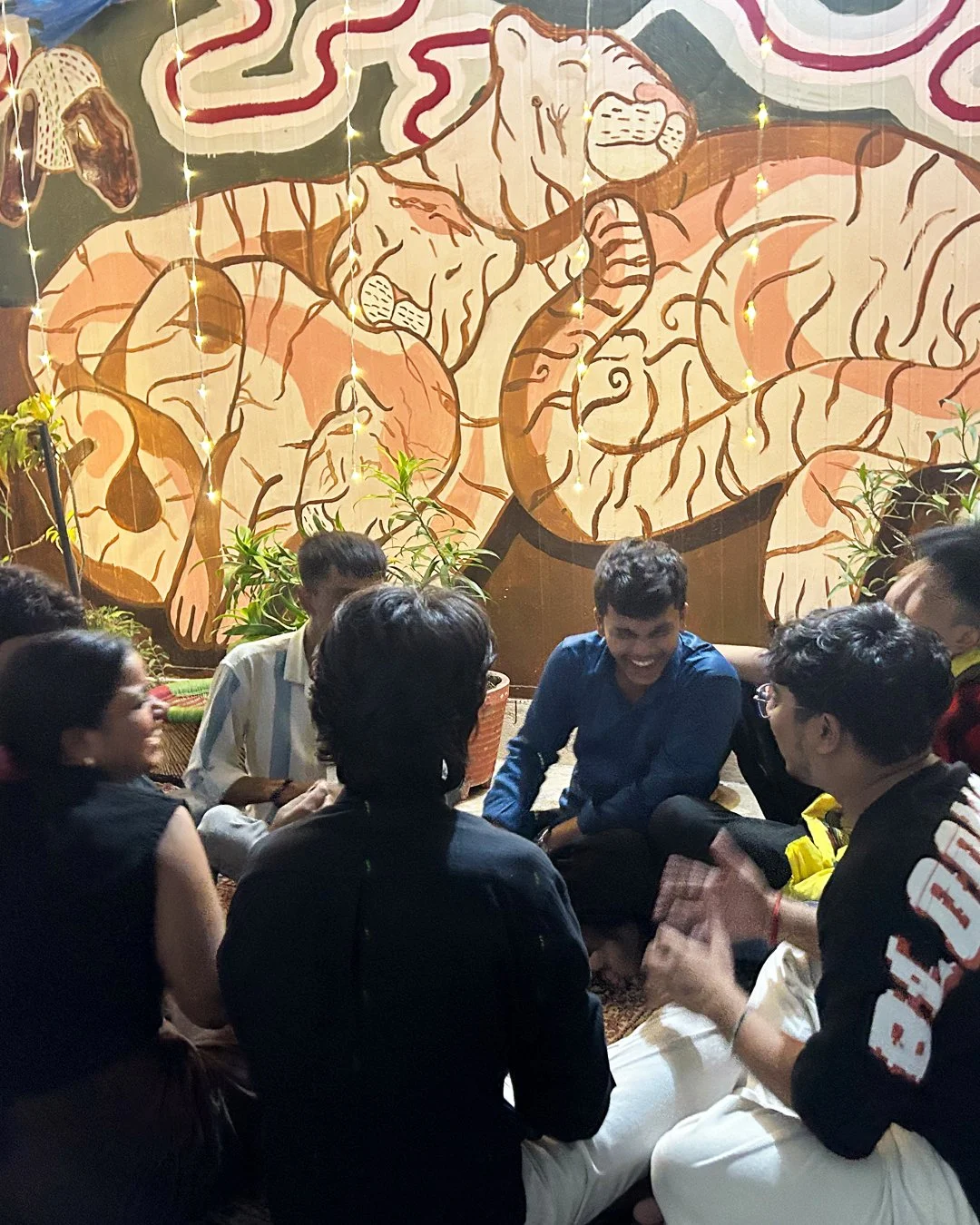
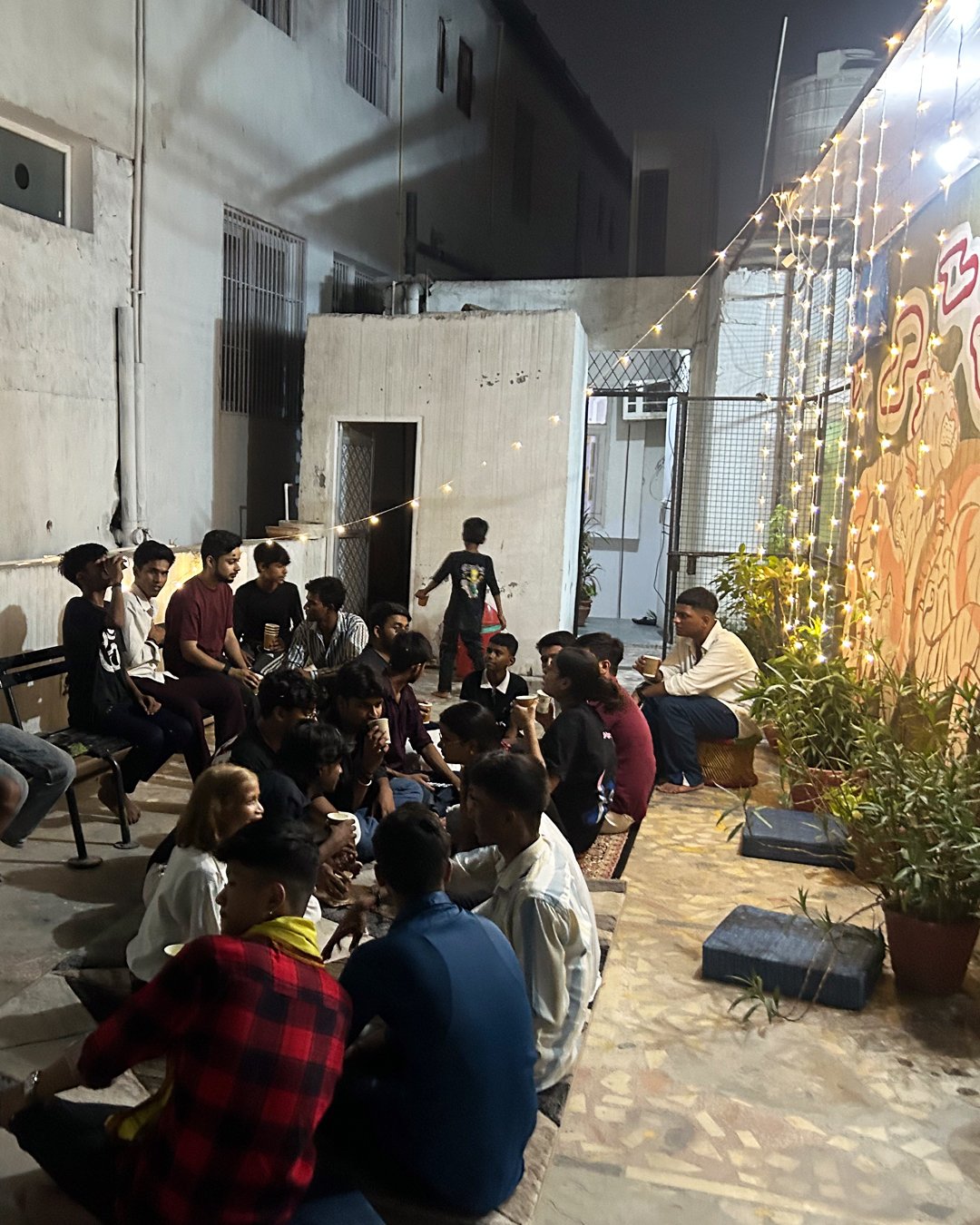
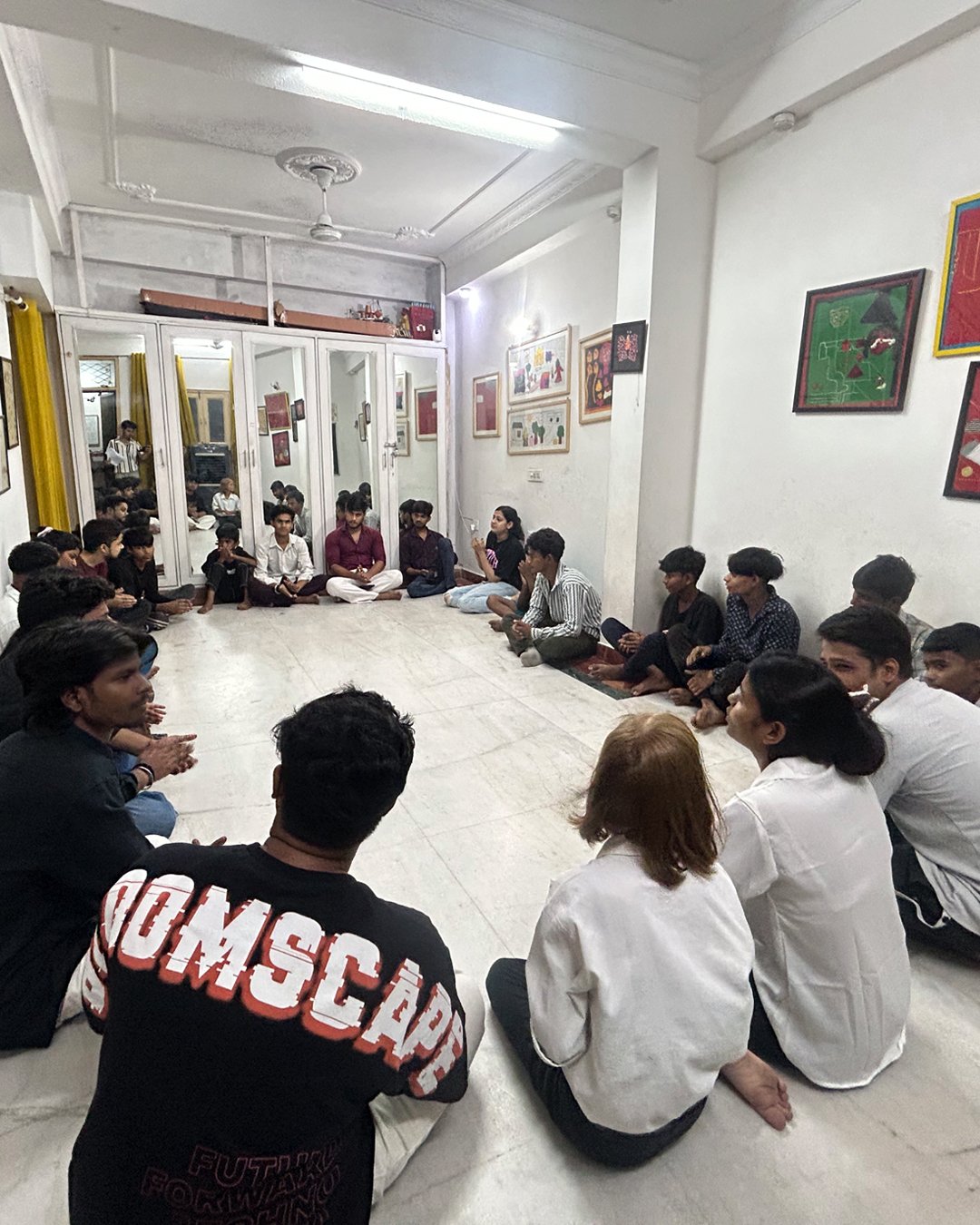
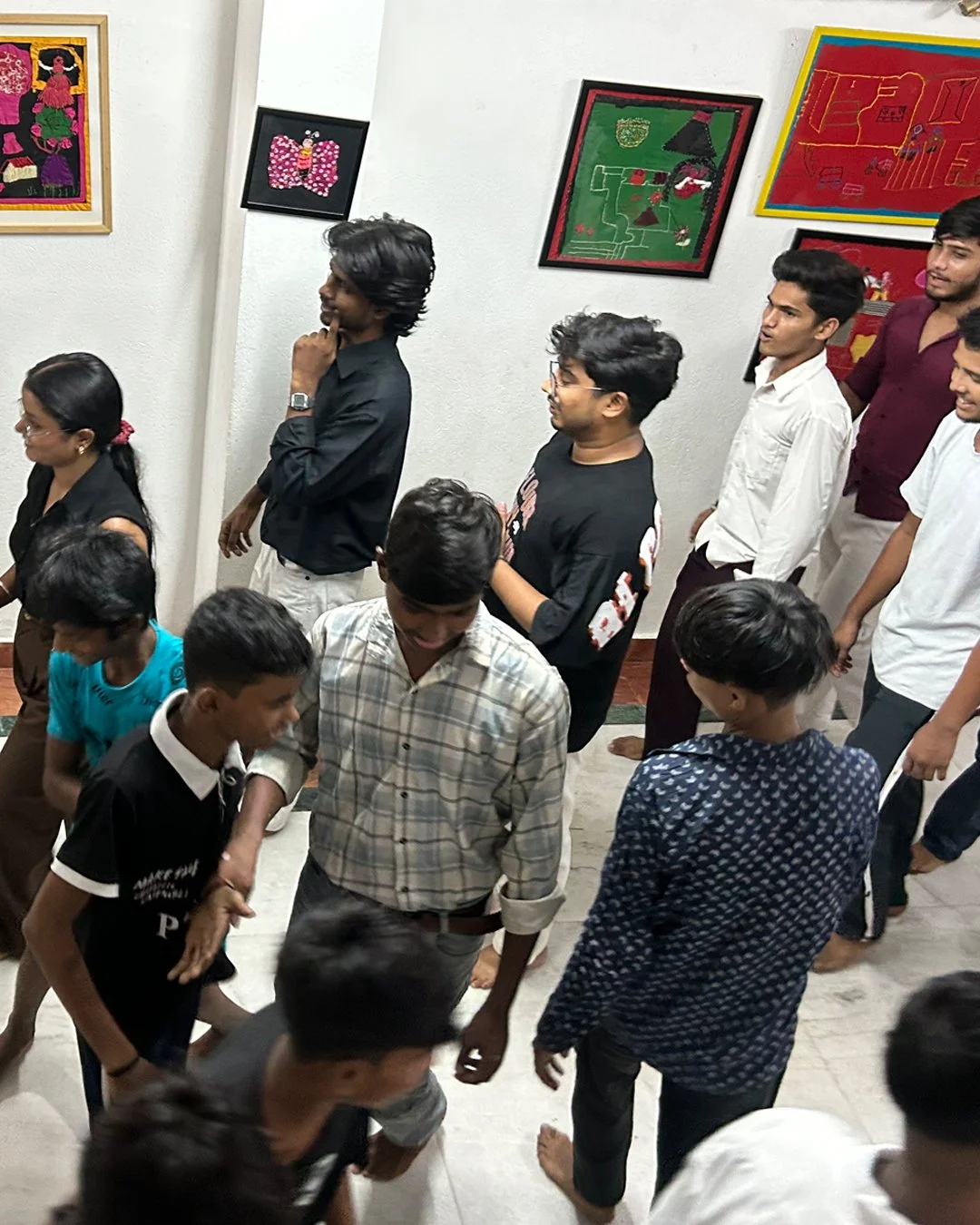
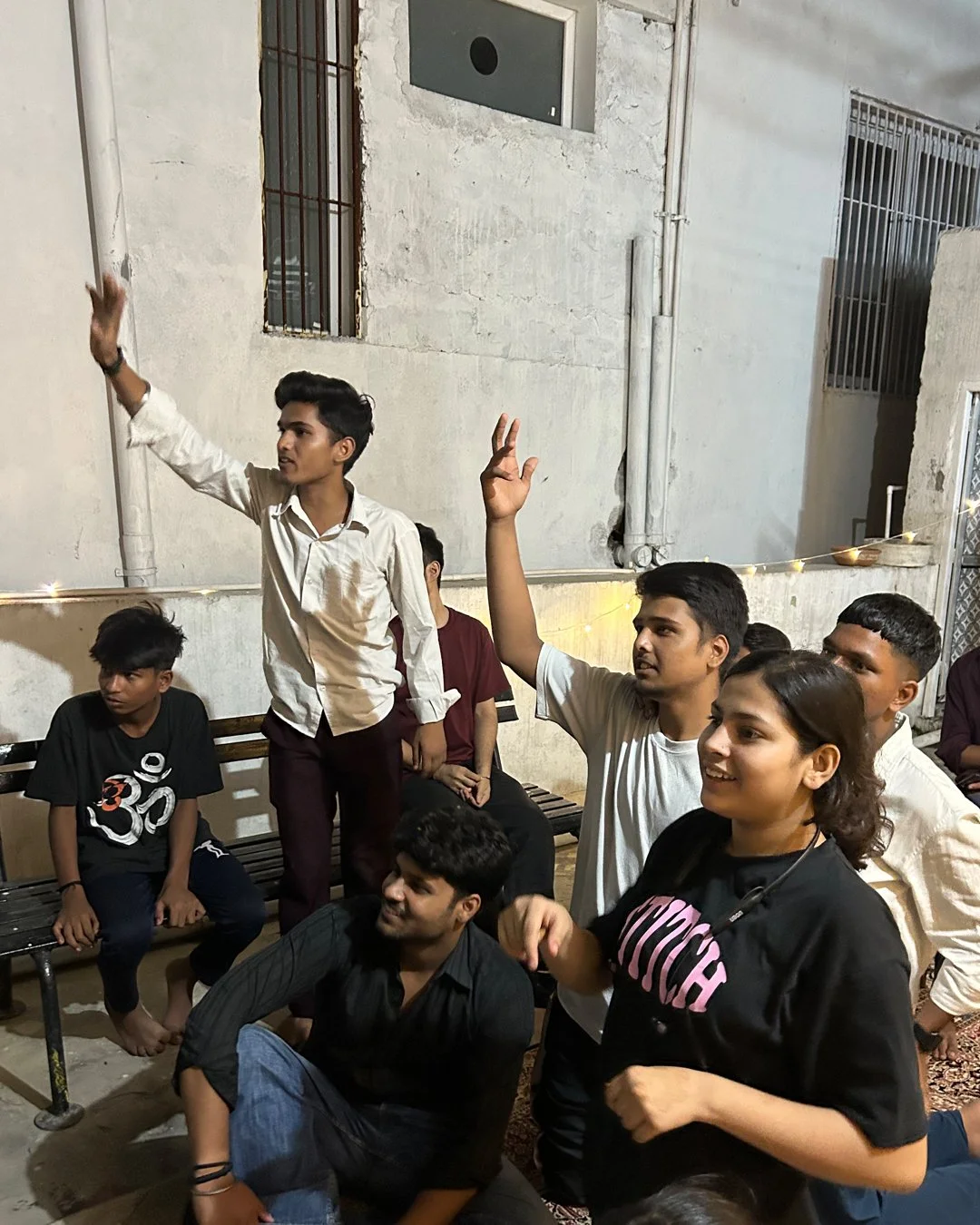
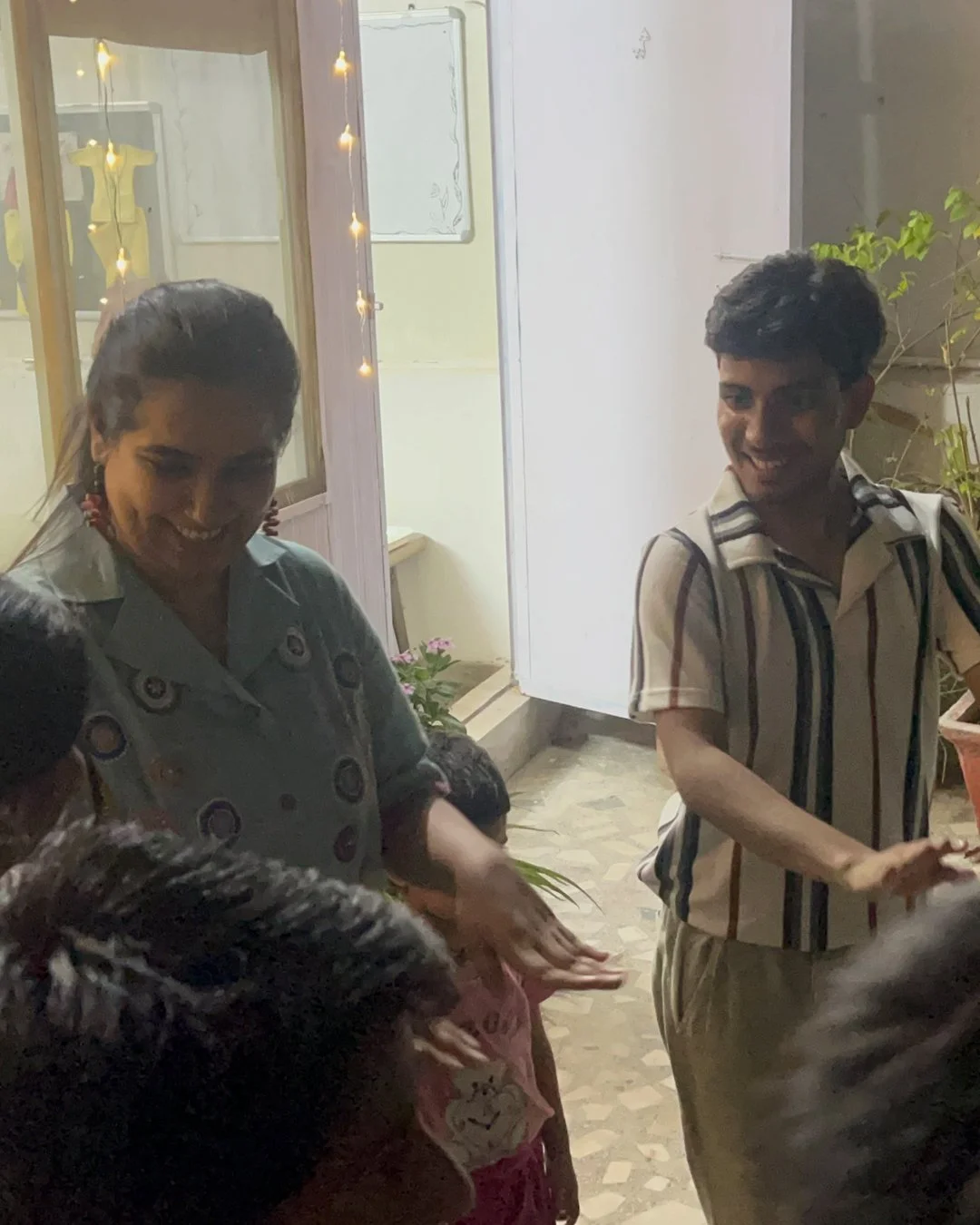
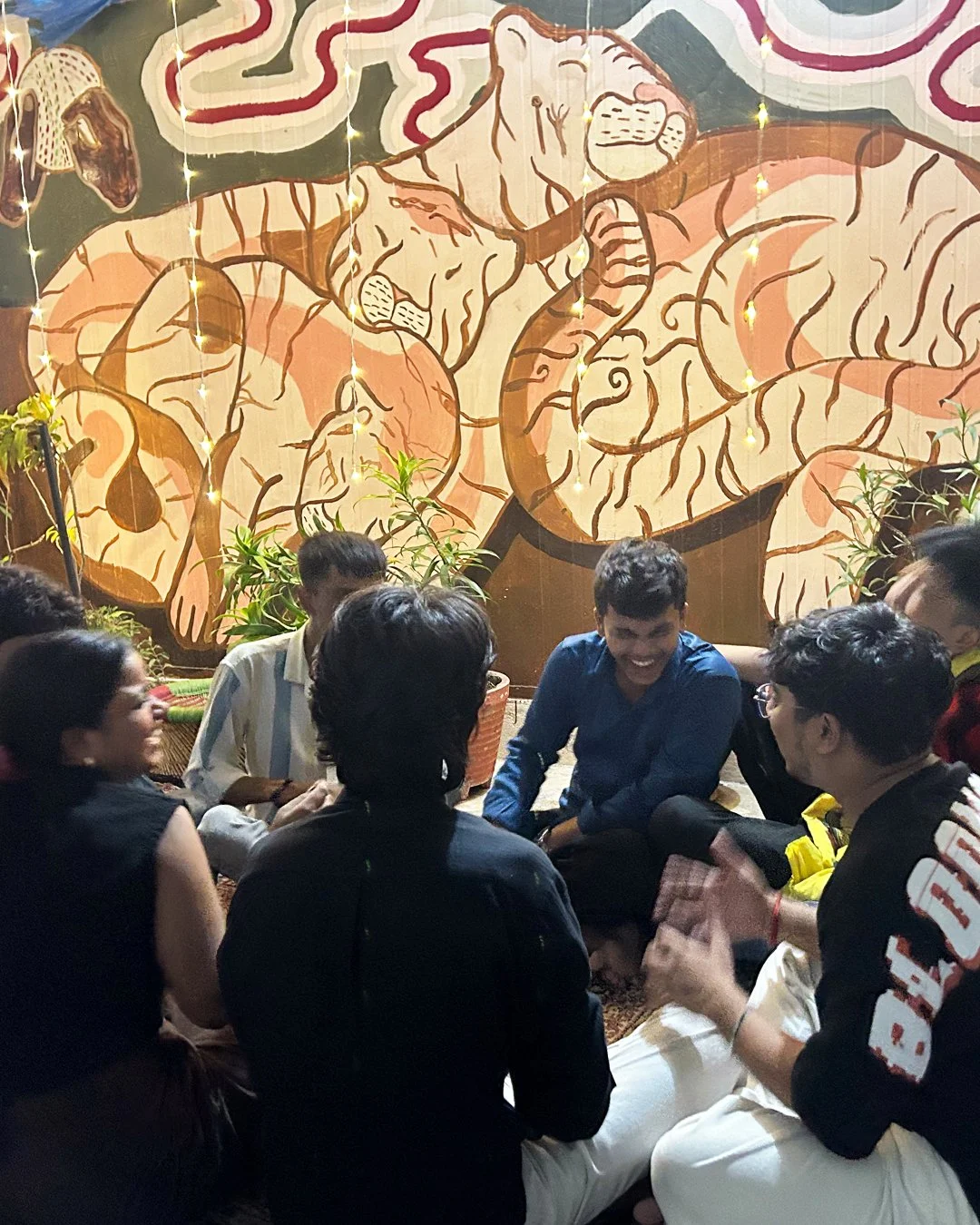
Lot of them stayed at the centre all night and bonded over stories. Some of them shared that they carry stress, pressure, and unspoken thoughts every day and the party and the space allowed them to enjoy and express themselves freely. The party was an emotional release for a lot of them.
Highlights of the party:
fun games, chit-chat, pulling each other’s legs, gaana bajana, heart break songs, ghungroo dance, delicious khana by Nahid ji from Rafooghar, all night kurkure aur kurkuri baatein.
SESSION ON THE RUGBY FIELD: LEARNING BY PLAYING
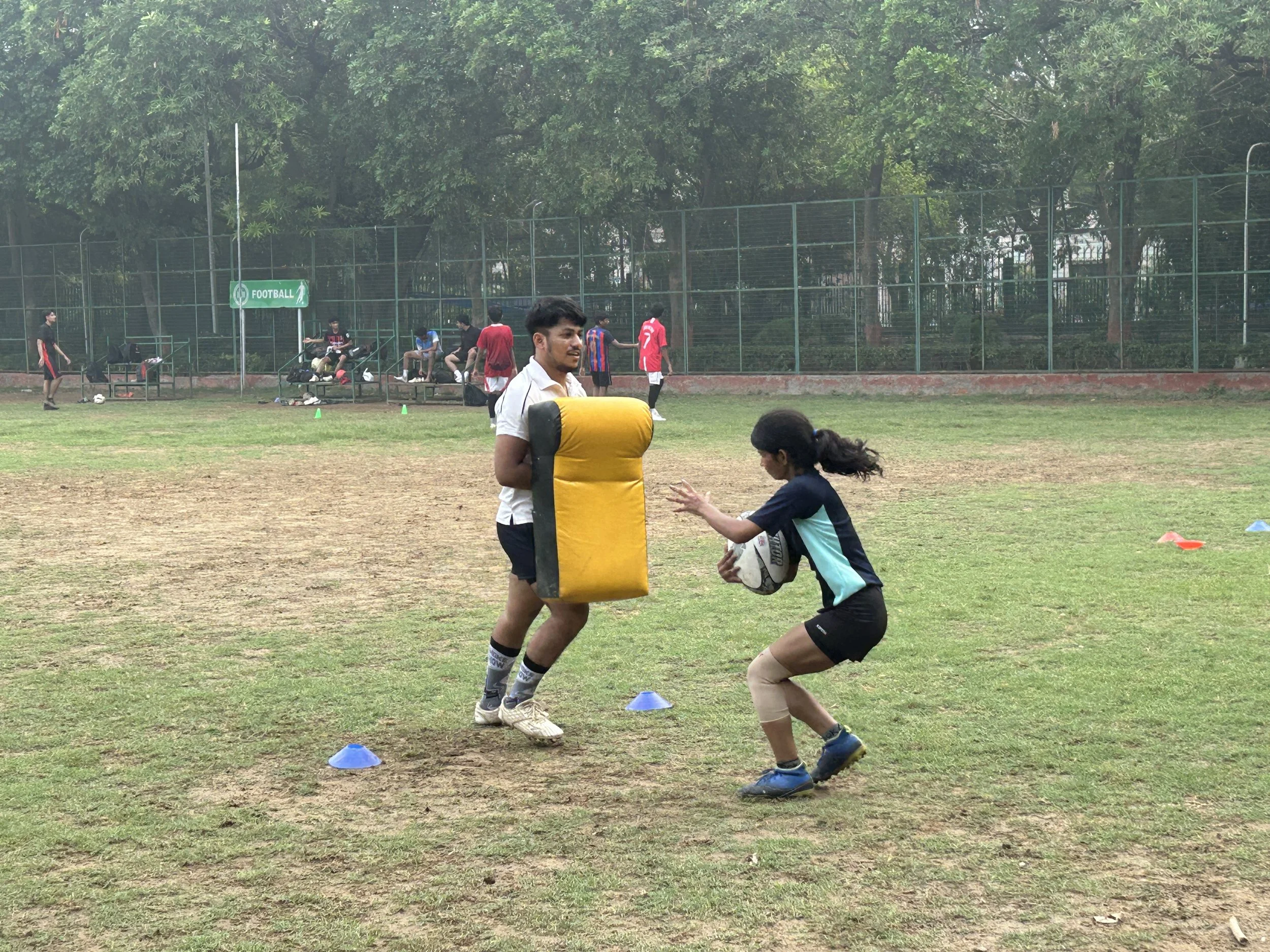
The purpose of this session was to learn from the values of Rugby, play together and enjoy an activity that was probably new for some of the boys and the girls.
Values of Rugby: Respect. Discipline. Integrity. Solidarity. Passion. Teamwork.
Bananas and Namkeen by Fouziya ji were enjoyed by all at the end of the session. Rugby field is also a great place to channel anger and agression. A young girl who has faced domestic and sexual violence in her marriage took out all her anger and angression on the tackle bag which was very powerful yet heart-breaking.
Highlights: Pushups, Stretches, Running, Tackling, Games and Exercises around the importance of team spirit and listening- Listening to react, Listening to respond and Listening to understand.
Jaan Pehchaan through Sawal Jawaab
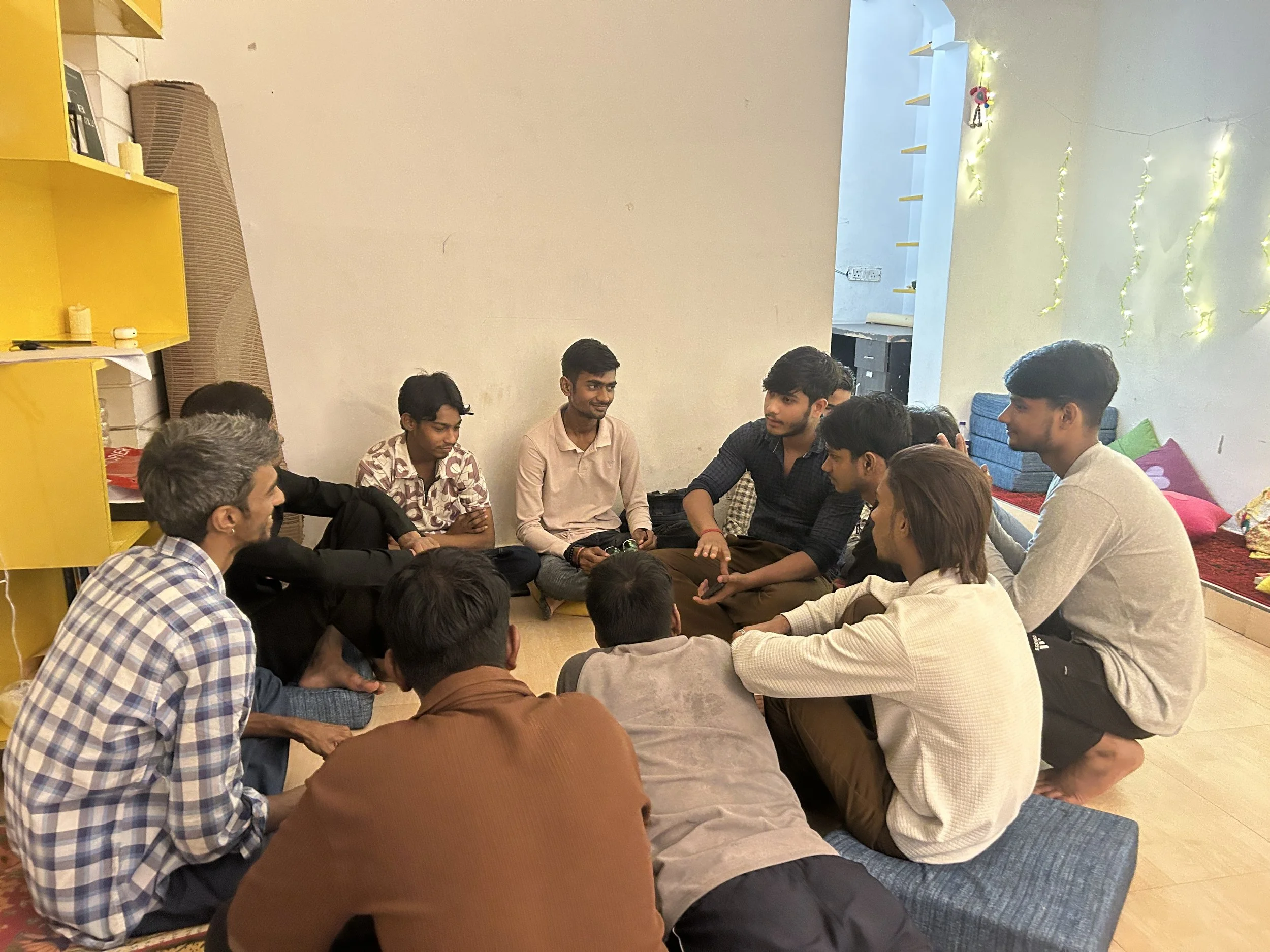
We decided to spend a day indoors at Rafooghar to just get to know the boys better. Boys were paired up and were given 10 questions to ask each other. The questions revolved around their favorite color, song, their dreams, love etc but most participants focused on this one questIon, “What is love for you? Tell me about someone you love or have loved.” This session helped the boys to open up, get closer with each other and also give them the space to just be themselves, without the fear of being right or wrong.
Picnic in the (JASOLA) Park
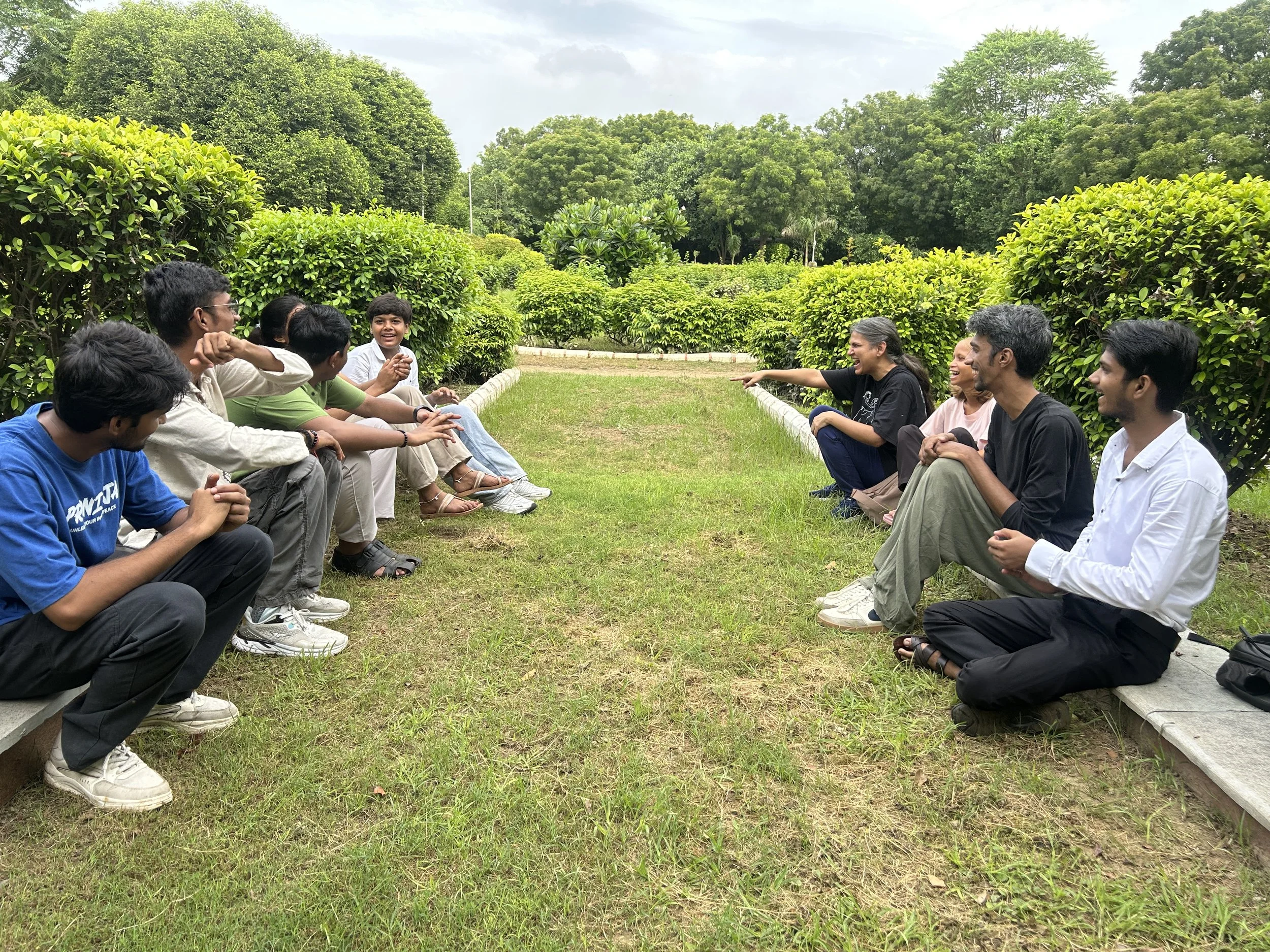
At 7:30 on a Sunday morning, we met at the neigborhood Jasola Park for a picnic, some gupshup and selfies...This time the participants were asked to share a game they would like others to play. We played a word memory game and a song and movement game (lambi dadi wale baba- a game we learnt from Aagaz Theatre Trust). This time the gupshup was around the fixed notions associated with gender and their personal experiences and challenges that they face because of these rigid definitions.
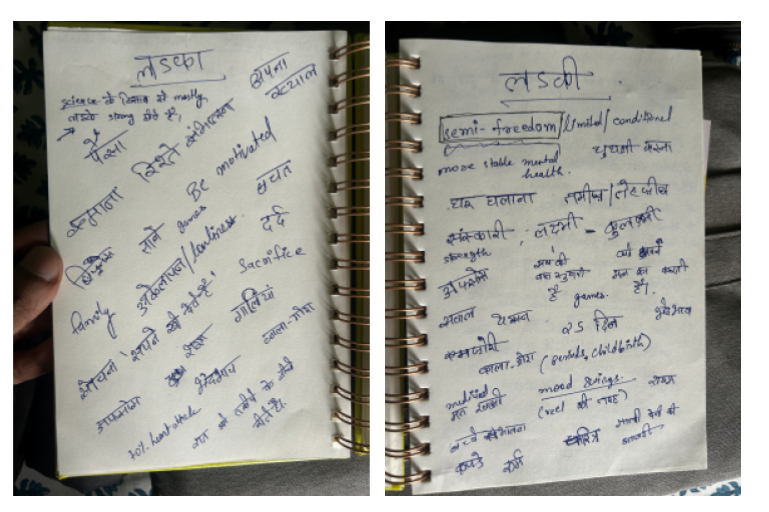
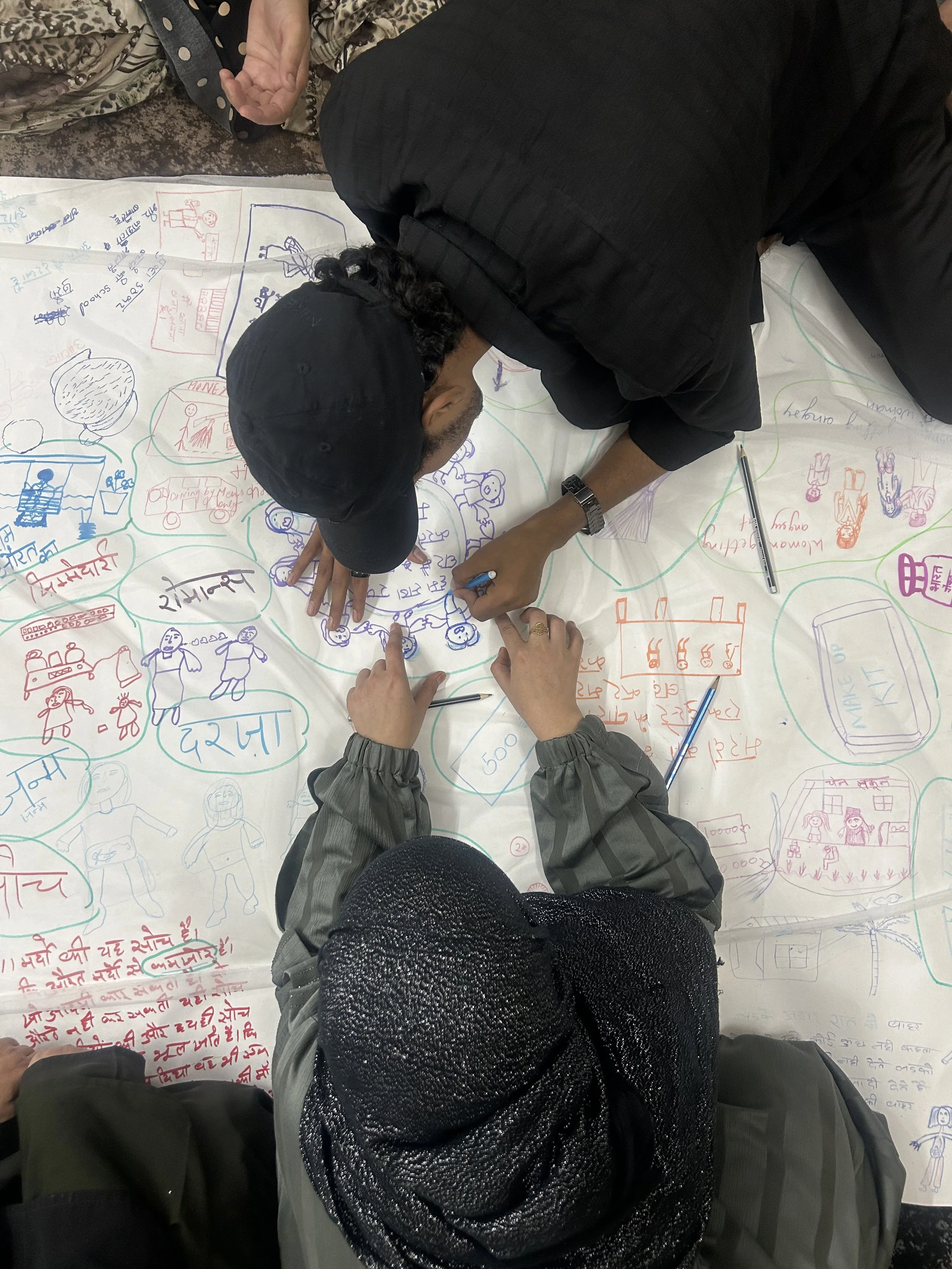
Boys: Money कमाना है। Business संभालना। घर की ज़िम्मेदारी।Earning ही main role है।Relationship नहीं… बस earning।Taane सुनने पड़ते हैं।Demotivation। Apna ख़याल नहीं रखते। Self-care missing है।Loneliness।Mood Swings
Girls: Semi-freedom। Kuchh ko freedom मिलता है, kuchh ko नहीं।Tamij, tehjib की expectation।Lakshmi aur Kulakshmi का बोझ।Afsos।Thakan।Kamjori।Najuk – nazuk समझा जाता है। Time कम होता है – periods aur pain की वजह से। Pregnancy ke दौरान और भी ज़्यादा pain aur ज़िम्मेदारी।
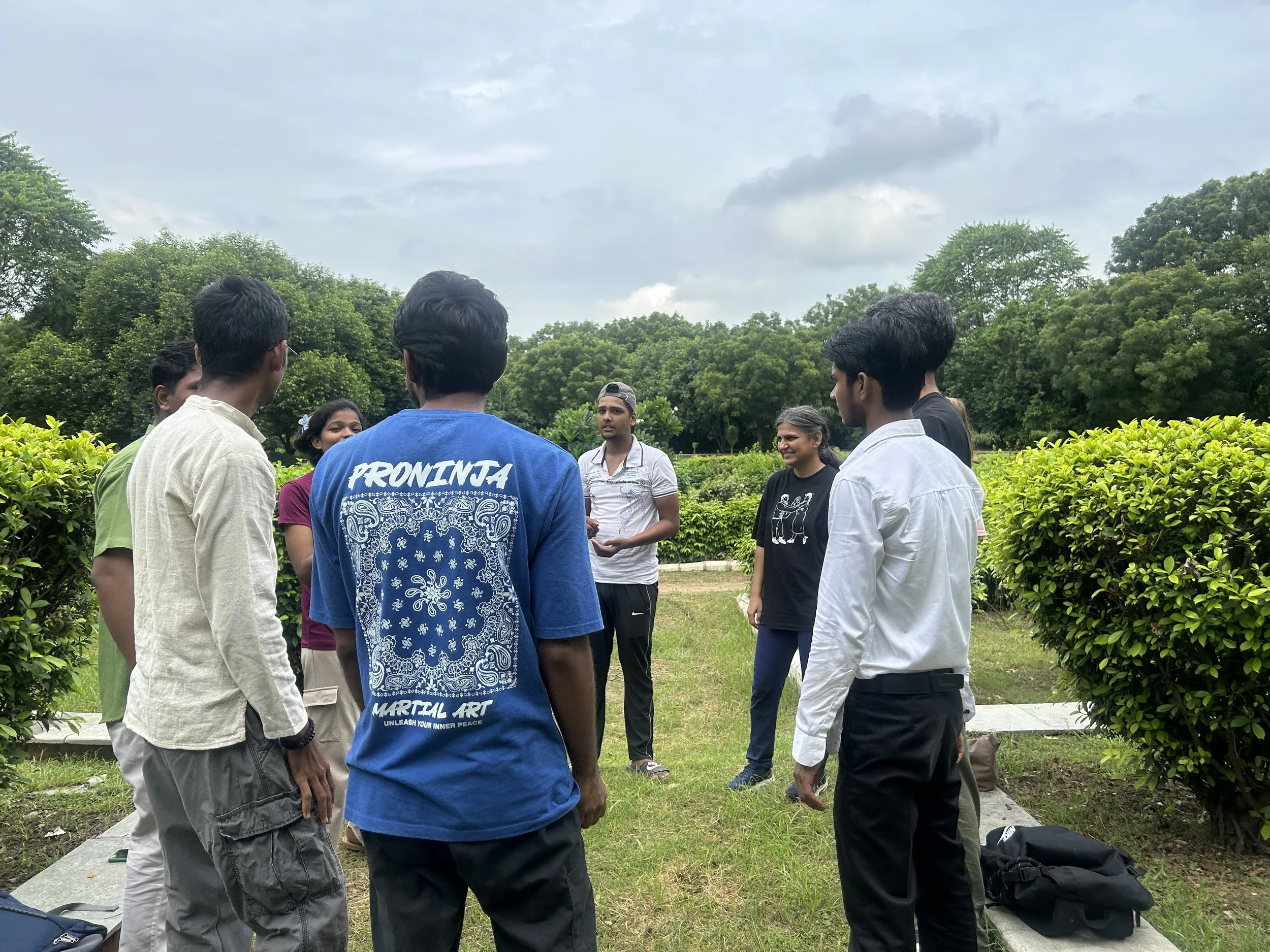
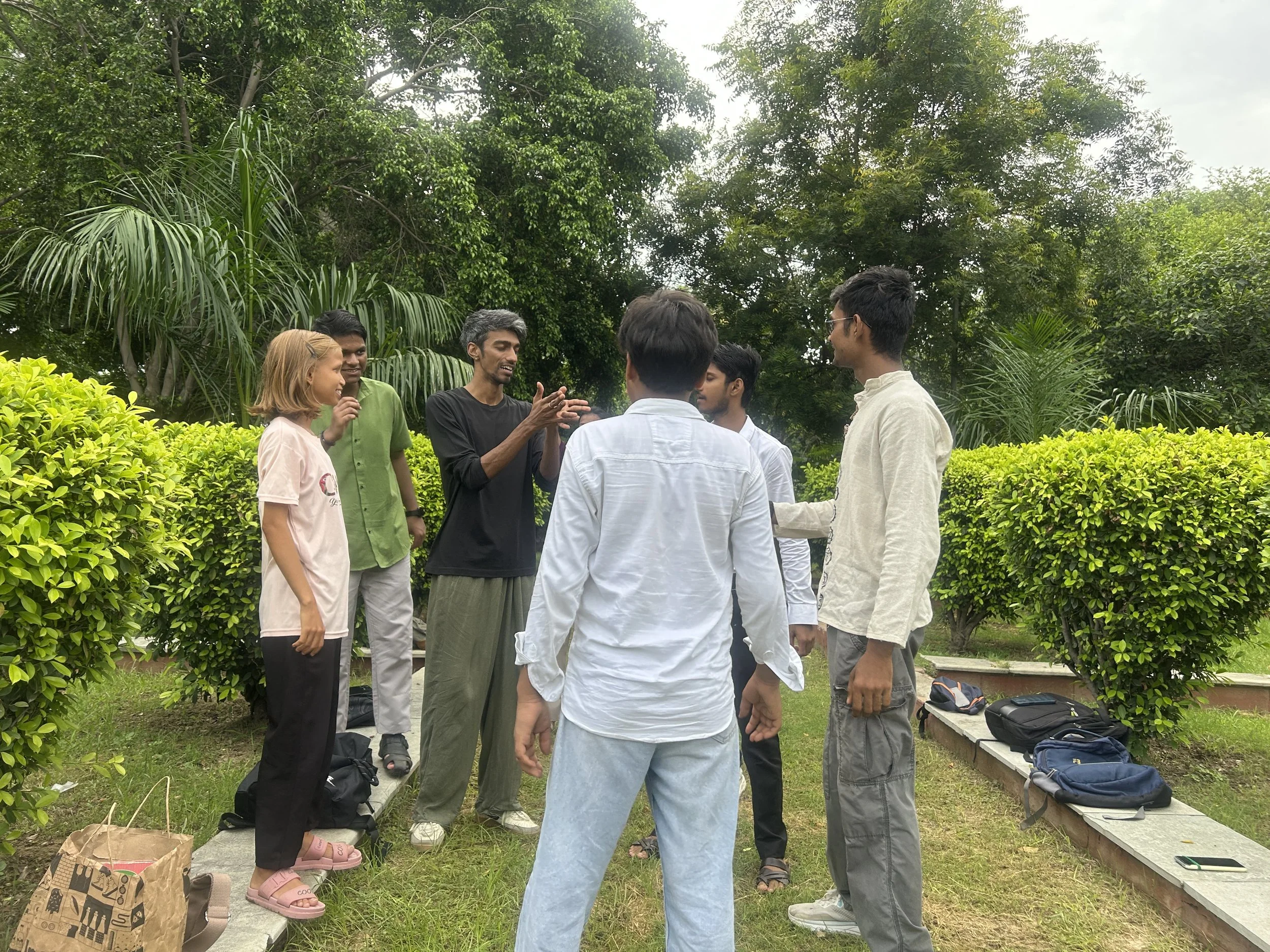
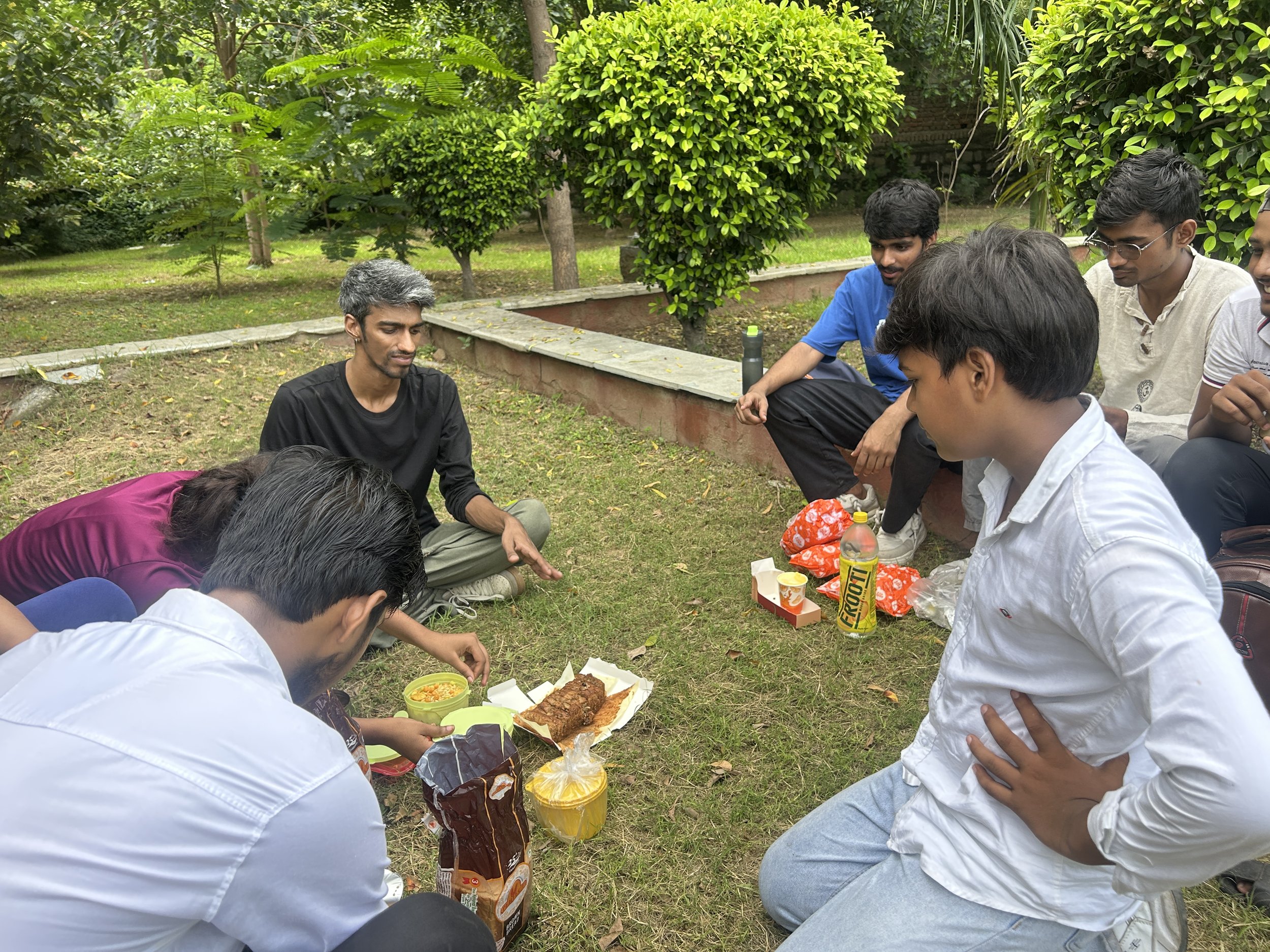
It was quite interesting to note that a lot of these heavy discussions happened so easily and spontaneously while sharing food that everyone brought for the picnic. After the session, everyone went to explore the park and take some selfies.
TERRACE THEATRE: Understanding Masculinity
and Gender Stereotyping
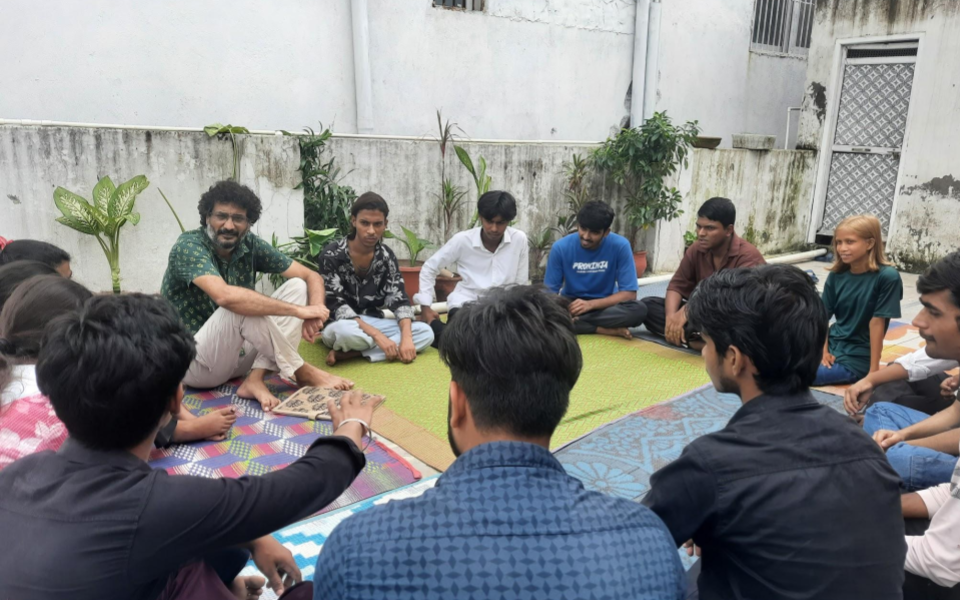
Harmeet Basur- a theatre practitioner and filmmaker facilitated two guest sessions, using theatre games and movement exercises to explore how masculinity and gender stereotypes are performed, learned, and internalized. The session began with some energizers and an alliteration-based self-introduction with actions.
Then participants were asked to try different Walking Styles based on prompts like different ages, professions, and gendered roles, exaggerating and softening movements to reflect on how much of gender is performed through our body language. This led to a discussion on where stereotypes come from and how family, friends, teachers, and lived experiences shape us. In Pass the Object, a neutral object was reimagined in multiple ways, including stereotypically masculine and feminine uses, then deliberately transformed to break those stereotypes, to demonstrate that meaning is socially constructed. The Superhero Remix invited participants to design and perform short skits on gender-neutral superheroes who challenge traditional ideas of strength and care, encouraging new models of identity beyond rigid norms. The session ended with Mushaira–e-Gibberish in which everyone composed nonsensical poetry but performed it with full seriousness and dramatic flair.
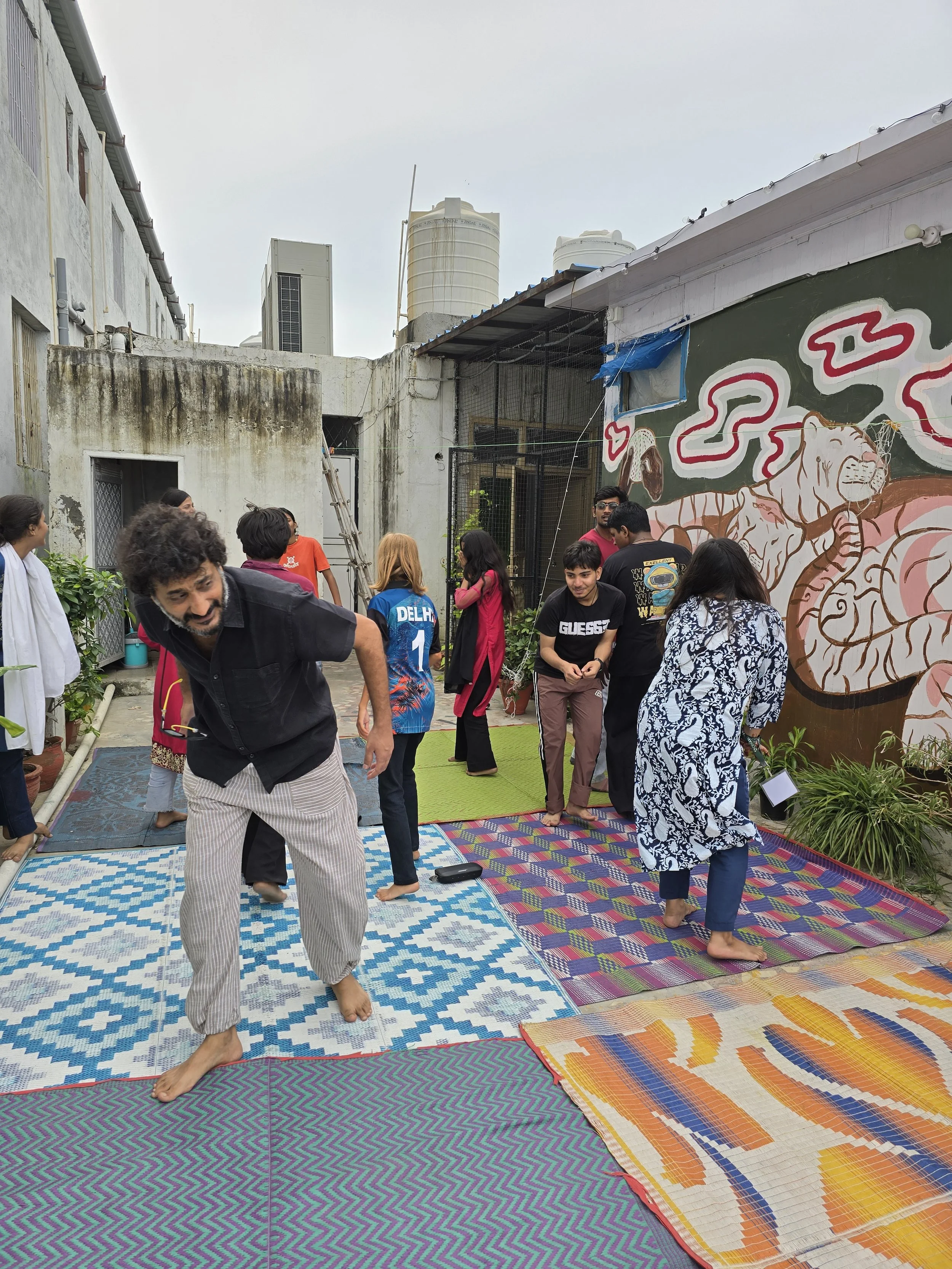
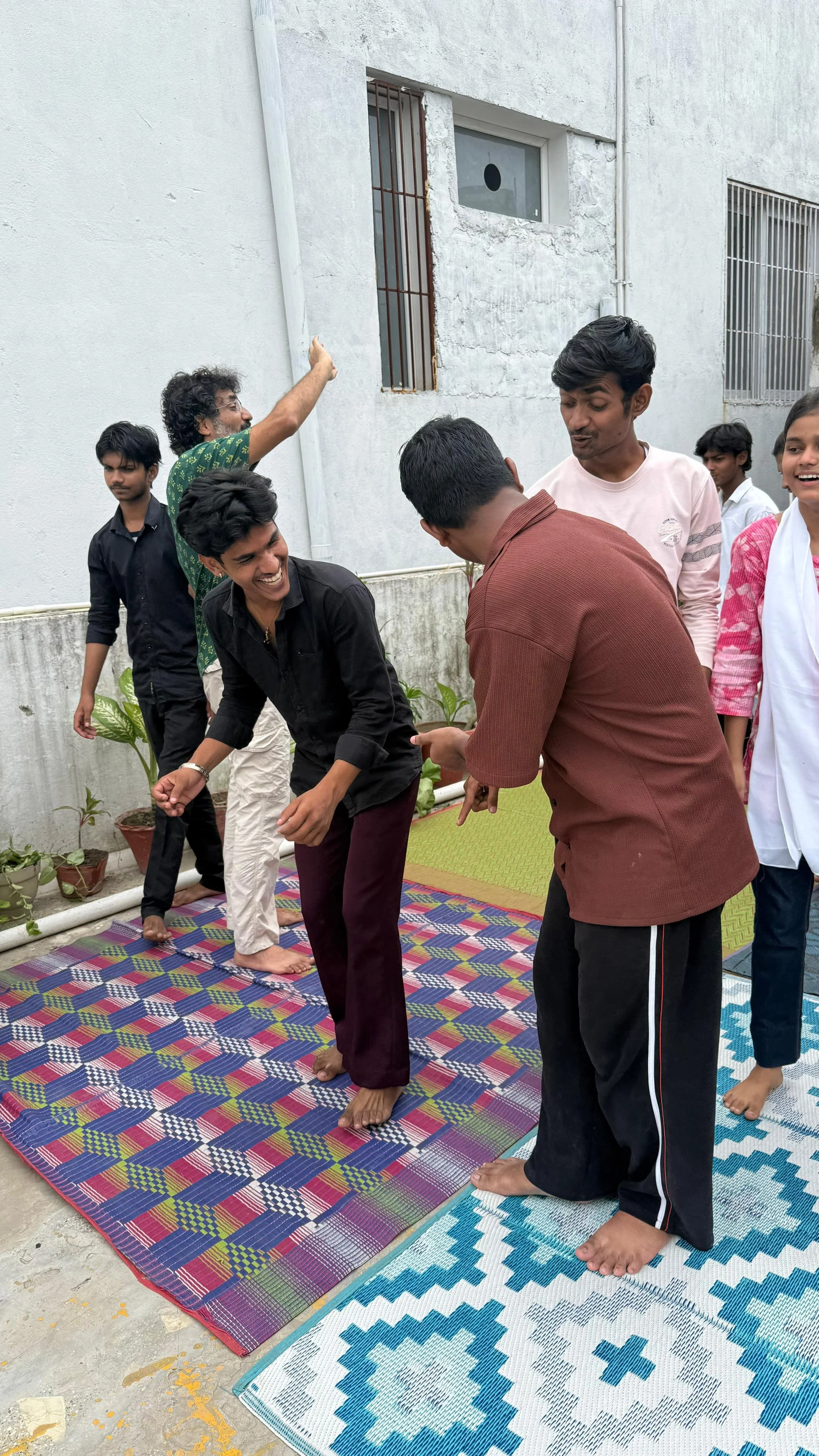
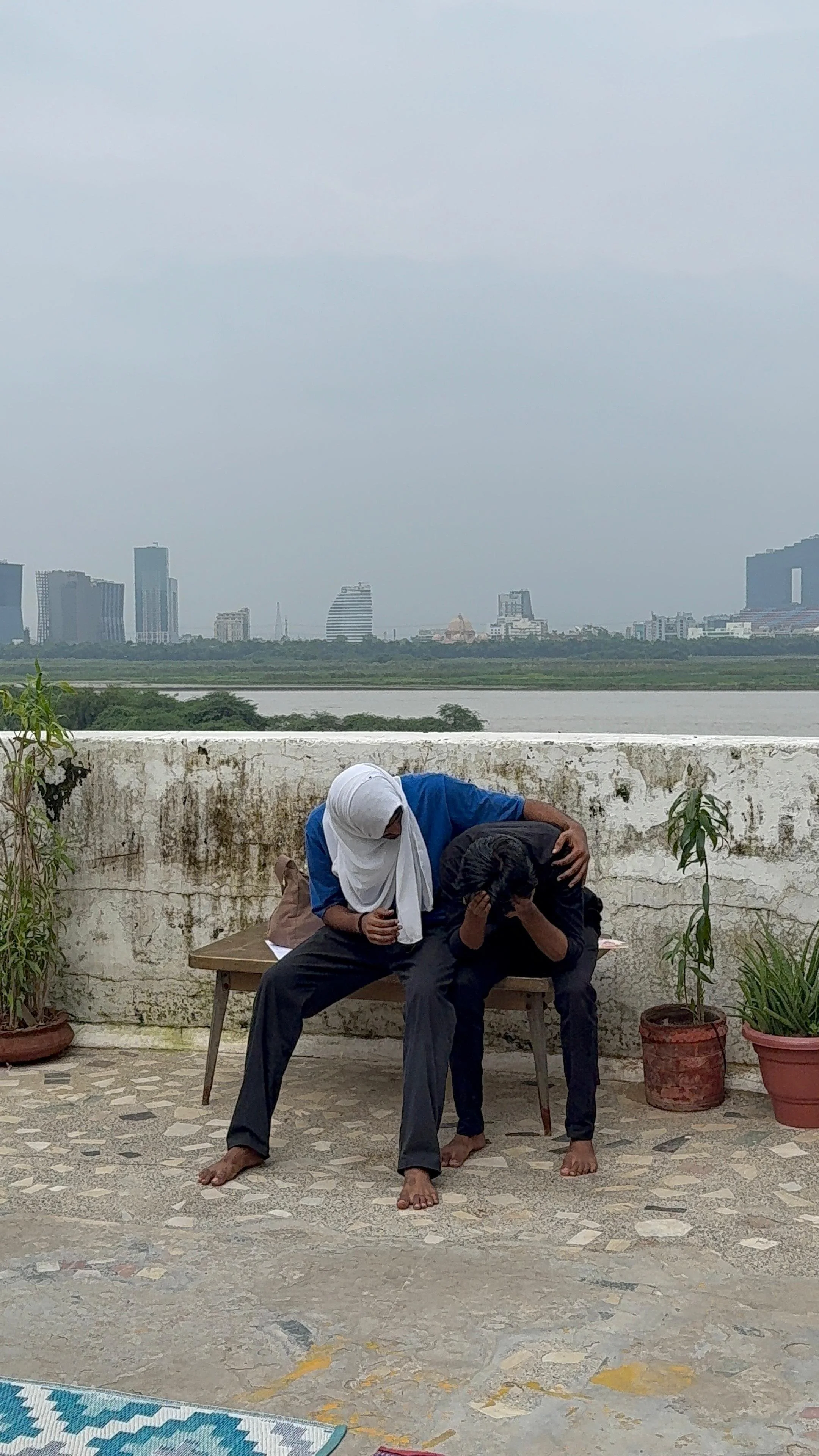
The second session explored rhythm, emotion, memory, through movement and sound. It began with a walk-and-greet warm-up, gradually shifting movement qualities…robotic, fluid (like water), solid (like stone), and grounded (like a tree branch)..to expand physical awareness. In Sound Orchestra / Vocal Sculpting, participants collectively created layered vowel sounds (aaah, oooh, eeeh), experimenting with texture, dynamics, emotions, and movements. This evolved into body percussion and creating chorus. In Genre and Emotion Freeze, participants move according to the music played,. When the music is frozen, The participants are asked about the emotion they are feeling in their body and if that emotion triggers a memory.