Visible, Invisible and Mending beyond fabric
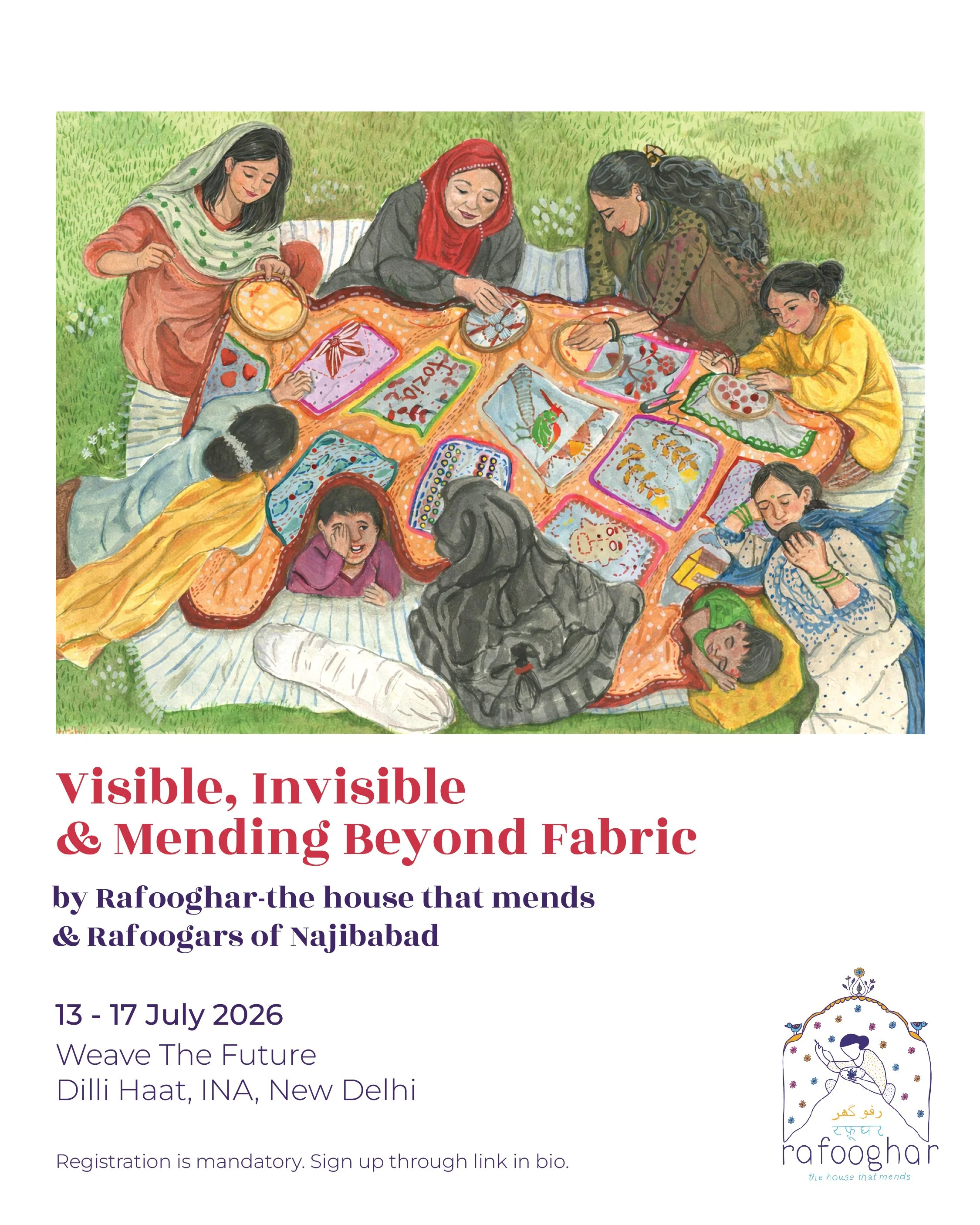
Illustration by Toshi Singh, Art directed by: Pooja Dhingra
Our practice and space- Rafooghar-the house that mends takes its inspiration from the word -rafoogar- the cloth darners who don't simply repair worn-out clothing and cherished textiles, but also breathe new life into them, preserving the stories, memories, and lives held within every stitch.
When the team of Material Library reached out to us to design a program around mending at Weave the Future, we immediately reached out to the Rafoogars of Najibabad -the master darners who inspired not only our name but also the philosophy of mending that lies at the heart of our work.
Their practice has shaped our understanding of repair as an act of care and dignity, extending far beyond fabric into the ways we mend relationships, communities and ourselves.
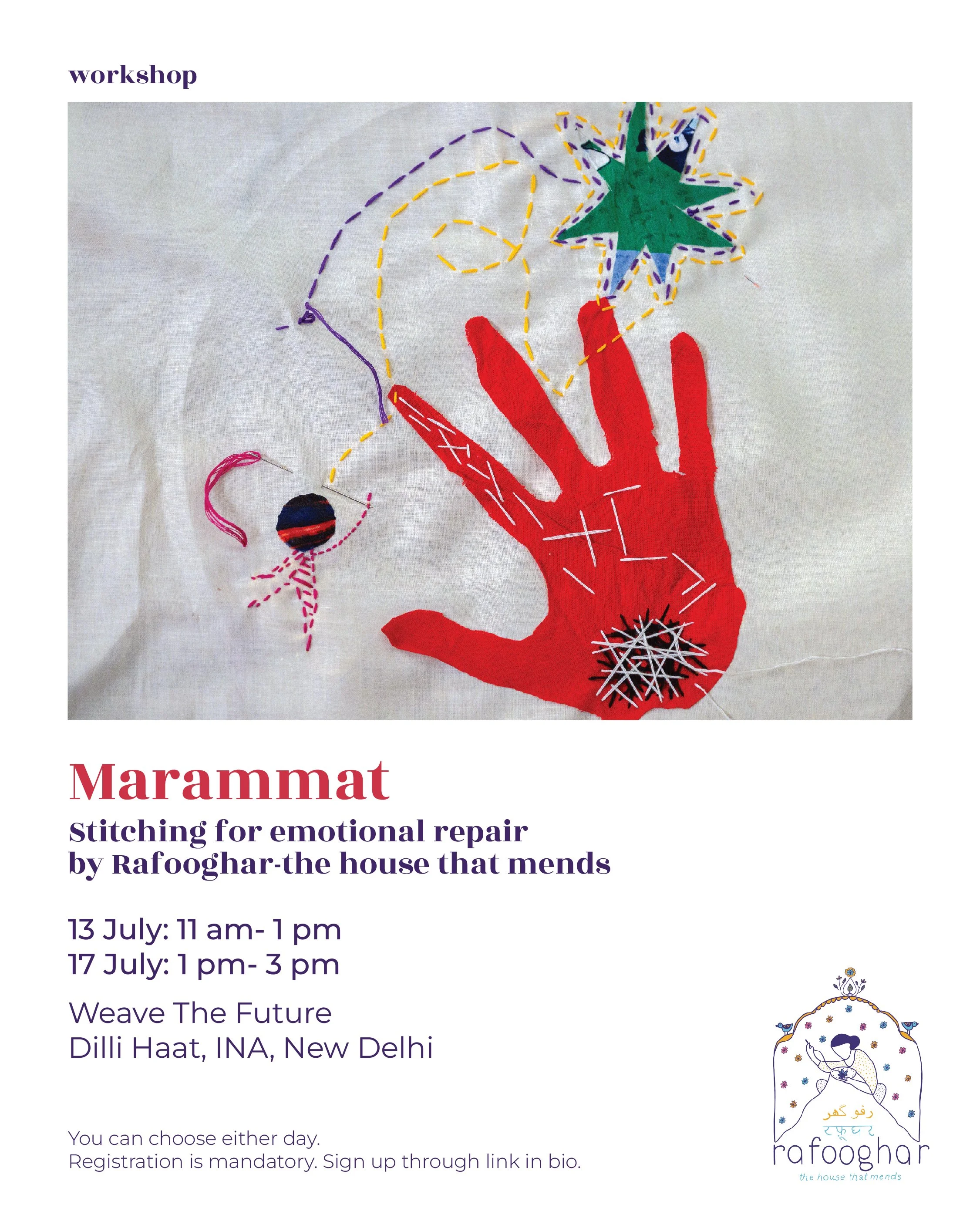
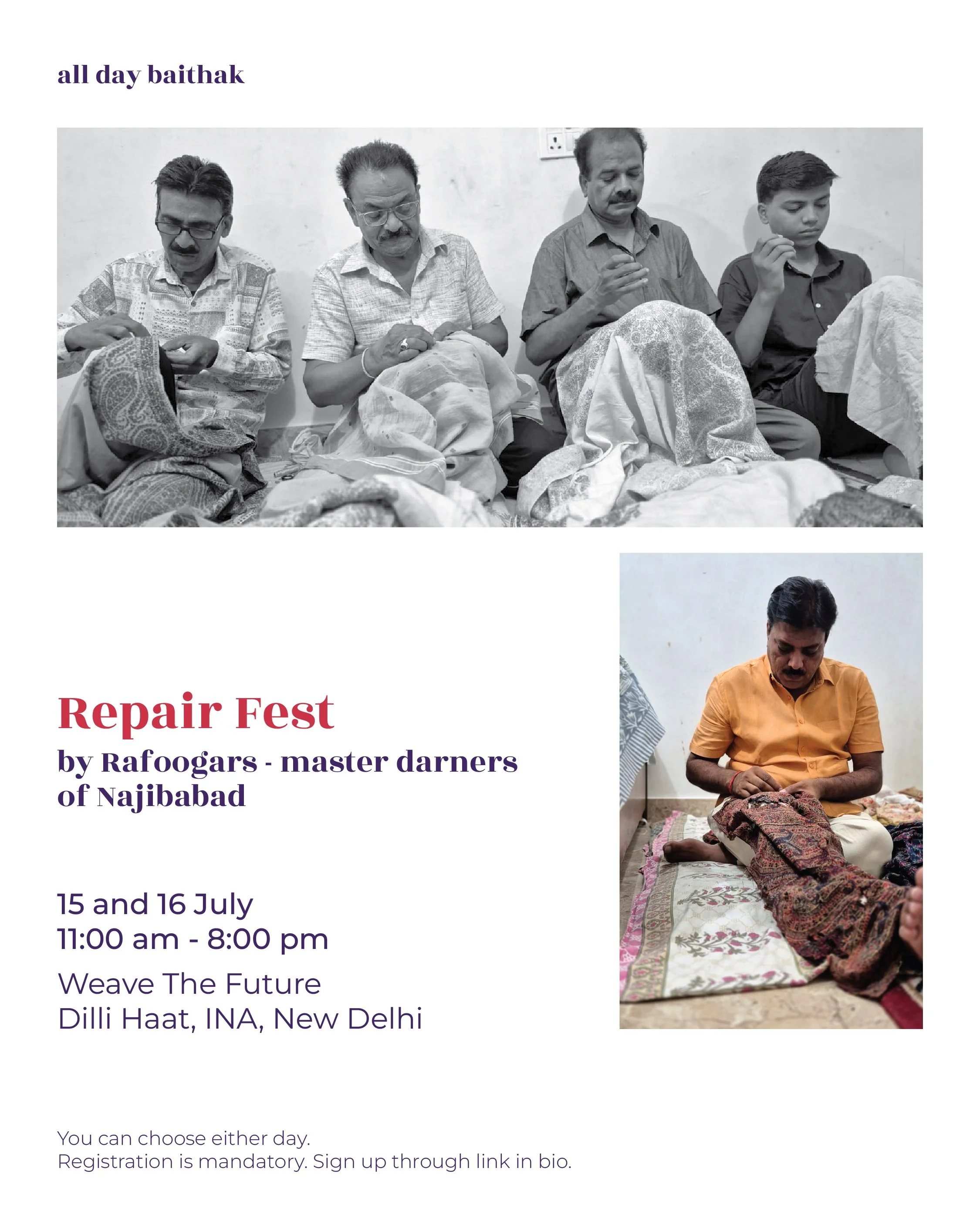
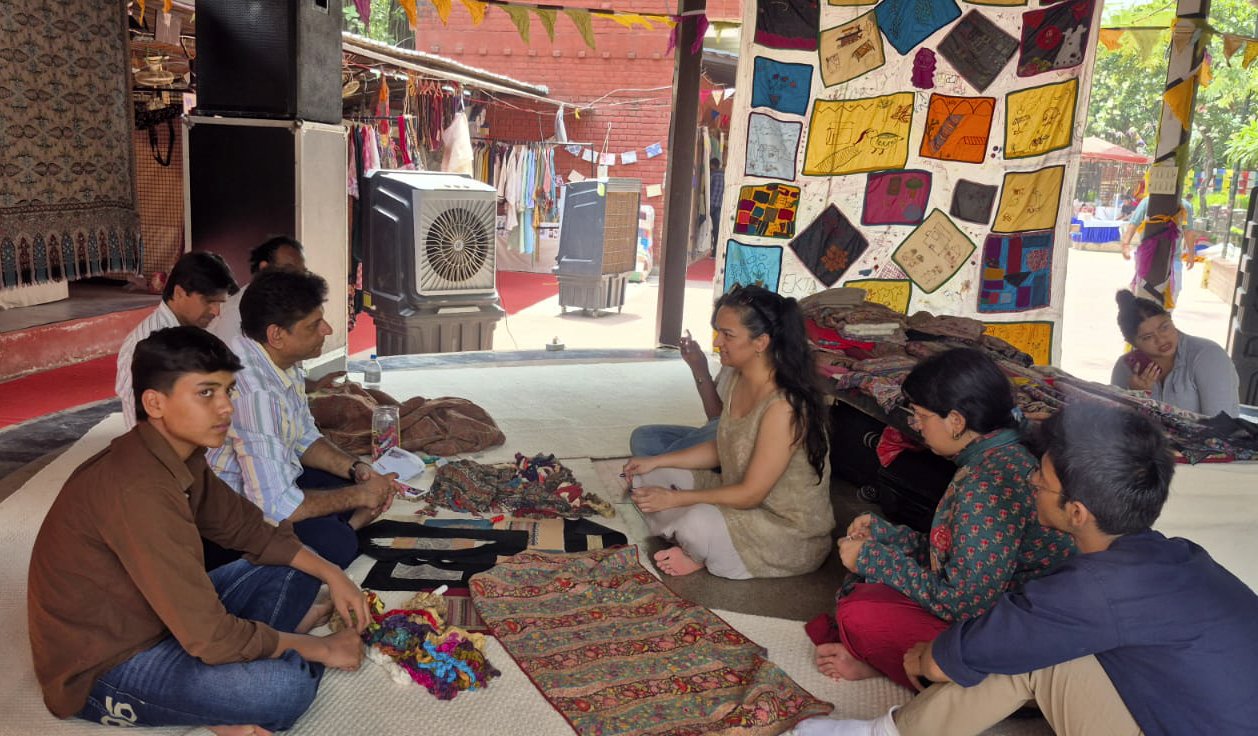
We designed a series of very special workshops, demonstrations and informal conversations with our own artists of Rafooghar-the house that mends and the master Rafoogars of Najibabad.
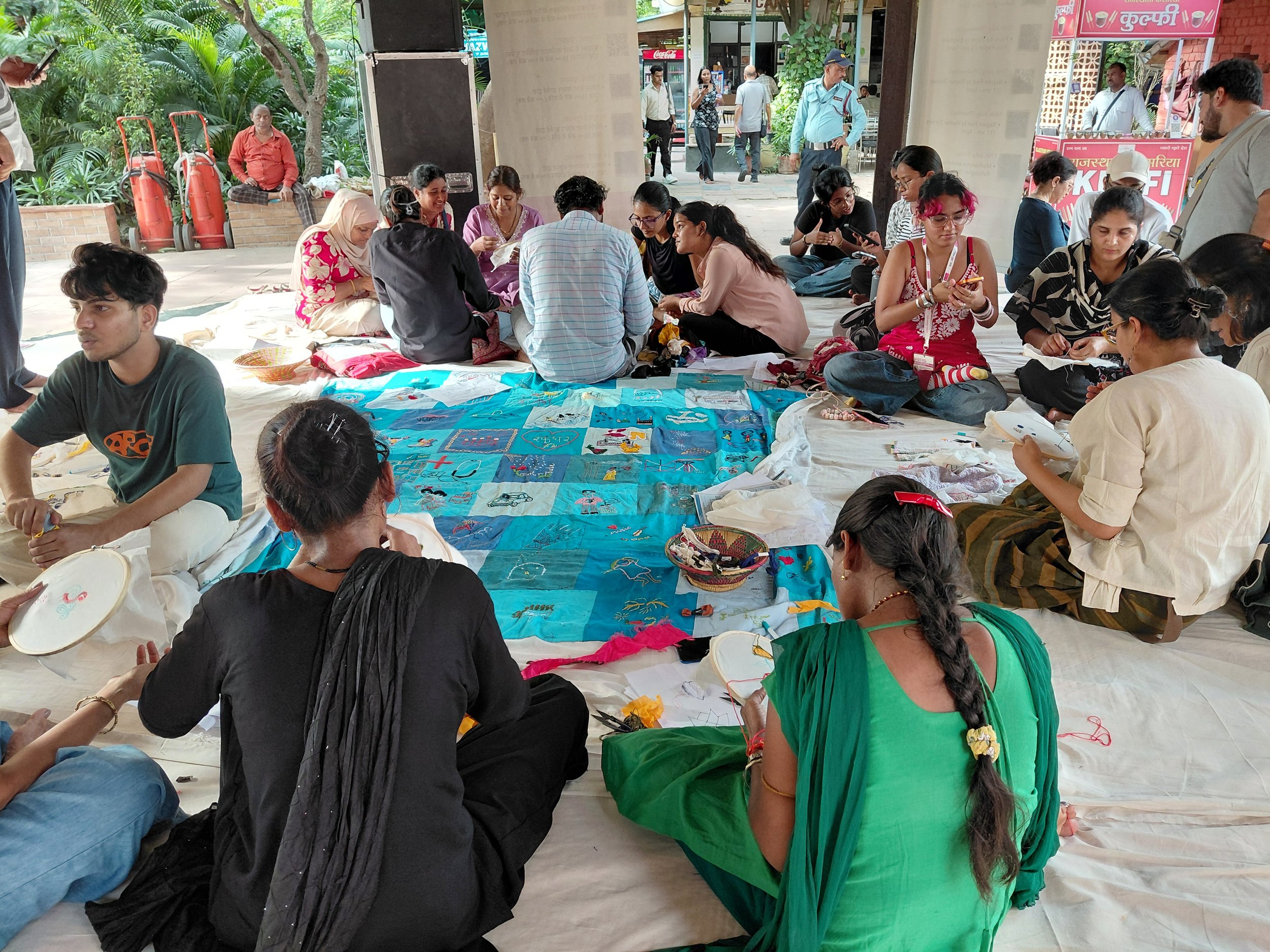
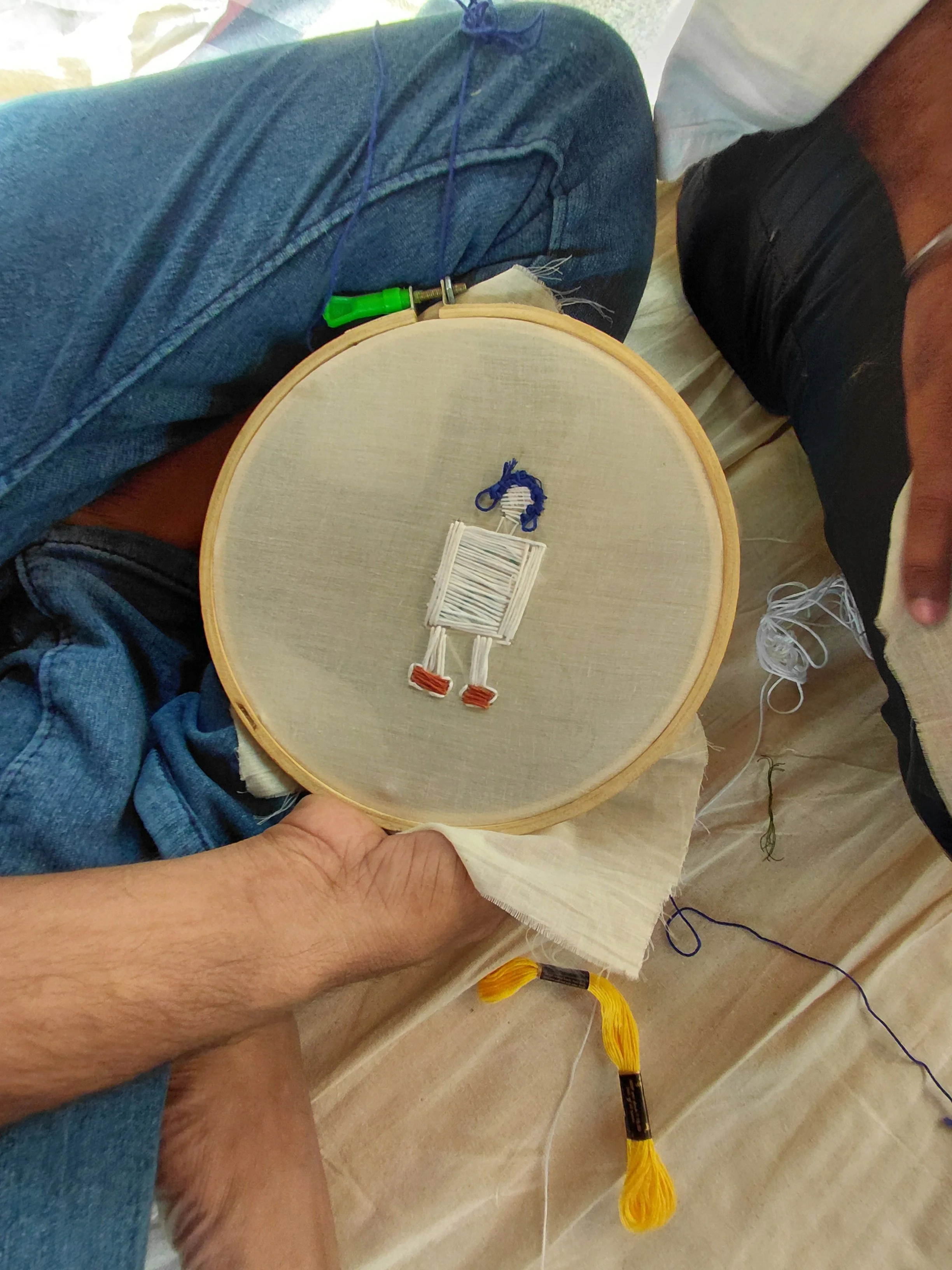
Our Maramaat workshop was all about Emotional Repair. We engaged with fabric as a way to explore ideas of rupture, repair, and resilience. Through processes like cutting, stitching, and layering, participants were invited to work with cloth as a surface for personal expression and transformation.
Rather than aiming for perfection, we embraced irregular threads, raw edges, and visible mends as part of the story. Together, we explored what it means to tend to what feels broken, in fabric, and perhaps within or around us. It was facilitated by Hariom, Nahid and Anjali from Rafooghar.
In our Visible Mending Workshop, we explored various techniques of visible mending the fabric. Much like Kintsugi, the Japanese art of repairing broken pottery with gold, visible mending celebrates signs of wear and damage as part of an object's history.
Rather than hiding imperfections, we experimented with different stitches, patchwork, applique and embellishing to transform tears, stains, and worn-out areas into sites of beauty and storytelling. It was facilitated by Hariom, Nahid, Saniya and Anjali from Rafooghar.
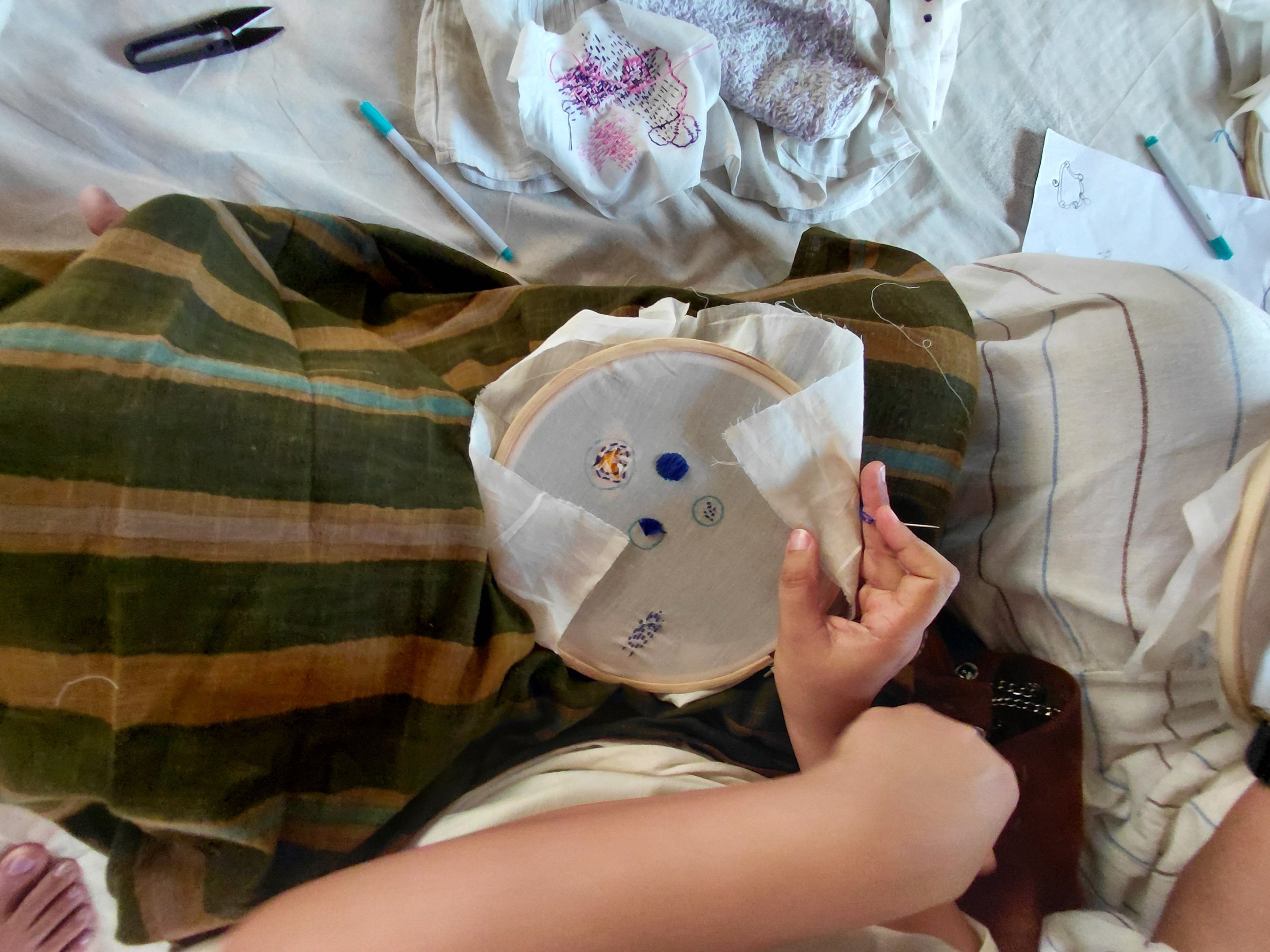
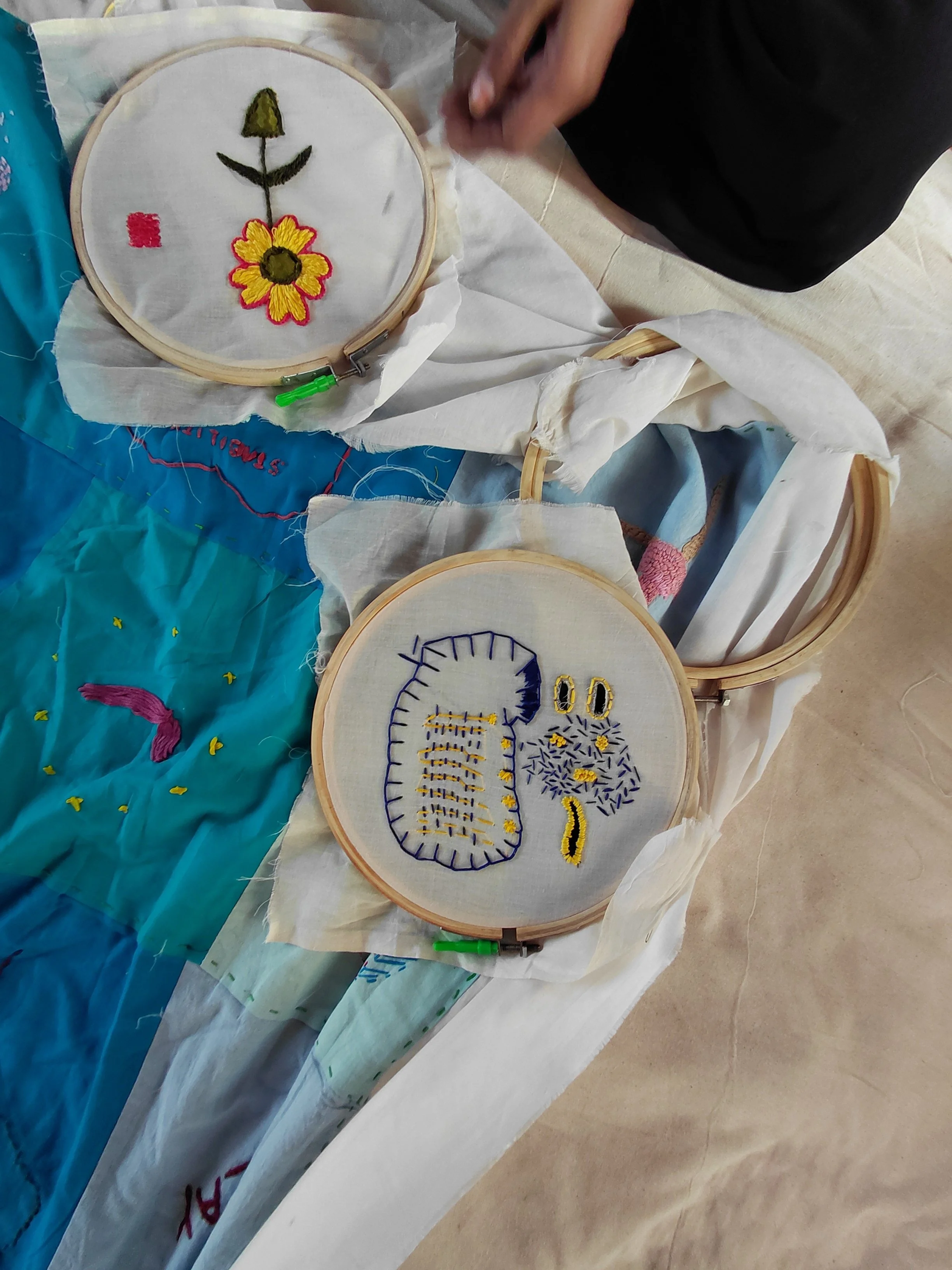
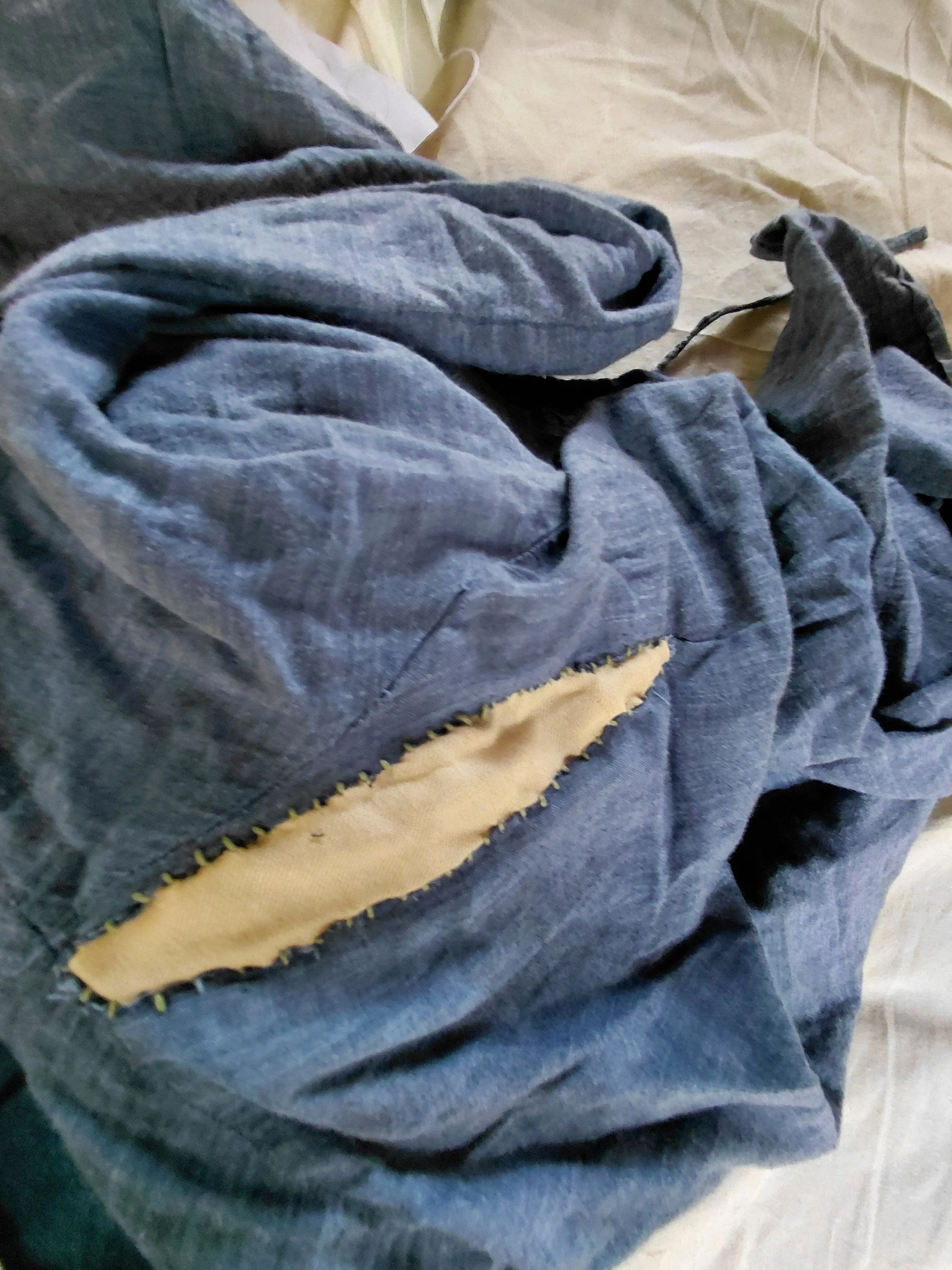
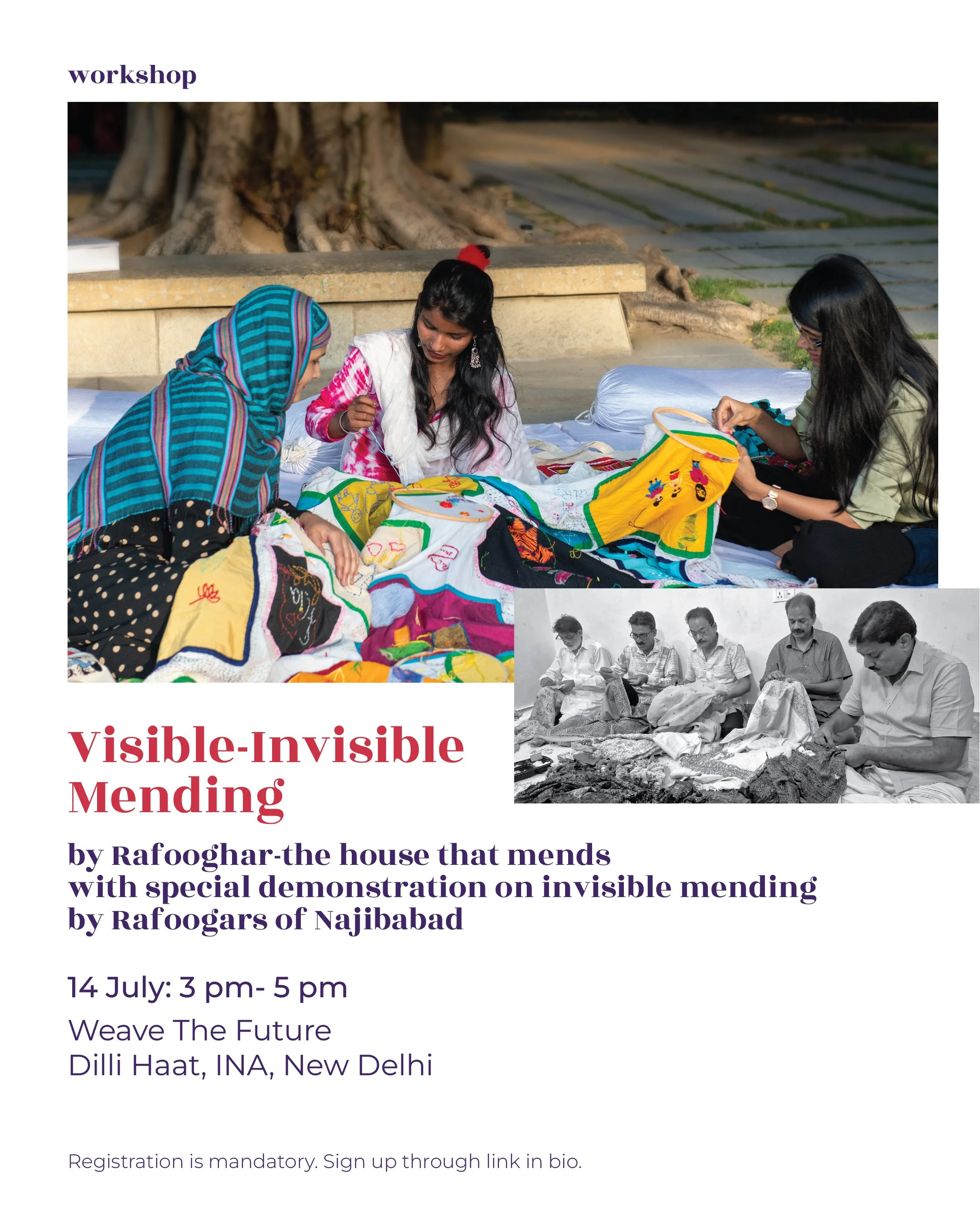
Invisible mending workshop was facilitated by the the highly acclaimed masters- Rafoogars of Najibabad, renowned for their extraordinary skill in restoring damaged textiles so seamlessly that the repair becomes almost impossible to detect.
Through live demonstrations and conversations, participants gained insight into this remarkable craft, which demands patience, precision, and years of practice. Beyond the technical mastery involved, the session also acknowledged the important role of the rafoogar in extending the life of garments and reducing waste. At a time when questions of sustainability and ecological responsibility are becoming increasingly urgent across cultures and continents, invisible mending reminded us that care, conservation, and repair can be meaningful alternatives to disposal and excess.
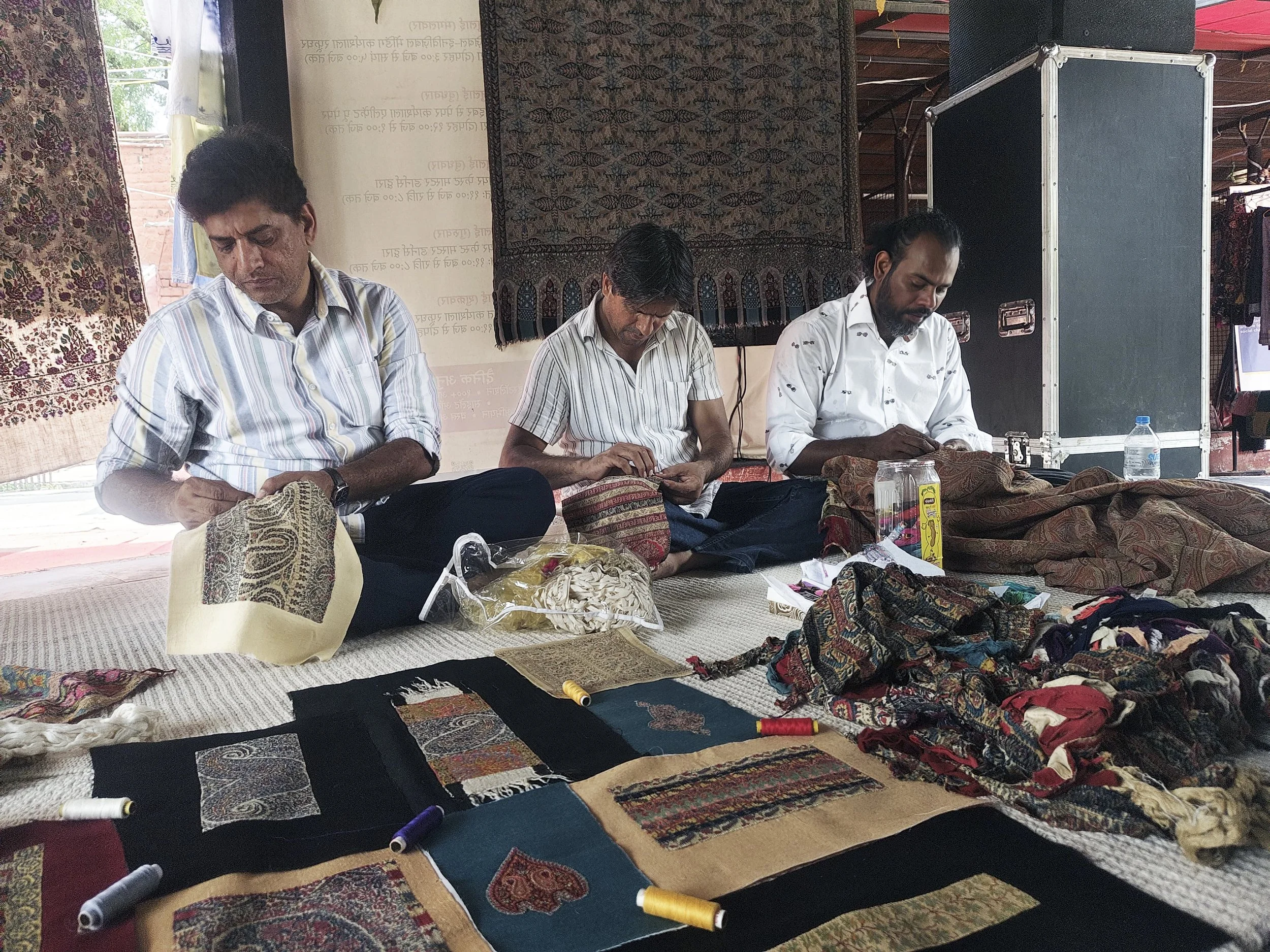
Rafoogars of Najibabad
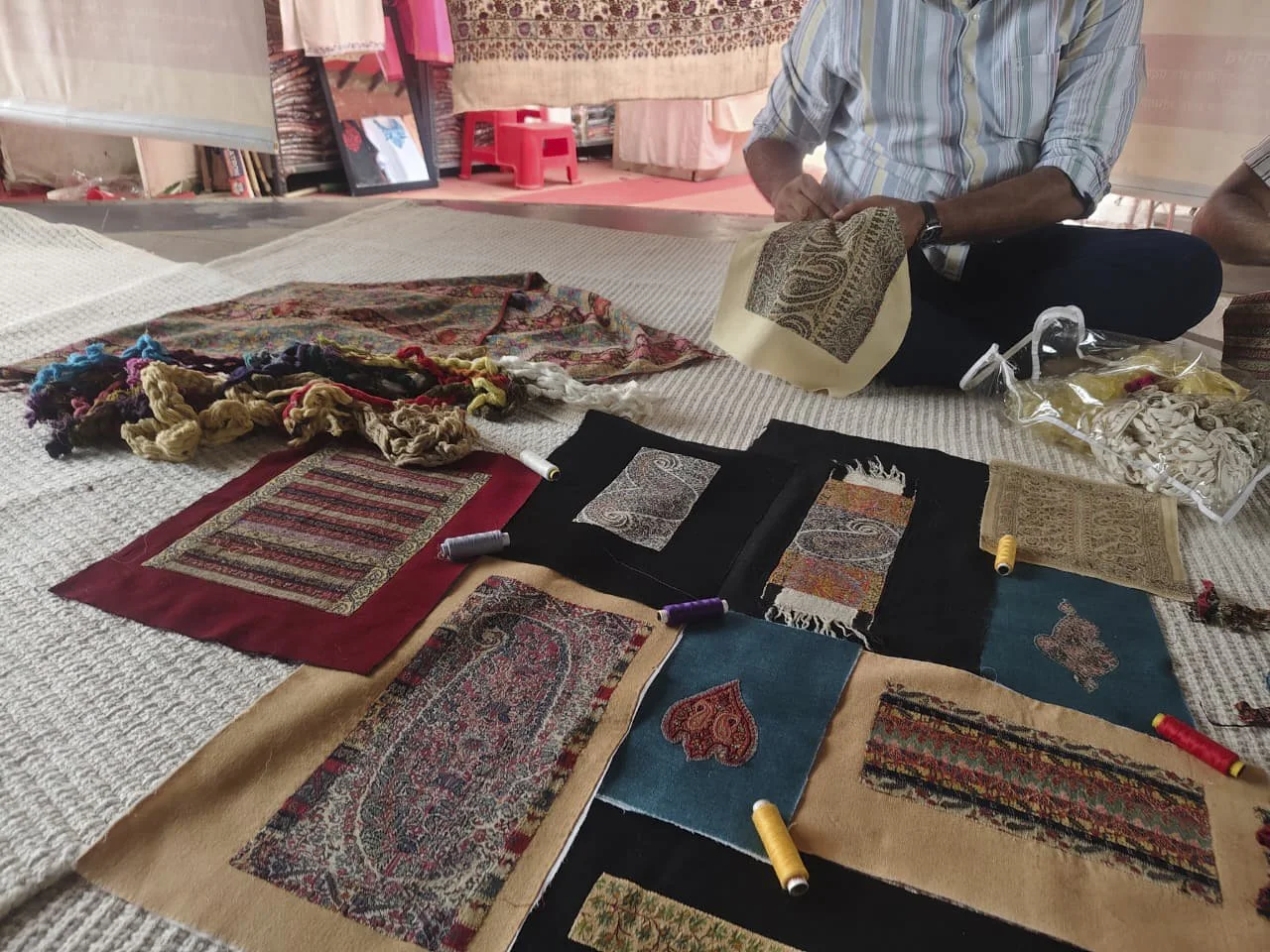
We also spent some time remembering Priya Ravish Mehra- a Delhi-based textile artist, weaver, researcher and designer. Priya who grew up in Najibabad, home to generations of rafoogars. Her close proximity to the craft and deep connection and interest inspired her research on the rafoogars and her project, Making ‘Invisible’ Visible, honored celebrated and honored their expertise.